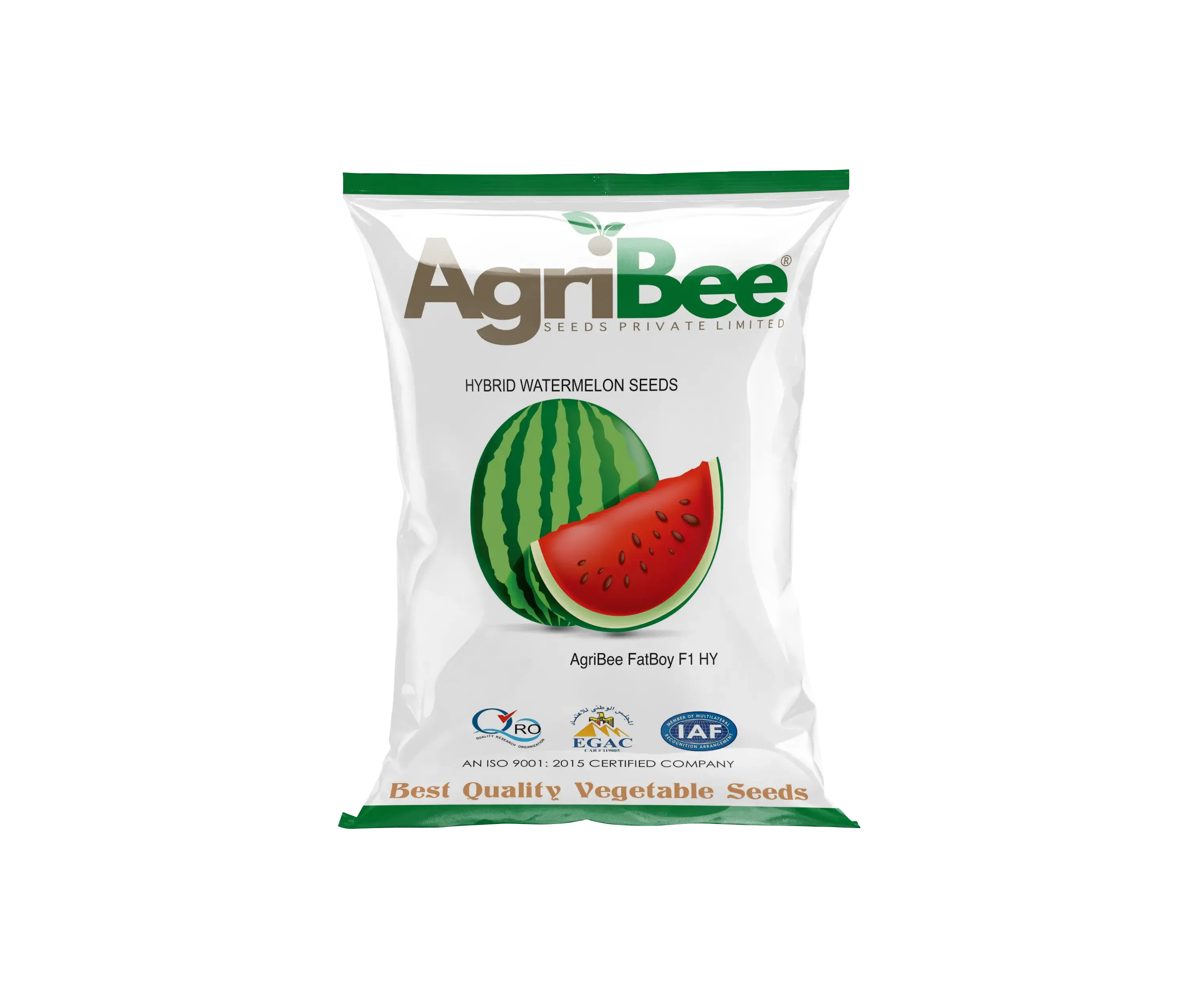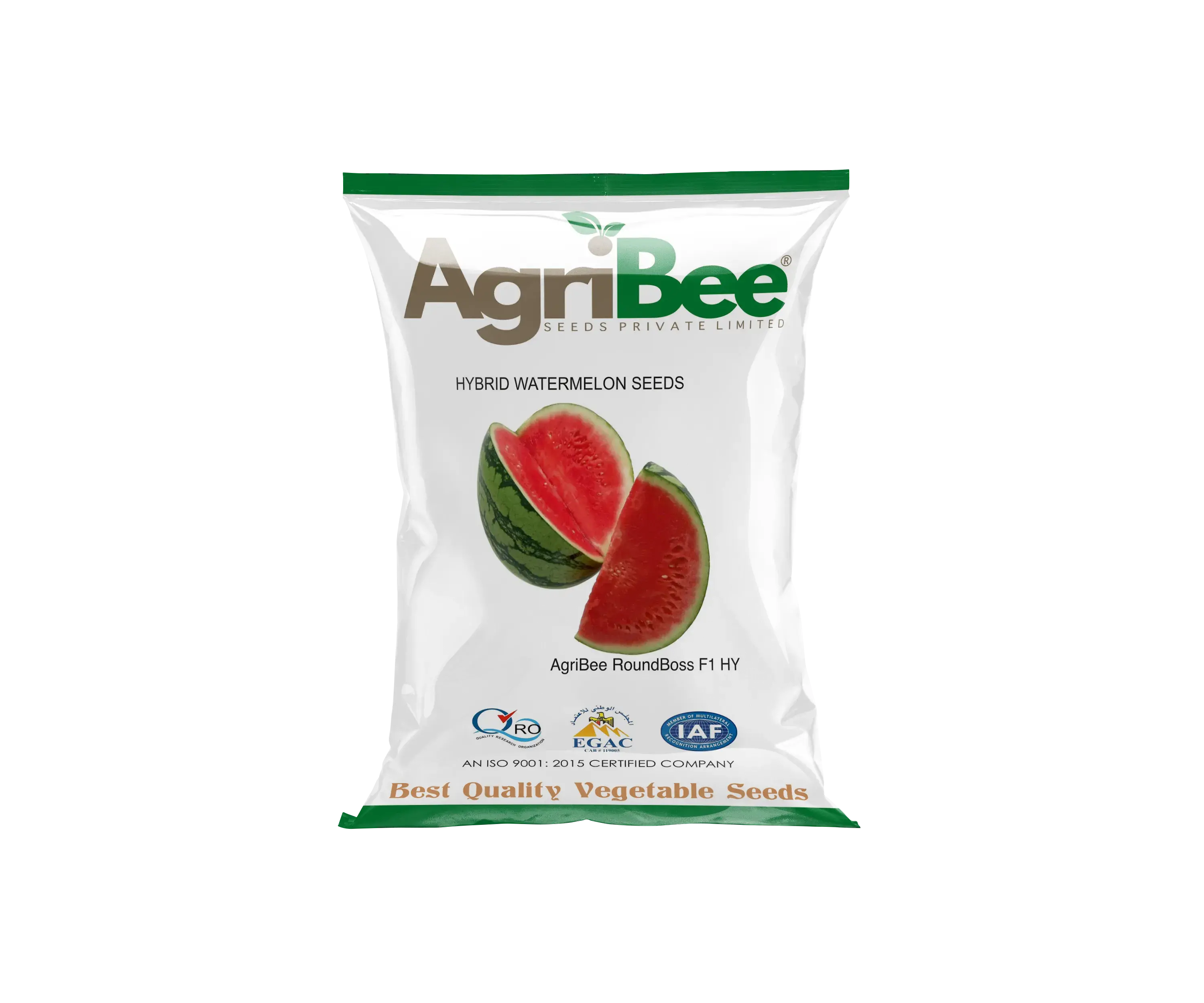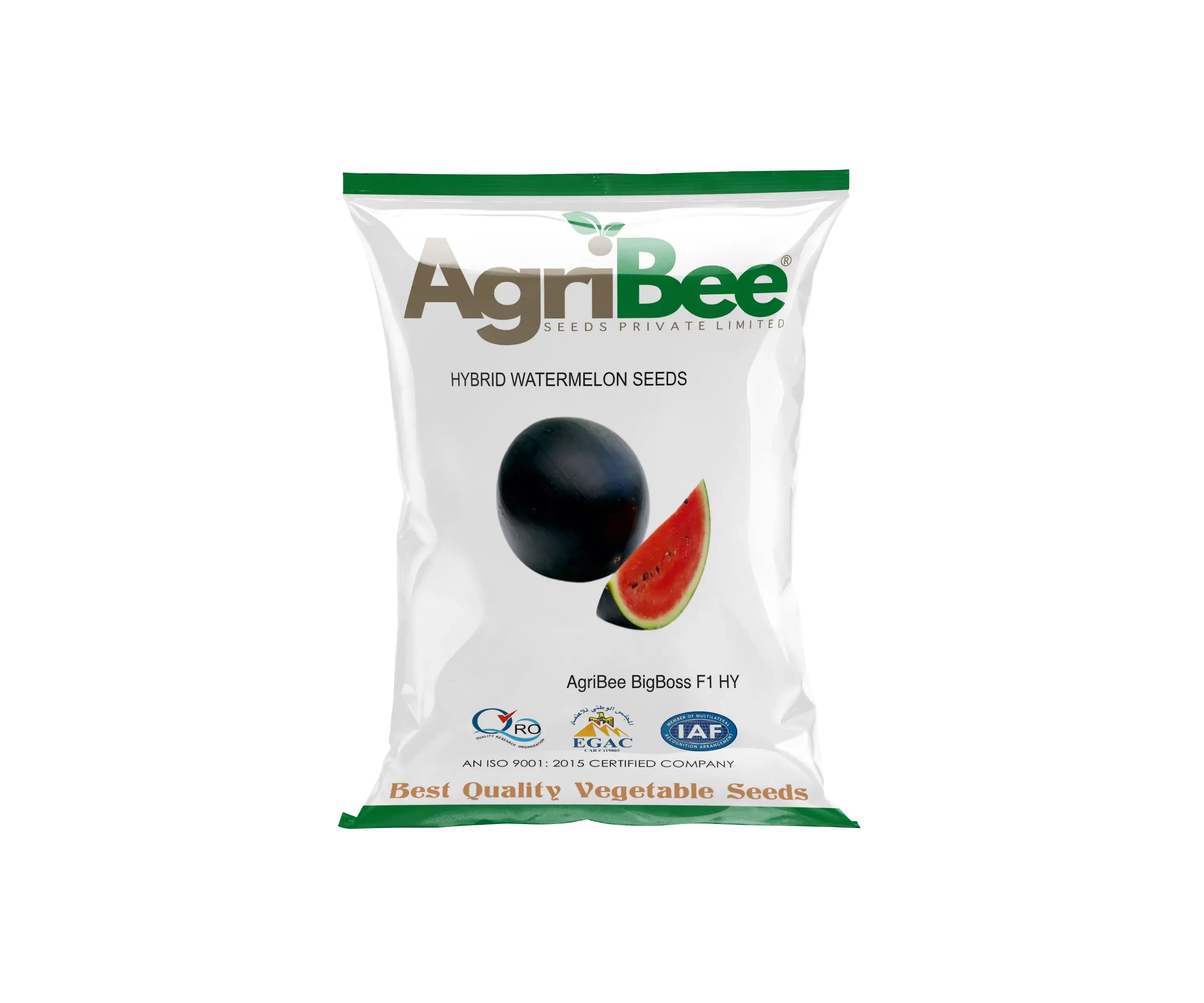

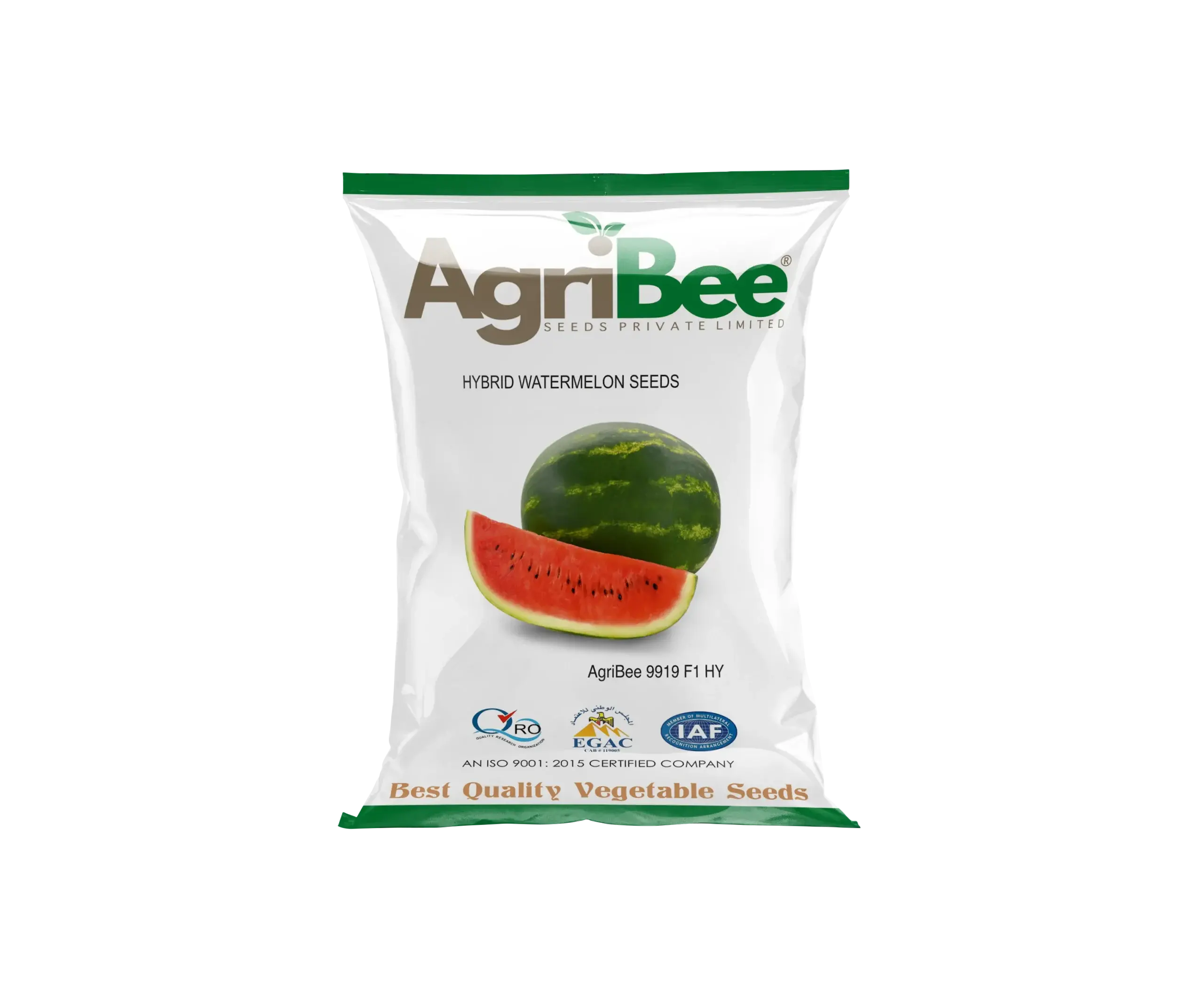
Description
ખેતી અને વાવણી માર્ગદર્શિકા — તરબૂચ Seeds AgriBee 9919 F1 HY
પાકના શ્રેષ્ઠ સંચાલન, રોગ પ્રતિકારક શક્તિ અને પ્રીમિયમ ગુણવત્તાવાળા ઉત્પાદન માટે સંપૂર્ણ વિગતવાર માર્ગદર્શિકા.
🌾 જમીનની તૈયારી અને ખેડ
જમીનની યોગ્ય તૈયારીથી એકસરખો ઉગાવો અને મૂળનો ઊંડો વિકાસ સુનિશ્ચિત થાય છે.
🌱 યોગ્ય જમીનનો પ્રકાર અને pH
Well-drained sandy loam or loamy soils with good organic matter; pH range 6.0–7.5. તરબૂચs are sensitive to waterlogging and heavy clay soils.
✨ મુખ્ય કૃષિ ફાયદા
Loose, well-aerated seedbed ensures rapid seed germination, strong taproot development, and excellent fruit anchorage without water stagnation.
- 1
Deep summer ploughing to 25–30 cm followed by 2–3 cross-harrowings for fine tilth and weed seed burial.
- 2
Field leveling and formation of drainage channels to prevent standing water in low-lying patches.
- 3
Incorporation of 8–10 t/ha well-decomposed FYM or vermicompost during last ploughing for improved soil structure and moisture retention.
- 4
Soil health conditioning — for acidic soils apply 250–300 kg/ha agricultural lime; for alkaline soils apply gypsum at 250 kg/ha before sowing.
🌱 વાવણીનો સમય અને પદ્ધતિ
Precise seed rate and spacing maximize light interception and canopy development.
| માપદંડ / પેરામીટર | ભલામણ / સૂચના | કૃષિ મહત્વ |
|---|---|---|
| વાવણી સમયમર્યાદા | April – mid-June for Summer/Kharif; October – November for Rabi in Maharashtra, Gujarat, Rajasthan, MP, and South India | Warm soil temperatures (25–30°C) are essential for rapid germination and establishment; frost-sensitive crop cannot tolerate cold stress |
| બિયારણનો દર (એકર દીઠ) | 250–300 g/acre (direct), 50–60 g/acre (transplant) | Ensures optimal plant population of 3,500–4,500 plants/acre for balanced canopy and uniform fruit development |
| હાર અને છોડ વચ્ચેનું અંતર | 120 cm x 45–60 cm (row-to-row x plant-to-plant) | Adequate canopy spread, inter-row aeration, ease of field operations, and reduced fruit rot from soil contact |
| Sowing / Transplanting Depth | 2–3 cm for direct sowing; 2 cm depth for nursery seedlings at 2–3 true leaf stage | Proper depth ensures uniform emergence; deeper sowing reduces germination rate and delays crop stand |
💧 પિયત અને પાણી વ્યવસ્થાપન
Adequate moisture regulation supports strong vegetative and reproductive growth.
☀️ પાણીની જરૂરિયાત અને પિયત પ્રોફાઇલ
તરબૂચ is moderately drought-tolerant once established but requires consistent soil moisture for optimal fruit expansion. Drip irrigation is highly recommended — supplying 3–5 mm per event every 2–3 days during active growth. The crop is sensitive to both water deficit during fruit set and waterlogging during maturity. Mulched drip systems can reduce water use by 30–40% while improving fruit uniformity.
🌦️ Soil ભેજ વ્યવસ્થાપન
In rainfed or semi-arid zones, schedule pre-sowing irrigation to ensure adequate seedbed moisture. During the monsoon, maintain raised beds with wide furrows for rapid drainage. Avoid overhead irrigation during fruit maturation as it increases crack risk and sugar dilution.
- ✓
First irrigation within 3–4 days after transplanting (or 5–6 DAS for direct sown crops) to ensure establishment and uniform stand.
- ✓
Light and frequent irrigations during vegetative phase (20–40 DAS) every 3–4 days to support vigorous vine growth and leaf area development.
- ✓
Critical: Increase irrigation frequency during flowering and fruit setting (40–55 DAS); moisture stress at this stage causes flower drop, poor fruit set, and misshapen fruit. Maintain steady moisture during fruit enlargement (55–75 DAS) for maximal sugar accumulation.
- ✓
Reduce irrigation 7–10 days before harvest to concentrate soluble solids (Brix), improve firmness, and enhance shelf life. Stop irrigation entirely 5 days prior to picking.
🧪 ખાતર અને પોષણ વ્યવસ્થાપન
Balanced crop nutrition supports robust plant structure and premium produce quality.
| પોષક તત્વ | ભલામણ કરેલ માત્રા (એકર દીઠ) | ઉપયોગ પદ્ધતિ અને સમય |
|---|---|---|
| નાઇટ્રોજન (N) | 25–30 kg/acre | Basal: 15 kg N; First top-dressing at 25 DAS: 8 kg N; Second top-dressing at 50 DAS (fruit development): 7 kg N |
| ફોસ્ફરસ (P2O5) | 40–50 kg/acre | 100% basal application as DAP (21:54:0) or SSP incorporated during last ploughing |
| પોટાશ (K2O) | 35–40 kg/acre | Basal: 20 kg K2O; Fruit development stage (50 DAS): 15–20 kg K2O via MOP for improved sweetness and firmness |
🌿 નિંદામણ નિયંત્રણ અને આંતરખેડ
Timely weed control ensures optimal nutrient and moisture availability for crop seedlings.
-
1
પ્રથમ નિંદામણ અને ગોડ: At 15–20 DAS, perform shallow hand weeding between rows to remove early weed flush without damaging shallow roots. This is the most critical weed-free period; competition at this stage can delay vine growth by 7–10 days.
-
2
બીજી વાવણી અને પાળા ચઢાવવા: At 30–35 DAS, conduct second weeding along with light earthing-up around the base of plants to support spreading vines and improve root zone aeration. Remove weak or excess lateral shoots to direct photoassimilates toward fruit development.
-
3
Mulch Maintenance & Fruit Positioning: If using LDPE mulch, inspect for tears and repair promptly. At fruit set stage (50–55 DAS), gently reposition developing fruits away from furrows and place a straw platform or foam pad beneath each fruit to prevent soil contact rot and ensure uniform coloring.
🛡️ જીવાત અને રોગ નિયંત્રણ
Proactive crop monitoring and integrated management ensure healthy crop development.
🐛 જીવાત નિયંત્રણ અને સંરક્ષણ
- Aphids (Aphis gossypii): Suck sap from young leaves and tender shoots; viruliferous vectors of તરબૂચ Mosaic Virus and Zucchini Yellow Mosaic Virus. Yellowing, curling, and stunting of seedlings. Control: Imidacloprid 17.8% SL at 0.3 ml/liter OR Thiamethoxam 25% WG at 0.2 g/liter sprayed thoroughly on undersides of leaves. Repeat at 10-day intervals. Release ladybird beetles (Cryptolaemus montrouzieri) at 25,000/acre as biological control.
- Fruit Borer / Stem Borer (Helicoverpa armigera): Larvae bore into fruits causing direct damage and secondary infections; also attack terminal buds. Irregular holes on fruit surface with frass accumulation. Control: Chlorantraniliprole 18.5% SC at 0.3 ml/liter OR Spinosad 45% SC at 0.3 ml/liter. Apply during evening hours targeting fresh borings. Install sex pheromone traps at 10/acre for monitoring and mass trapping.
- સફેદfly (Bemisia tabaci): Colonize leaf undersides causing yellowing, honeydew sooty mold, and transmitting Begomoviruses (Yellow Vein Mosaic). Sticky residue and leaf curl visible. Control: Cyantraniliprole 10.26% OD at 0.5 ml/liter OR Acetamiprid 20% SP at 0.3 g/liter. Deploy yellow sticky traps at 10–12/acre for adult monitoring. Reflective mulch at nursery stage repels whitefly population.
🔬 રોગ નિયંત્રણ અને ઉપચાર
- Powdery Mildew (Podosphaera xanthii): સફેદ powdery dusty growth on upper and lower leaf surfaces; progresses to necrotic patches causing premature leaf senescence. Favorable under warm dry conditions with high humidity. Control: Myclobutanil 8% + Wet sulfur 64% WP at 2.0 g/liter OR Propiconazole 25% EC at 0.5 ml/liter. First spray at 30 DAS and repeat at 15-day intervals. Avoid overhead irrigation to reduce leaf wetness.
- Downy Mildew (Pseudoperonospora cubensis): Angular yellow lesions on upper leaf surface bounded by veins; purplish-gray sporulation on underside in humid conditions. Defoliation leads to sunscald on fruits. Control: Metalaxyl 35% WP at 2.5 g/liter OR Mancozeb 75% WP at 2.5 g/liter as protective spray. Alternate with systemic fungicide every 12–15 days. Crop residue destruction and proper drainage are critical preventive measures.
- Fusarium Wilt (Fusarium oxysporum f.sp. nivele): Sudden wilting of individual vines or whole plants; brown vascular discoloration visible on stem cross-section; aerial roots may form at nodes. Seedling damping-off also occurs. Control: Seed treatment with Trichoderma viride at 10 g/kg seed or soil drench with Trichoderma@5 g/liter at transplanting. Preventive fungicide drench with Metalaxyl 35% WP + Mancozeb 64% WP at 3 g/liter at 30 DAS. Use raised beds with raised pH (7.0–7.5) and avoid waterlogging to suppress pathogen.
✂️ કાપણી અને ગુણવત્તા માર્ગદર્શિકા
Harvesting at peak maturity ensures maximum commercial grade and long keeping quality.
⏱️ કાપણીનો સમય અને આયોજન
First harvest at 75–80 days after sowing. Harvest when fruits attain full size, uniform dark green striped rind, and tendril nearest the fruit peduncle turns completely dry and brown. A single picking window of 5–7 days is typical; assess maturity visually as fruits ripen unevenly across the field.
⭐ ઉત્પાદનની ગુણવત્તા અને લક્ષણો
Deep red, crisp, and very sweet flesh with high TSS (10–13° Brix). Oblong to round fruit shape with dark green striped rind, firm texture, and thick rind suitable for transport. Uniform fruit size within the 4–8 kg range. Excellent flavor profile and attractive external appearance drive market preference.
| ગુણવત્તા માપદંડ | કૃષિ ધોરણ | ખેડૂત અને બજાર ફાયદો |
|---|---|---|
| પ્રથમ વીણી / કાપણી Stage | 75–80 વાવણી પછીના દિવસો | Ensures peak sugar accumulation, firm flesh, and early market arrival commanding premium prices |
| પરિપક્વતાના લક્ષણો | Tendril nearest fruit turns brown and dry; ground spot changes from white to cream-yellow; rind loses gloss and becomes slightly dull; fruit produces a hollow sound when tapped | Prevents harvesting under-ripe fruit (low sweetness) or over-mature fruit (soft, fibrous flesh) |
| સંગ્રહ ક્ષમતા અને ગુણવત્તા | 7–10 days under ambient conditions (25–30°C); 14–18 days under cool storage (10–12°C with 85–90% RH) | Thick rind and firm flesh provide natural protection enabling long-distance transportation to distant mandis with minimal spoilage |
| બજાર માંગ અને યોગ્યતા | Premium table fruit for fresh market, retail supermarkets, and export-grade trading; deep red crisp flesh preferred by urban consumers and hospitality sector | Superior visual appeal and taste profile attract higher realization per kg compared to local landrace varieties |
⭐ જાતની વિશેષતાઓ — તરબૂચ Seeds AgriBee 9919 F1 HY
Distinguishing characteristics that make this variety a top choice for Indian growers.
🌿 જાતની મુખ્ય વિશેષતાઓ
AgriBee 9919 F1 HY is a high-performing hybrid combining vigorous vine growth, uniform fruit set, and outstanding early maturity at 75–80 days from sowing, making it ideal for multiple cropping systems across India.
🌿 ઉત્પાદનની ગુણવત્તા અને દેખાવ
Deep red, crisp, and exceptionally sweet flesh with TSS of 10–13° Brix. Oblong to round fruit shape with attractive dark green striped rind, firm texture, and uniform 4–8 kg fruit weight — a consumer favorite for table use.
🌿 વાતાવરણ અને રોગ પ્રતિકારક ક્ષમતા
Demonstrates field-level tolerance to major fungal diseases including Fusarium wilt, Powdery Mildew, and Downy Mildew, ensuring sustained foliage health and consistent fruit set even under moderate pathogen pressure.
🌿 વિકાસ અને છોડની જોમ
Robust trailing vine architecture with strong primary and secondary branching. Healthy green foliage maintained throughout the crop cycle ensures efficient photosynthesis and steady carbohydrate supply to developing fruits.
🌿 પાક સમયગાળો અને પાકવાનો સમય
Earliest maturity window of 75–80 days enables timely harvest, quick crop turnaround, and flexibility for subsequent crop planting — a key advantage for farmers practicing intensive vegetable rotations in Gujarat, MP, Rajasthan, and South India.
🌿 બજાર અને ખેડૂત પસંદગી
Farmers value AgriBee 9919 F1 HY for its uniform fruit sizing, high Brix sweetness, attractive rind striping, and sturdy vines that withstand wind and rainfall events. Traders prefer the thick rind and extended shelf life, ensuring better realizations at the mandi.