
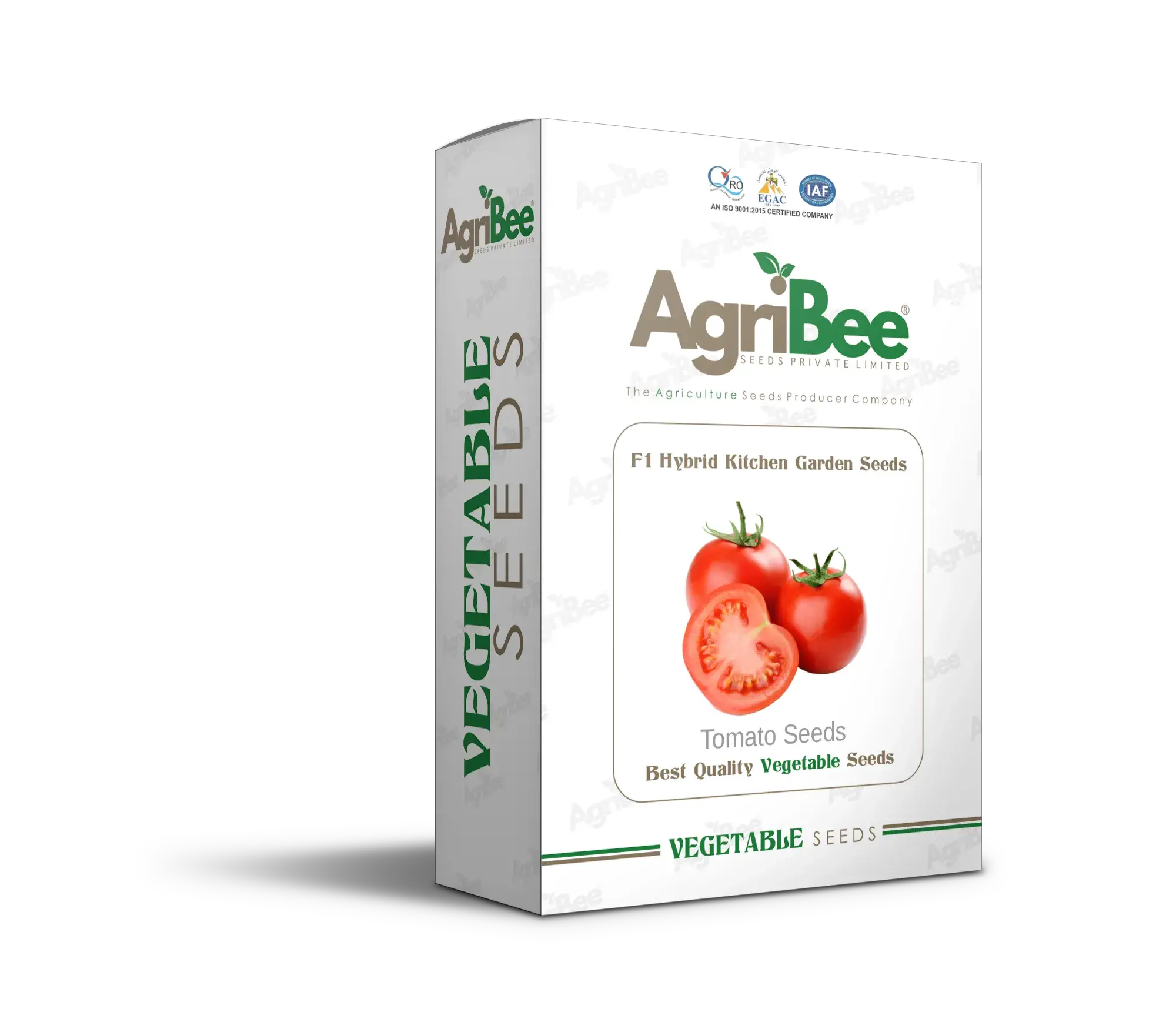
Description
ખેતી અને વાવણી માર્ગદર્શિકા — F1 હાઇબ્રિડ ટામેટાં
પાકના શ્રેષ્ઠ સંચાલન, રોગ પ્રતિકારક શક્તિ અને પ્રીમિયમ ગુણવત્તાવાળા ઉત્પાદન માટે સંપૂર્ણ વિગતવાર માર્ગદર્શિકા.
🌾 જમીનની તૈયારી અને ખેડ
જમીનની યોગ્ય તૈયારીથી એકસરખો ઉગાવો અને મૂળનો ઊંડો વિકાસ સુનિશ્ચિત થાય છે.
🌱 યોગ્ય જમીનનો પ્રકાર અને pH
Well-drained loamy or sandy-loam soils with good organic matter. Soil pH range: 6.0 to 6.8. Avoid heavy clay or waterlogged fields due to susceptibility to root rot.
✨ મુખ્ય કૃષિ ફાયદા
Deep, fertile, loose soil ensures rapid root penetration, strong anchorage, and efficient nutrient uptake for vigorous foliage and uniform fruit set.
- 1
Deep summer ploughing followed by 2–3 cross-harrowings to achieve fine tilth and break pest cycles.
- 2
Field leveling with a leveler to ensure uniform water distribution and prevent waterlogging.
- 3
Incorporation of 8–10 t/ha of well-decomposed FYM or compost into the seedbed before transplanting.
- 4
Application of gypsum (100 kg/acre) in acidic soils to correct pH and improve soil structure.
🌱 વાવણીનો સમય અને પદ્ધતિ
Precise seed rate and spacing maximize light interception and canopy development.
| માપદંડ / પેરામીટર | ભલામણ / સૂચના | કૃષિ મહત્વ |
|---|---|---|
| વાવણી સમયમર્યાદા | June–July (Kharif), Oct–Nov (Rabi), Feb–Mar (Summer) | Aligns crop cycle with favorable temperatures, minimizing heat or cold stress during flowering and fruit set. |
| બિયારણનો દર (એકર દીઠ) | 250–300 g per Acre (Transplanted) | Ensures adequate seedling population for optimal plant spacing and uniform canopy development. |
| હાર અને છોડ વચ્ચેનું અંતર | 60 cm (Row-to-row) × 45 cm (Plant-to-plant) | Provides adequate inter-row aeration, reduces humidity-related diseases, and facilitates field operations. |
| Sowing / Transplanting Depth | Seed sown at 0.5–1.0 cm depth; transplants planted at same depth as nursery. | Promotes uniform germination and prevents stem damping-off while establishing a robust root system. |
💧 પિયત અને પાણી વ્યવસ્થાપન
Adequate moisture regulation supports strong vegetative and reproductive growth.
☀️ પાણીની જરૂરિયાત અને પિયત પ્રોફાઇલ
ટામેટાં is moderately sensitive to water stress, especially during flowering and fruit development. Drip irrigation is highly recommended for uniform moisture, nutrient fertigation, and improved fruit quality. Maintain soil moisture at 70–80% field capacity throughout the crop cycle.
🌦️ Soil ભેજ વ્યવસ્થાપન
Under rainfed conditions, apply mulch (straw or plastic) immediately after transplanting to conserve soil moisture and reduce evaporation. Avoid waterlogging after heavy rains by ensuring proper field drainage channels.
- ✓
First irrigation immediately after transplanting to reduce transplant shock.
- ✓
Light irrigations every 5–7 days during vegetative phase to support leaf expansion.
- ✓
Critical irrigation at flowering and fruit-setting stages; deficit here causes blossom-end drop and misshapen fruits.
- ✓
Reduce irrigation frequency 7–10 days before final harvest to concentrate sugars and improve firmness.
🧪 ખાતર અને પોષણ વ્યવસ્થાપન
Balanced crop nutrition supports robust plant structure and premium produce quality.
| પોષક તત્વ | ભલામણ કરેલ માત્રા (એકર દીઠ) | ઉપયોગ પદ્ધતિ અને સમય |
|---|---|---|
| નાઇટ્રોજન (N) | 80–100 kg/acre | 50% basal at transplanting; remaining 50% split two times at 30 and 45 DAT. |
| ફોસ્ફરસ (P2O5) | 50–60 kg/acre | 100% basal application during final land preparation mixed with FYM. |
| પોટાશ (K2O) | 40–50 kg/acre | Split application: 50% basal and 50% at first flowering for fruit quality and stress tolerance. |
🌿 નિંદામણ નિયંત્રણ અને આંતરખેડ
Timely weed control ensures optimal nutrient and moisture availability for crop seedlings.
-
1
પ્રથમ નિંદામણ અને ગોડ: Carry out at 15 DAS to remove early weeds and loosen soil surface for better root aeration.
-
2
બીજી વાવણી અને પાળા ચઢાવવા: Perform at 30 DAS; earthen up around the stem base to support plant and encourage adventitious roots.
-
3
વિશેષ આંતરખેડ કામગીરી: Apply organic mulch (paddy straw) 5–7 cm thickness between rows to conserve moisture and suppress weeds. Regularly remove suckers below the first flower cluster to direct energy toward fruit development.
🛡️ જીવાત અને રોગ નિયંત્રણ
Proactive crop monitoring and integrated management ensure healthy crop development.
🐛 જીવાત નિયંત્રણ અને સંરક્ષણ
- Helicoverpa armigera (Fruit Borer): Symptoms—boring holes in fruits with frass excretions. Control: Spray Carbendazim 50 WP @ 0.1% or use pheromone traps (10/acre) for monitoring. Apply Bacillus thuringiensis (Bt) @ 250 g/acre at early larval stage.
- Bemisia tabaci (સફેદfly): Symptoms—yellowing, curling leaves, sooty mold, virus transmission. Control: Yellow sticky traps (40/acre) + spray Imidacloprid 17.8 SL @ 0.3 ml/liter or Neem-based formulations @ 3 ml/liter.
- Aphis gossypii (Cotton Aphid): Symptoms—curling leaves, honeydew secretion, stunted growth. Control: Spray Thiamethoxam 25 WG @ 0.1 g/liter or release predatory ladybird beetles.
🔬 રોગ નિયંત્રણ અને ઉપચાર
- ટામેટાં Leaf Curl Virus (ToLCV): Symptoms—upward leaf curling, yellowing, reduced fruit size. Control: The variety shows tolerance. Use virus-free seed, install insect-proof nets (40 mesh) in nursery, and control whitefly vectors promptly with neonictinoid sprays.
- Early Blight (Alternaria solani): Symptoms—concentric ring spots on lower leaves, defoliation. Control: Spray Mancozeb 75 WP @ 0.25% or Copper oxychloride @ 0.3% at 15-day intervals starting at flowering.
- Bacterial Wilt (Ralstonia solanacearum): Symptoms—sudden wilting of one side of plant, vascular browning. Control: Soil drench with Streptocycline 50 ppm or Trichoderma viride @ 10 kg/acre mixed with FYM at planting. Remove and burn infected plants.
✂️ કાપણી અને ગુણવત્તા માર્ગદર્શિકા
Harvesting at peak maturity ensures maximum commercial grade and long keeping quality.
⏱️ કાપણીનો સમય અને આયોજન
First harvest begins at 65–70 DAT. Subsequent pickings are done at 3–4 day intervals throughout the season.
⭐ ઉત્પાદનની ગુણવત્તા અને લક્ષણો
Fruits exhibit deep red color, flat-round to oval shape, smooth skin, firm texture, balanced sugar-acid ratio, and appealing appearance. Seeds are few with minimal locular cavities.
| ગુણવત્તા માપદંડ | કૃષિ ધોરણ | ખેડૂત અને બજાર ફાયદો |
|---|---|---|
| પ્રથમ વીણી / કાપણી Stage | 65–70 ફેરરોપણી પછીના દિવસો | Enables early market entry and better price realization compared to late varieties. |
| પરિપક્વતાના લક્ષણો | Full red color development, firm but yielding to gentle pressure, average size reached. | Prevents over-ripening on vine, maintains fruit firmness, and extends handling life. |
| સંગ્રહ ક્ષમતા અને ગુણવત્તા | 7–10 days under ambient conditions; up to 14 days in cool storage (10–12°C). | Superior keeping quality supports long-distance transport and reduces post-harvest losses. |
| બજાર માંગ અને યોગ્યતા | Fresh table market, local mandis, urban retail chains, and kitchen garden consumers. | Uniform fruit size and vibrant color attract premium rates from traders and end consumers. |
⭐ જાતની વિશેષતાઓ — F1 હાઇબ્રિડ ટામેટાં
Distinguishing characteristics that make this variety a top choice for Indian growers.
🌿 જાતની મુખ્ય વિશેષતાઓ
F1 hybrid engineered for high field vigor, uniform plant architecture, and strong tolerance to ટામેટાં Leaf Curl Virus (ToLCV).
🌿 ઉત્પાદનની ગુણવત્તા અને દેખાવ
Produces deep red, flat-round to oval fruits weighing 80–100 gm with thick pericarp, firm flesh, and appealing glossy finish.
🌿 વાતાવરણ અને રોગ પ્રતિકારક ક્ષમતા
Demonstrates reliable tolerance to ToLCV and moderate resistance to bacterial wilt and early blight under managed conditions.
🌿 વિકાસ અને છોડની જોમ
Determinate bushy type with sturdy stems, vigorous foliage coverage, and good branching capacity for sustained fruit load.
🌿 પાક સમયગાળો અને પાકવાનો સમય
Early maturity profile with first picking at 65–70 DAT, allowing flexible crop rotation and multiple harvesting cycles.
🌿 બજાર અને ખેડૂત પસંદગી
Preferred by kitchen garden growers and commercial farmers for its consistent fruit set, attractive appearance, disease resilience, and excellent keeping quality.