
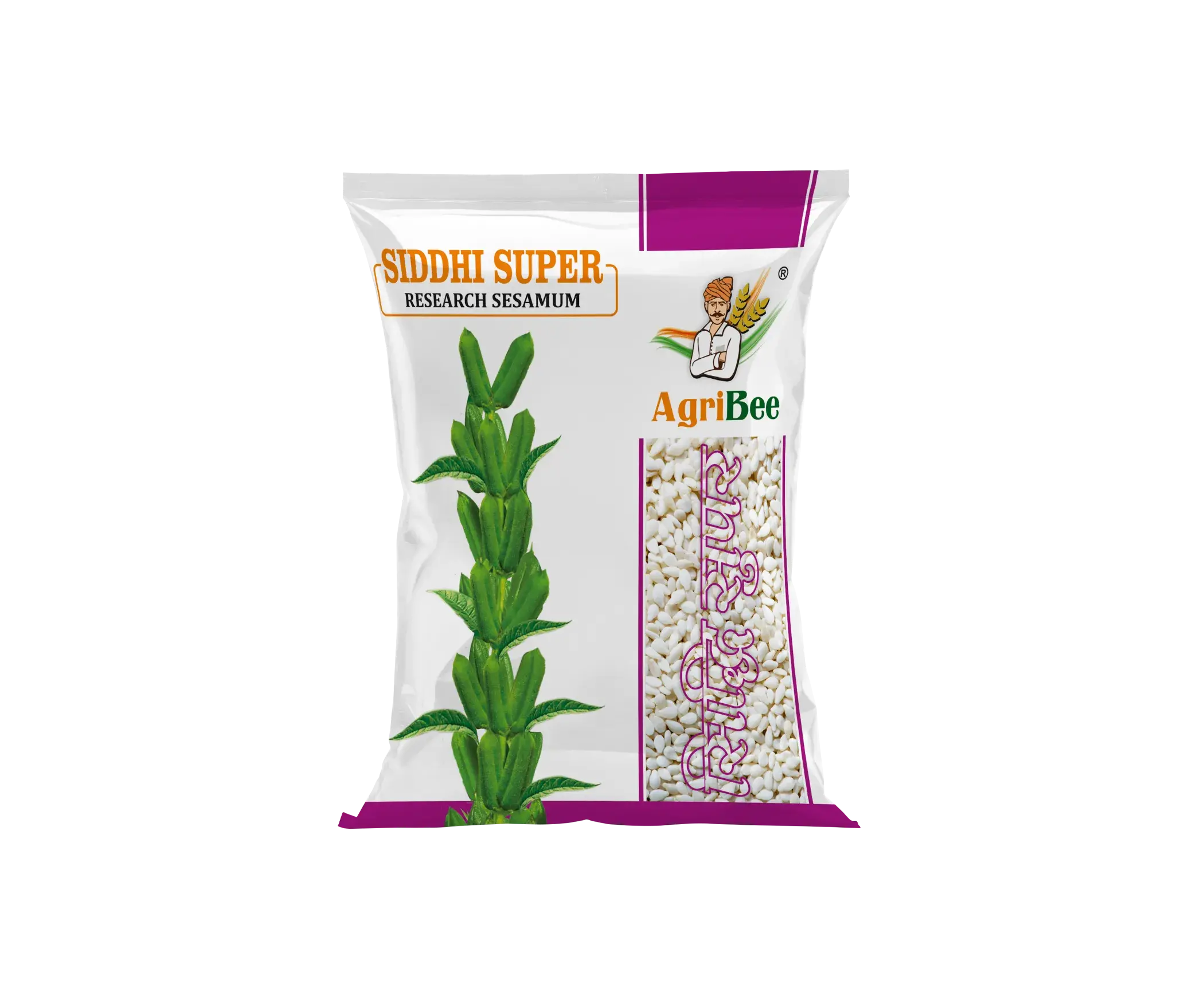
Description
ખેતી અને વાવણી માર્ગદર્શિકા — તલ Siddhi Super
પાકના શ્રેષ્ઠ સંચાલન, રોગ પ્રતિકારક શક્તિ અને પ્રીમિયમ ગુણવત્તાવાળા ઉત્પાદન માટે સંપૂર્ણ વિગતવાર માર્ગદર્શિકા.
🌾 જમીનની તૈયારી અને ખેડ
જમીનની યોગ્ય તૈયારીથી એકસરખો ઉગાવો અને મૂળનો ઊંડો વિકાસ સુનિશ્ચિત થાય છે.
🌱 યોગ્ય જમીનનો પ્રકાર અને pH
Well-drained loamy to sandy-loam soils with pH 6.0–7.5. તલ thrives in light, warm soils that do not waterlog. Heavy clays and water-stagnant fields must be avoided.
✨ મુખ્ય કૃષિ ફાયદા
Fine, well-tilled seedbed ensures rapid germination and strong early root development, critical for sesame's shallow seedling phase.
- 1
Deep summer ploughing followed by 2–3 cross-harrowings to produce a fine, crumbly tilth.
- 2
Field leveling with ridges and furrows or flat sowing beds depending on irrigation availability.
- 3
Incorporation of 5–8 tonnes/ha well-decomposed FYM or farmyard compost during last ploughing for soil structure improvement.
- 4
Soil health conditioning: if pH is below 5.5, apply agricultural lime at 250–500 kg/ha based on soil test; for saline-affected soils, use gypsum at 500–750 kg/ha.
🌱 વાવણીનો સમય અને પદ્ધતિ
Precise seed rate and spacing maximize light interception and canopy development.
| માપદંડ / પેરામીટર | ભલામણ / સૂચના | કૃષિ મહત્વ |
|---|---|---|
| વાવણી સમયમર્યાદા | June–July (Kharif); October–November (Rabi in Maharashtra, Gujarat, and South India) | Ensures optimal temperature (25–35°C) for germination and avoids extreme cold during capsule maturation |
| બિયારણનો દર (એકર દીઠ) | 3–4 kg/ha for line sowing; slightly higher (4–5 kg/ha) for broadcast | Maintains ideal plant population for canopy cover without excessive competition |
| હાર અને છોડ વચ્ચેનું અંતર | 45 cm row-to-row × 10–15 cm plant-to-plant within row | Provides adequate canopy spread, improves air circulation, and reduces humidity-related disease pressure |
| વાવણીની ઊંડાઈ | 1.0–1.5 cm (never deeper than 2 cm) | Small seeds require shallow sowing for uniform and rapid emergence |
💧 પિયત અને પાણી વ્યવસ્થાપન
Adequate moisture regulation supports strong vegetative and reproductive growth.
☀️ પાણીની જરૂરિયાત અને પિયત પ્રોફાઇલ
તલ is inherently drought-tolerant due to its narrow leaves and deep taproot system. However, consistent moisture during flowering and pod-filling significantly enhances oil content and overall produce quality. Under drip irrigation, apply 25–30 mm per event at 7–10 day intervals during active growth. Flood irrigation should be light and frequent rather than heavy and infrequent.
🌦️ Soil ભેજ વ્યવસ્થાપન
In rainfed areas, synchronize sowing with pre-monsoon showers or rely on residual soil moisture. Install broad beds and furrows for efficient runoff capture. Mulching with straw at 2–3 tonnes/ha conserves soil moisture and suppresses weeds. Avoid waterlogging at all costs—even brief saturation can cause rapid seedling collapse.
- ✓
First irrigation at 15–20 DAS (Days After Sowing) to support early establishment; crucial in light soils.
- ✓
Vegetative phase: irrigate at 25–30 day intervals depending on soil moisture; maintain even moisture without saturation.
- ✓
Critical stage—at flowering and early pod initiation (45–60 DAS)—irrigation must be timely; moisture stress here reduces capsule set and oil biosynthesis.
- ✓
Withhold irrigation 10–12 days before harvest to allow capsule desiccation and reduce shattering losses.
🧪 ખાતર અને પોષણ વ્યવસ્થાપન
Balanced crop nutrition supports robust plant structure and premium produce quality.
| પોષક તત્વ | ભલામણ કરેલ માત્રા (એકર દીઠ) | ઉપયોગ પદ્ધતિ અને સમય |
|---|---|---|
| નાઇટ્રોજન (N) | 40–50 kg/ha (approx. 16–20 kg N/acre) | 50% basal at sowing + 50% top-dressing at 30–35 DAS |
| ફોસ્ફરસ (P2O5) | 30–40 kg/ha (approx. 12–16 kg P2O5/acre) | 100% basal as DAP (18:46:0) or SSP at sowing; placement 5 cm below and beside seed for best uptake |
| પોટાશ (K2O) | 20–25 kg/ha (approx. 8–10 kg K2O/acre) | 100% basal as MOP (60% K2O); supports stalk strength and disease resilience |
🌿 નિંદામણ નિયંત્રણ અને આંતરખેડ
Timely weed control ensures optimal nutrient and moisture availability for crop seedlings.
-
1
પ્રથમ નિંદામણ અને ગોડ: Carry out at 15–20 DAS using a hand hoe or conformator. તલ has a slow early growth phase, making it highly competitive against weeds. A weed-free period up to 30 DAS is essential for uniform stand and canopy development.
-
2
Second Weeding & Shallow Hoeing: Conduct at 30–35 DAS. Keep hoeing very shallow (2–3 cm depth) as sesame has a shallow feeder-root system that is easily damaged by deep cultivation. This also improves oxygen availability near the root zone.
-
3
Mulching and Intra-row Hoeing: Straw mulch at 2–3 tonnes/ha between rows conserves moisture, regulates soil temperature, and suppresses late-season weed flush. For dense.canopy management, remove excess basal suckers if present to direct carbohydrates toward main stem and primary branches.
🛡️ જીવાત અને રોગ નિયંત્રણ
Proactive crop monitoring and integrated management ensure healthy crop development.
🐛 જીવાત નિયંત્રણ અને સંરક્ષણ
- Jassids (Amrasca biguttula biguttula): Small yellowish-green insects causing leaf curling and silvering. Monitor with yellow sticky traps. Spray imidacloprid @ 0.3 ml/L or thiamethoxam @ 0.2 ml/L as foliar spray. Biological control: conserve Trichogramma releases and avoid broad-spectrum insecticides during peak jassid incidence.
- Smoke blight / Semitretia inferens caterpillars: Bore into stems and terminals causing wilting and shoot death. Remove and destroy affected shoots manually. Spray chlorantraniliprole @ 0.3 ml/L or bte (Bacillus thuringiensis) @ 2–3 g/L on young larvae. Maintain field hygiene by destroying crop residues post-harvest.
- Shoot and fruit borer (Etinza posticalis): Larvae mine into capsules and stems causing drying and premature capsule drop. Apply pheromone traps @ 10 traps/ha for monitoring and mass trapping. Spray spinosad @ 0.2 ml/L or carbaryl @ 1 g/L at first sign of infestation. Practice crop rotation with non-host crops to reduce carry-over populations.
🔬 રોગ નિયંત્રણ અને ઉપચાર
- Foot rot / Collar rot (Macrophomina phaseolina): Black sclerotia formation at stem base, wilting, and plant death. Seed treatment with carbendazim @ 3 g/kg or thiram @ 4 g/kg prevents initial infection. Rotate with non-host cereals for 2–3 seasons. Avoid waterlogging and ensure raised bed sowing in heavy soils.
- Lecanium scale / સફેદfly (Aleurodicus spp.): Sucking pests covering undersides of leaves with white waxy coating, causing honeydew sooty mold. Spray neem-based formulations (neem oil @ 3 ml/L) or diafenthiuron @ 1 g/L. Encourage natural predators like ladybird beetles and lacewings.
- Powdery mildew (Oidium sesami): સફેદ powdery growth on leaves and capsules reducing photosynthetic efficiency and oil quality. Apply sulfur dust @ 25 kg/ha or wettable sulfur @ 2 g/L at first symptom appearance. Repeat at 10–12 day intervals. Ensure adequate row spacing for canopy airflow and reduced humidity.
✂️ કાપણી અને ગુણવત્તા માર્ગદર્શિકા
Harvesting at peak maturity ensures maximum commercial grade and long keeping quality.
⏱️ કાપણીનો સમય અને આયોજન
Capsules mature sequentially from bottom to top. Begin partial harvesting when 60–70% of capsules on lower branches turn brown and begin to split. Subsequent pickings at 7–10 day intervals. Final harvest at 80–85 DAS when majority of capsules are mature. Avoid waiting for 100% capsule opening as sesame shatters readily.
⭐ ઉત્પાદનની ગુણવત્તા અને લક્ષણો
સફેદ-colored, medium-sized seeds with high oil content, bright luster, and low moisture. Capsules are erect to semi-erect, reducing soil contact contamination. The variety shows excellent seed filling uniformity and minimal empty capsules.
| ગુણવત્તા માપદંડ | કૃષિ ધોરણ | ખેડૂત અને બજાર ફાયદો |
|---|---|---|
| કાપણીનો તબક્કો | 80–85 વાવણી પછીના દિવસો (partial picking begins at ~75 DAS) | Ensures peak oil biosynthesis and early market availability before full-season price dips |
| પરિપક્વતાના લક્ષણો | Lower capsules turn pale brown, seeds inside become hard and glossy white; a gentle shake causes slight capsule opening | Prevents over-maturity, excessive shattering, and darkening of seed coat |
| સંગ્રહ ક્ષમતા અને ગુણવત્તા | 4–6 months under ambient storage; 6–8 months under cool, dry conditions with moisture content below 5% | Facilitates long-distance transport and extended sales window without rancidity development |
| બજાર માંગ અને યોગ્યતા | Premium edible oil extraction, whole seed trade, tahini/food processing, and export markets requiring clean white sesame | Consistent white color, high oil percentage, and low foreign matter attract premium rates from processors and traders |
⭐ જાતની વિશેષતાઓ — તલ Siddhi Super
Distinguishing characteristics that make this variety a top choice for Indian growers.
🌿 જાતની મુખ્ય વિશેષતાઓ
તલ Siddhi Super is bred for robust performance across diverse Indian agro-climatic zones with superior oil seed quality and reliable field uniformity.
🌿 ઉત્પાદનની ગુણવત્તા અને દેખાવ
Produces clean white seeds with consistent size, excellent oil brightness, and minimal chaff attachment, making it ideal for both domestic and export-grade markets.
🌿 વાતાવરણ અને રોગ પ્રતિકારક ક્ષમતા
Demonstrates good tolerance to foot rot, powdery mildew, and moderate resistance to jassid and shoot borer pressures under normal field conditions.
🌿 વિકાસ અને છોડની જોમ
Medium-tall stature (95–105 cm) with strong main stem, well-spaced branching, and semi-erect capsule orientation that minimizes soil splash and disease incursion.
🌿 પાક સમયગાળો અને પાકવાનો સમય
Reaches 50% flowering in 45–50 days and completes maturity in 80–85 days, enabling flexible rotation with winter crops and multiple cropping systems.
🌿 બજાર અને ખેડૂત પસંદગી
Favorable traits—uniform maturity, white seed color, and strong plant architecture—make this AgriBee variety a preferred choice among progressive farmers, seed dealers, and oilseed processors across Gujarat, Maharashtra, Rajasthan, and peninsular India.