
Description
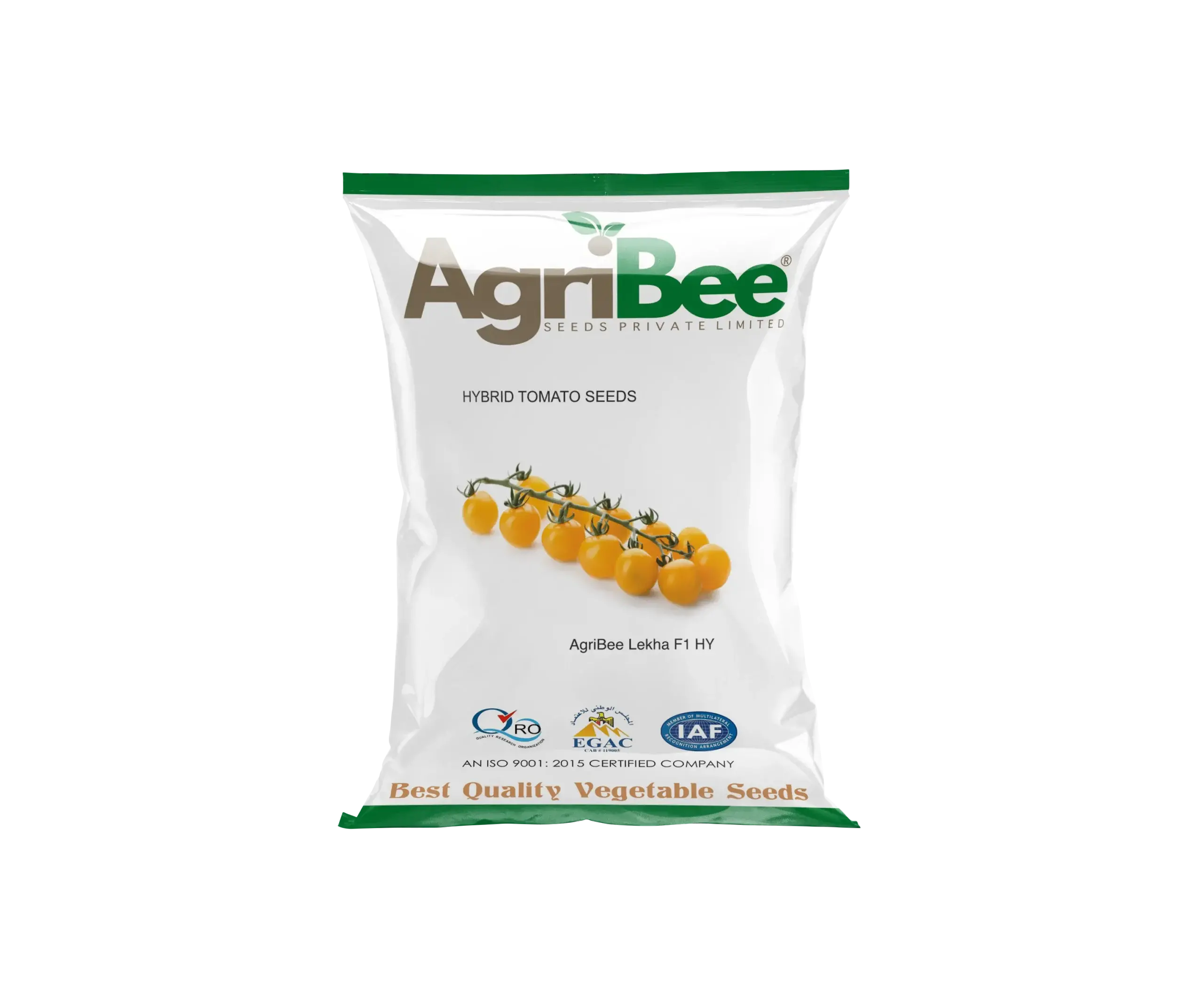
खेती एवं बुवाई निर्देशिका — Tomato Seeds AgriBee Lekha F1 HY
फसल के सर्वोत्तम प्रबंधन, रोग प्रतिरोधकता और प्रीमियम उत्पादन के लिए संपूर्ण चरणबद्ध कृषि निर्देशिका।
🌾 भूमि की तैयारी एवं खेत सुधार
खेत की समुचित जुताई एवं तैयारी से एकसमान अंकुरण और मजबूत जड़ों का विकास होता है।
🌱 आदर्श मिट्टी का प्रकार एवं pH
Well-drained loamy or sandy-loam soils with pH 6.0–7.0 are ideal for Tomato cultivation.
✨ प्रमुख कृषि लाभ
Loose, fertile soil ensures rapid root penetration, better nutrient uptake, and reduces waterlogging-related diseases.
- 1
Deep summer ploughing followed by 2–3 cross-harrowings for fine tilth.
- 2
Field leveling and drainage preparation to avoid water stagnation.
- 3
Organic basal manuring with 8–10 tons/acre of well-decomposed FYM or compost incorporated before sowing.
- 4
Soil health conditioning — maintain pH between 6.0 and 7.0; amend with gypsum or lime if required.
🌱 बुवाई का समय एवं विधि
सटीक बीज दर और सही दूरी से पौधों को पर्याप्त सूर्य का प्रकाश और संतुलित विकास मिलता है।
| मानक / पैरामीटर | अनुशंसा / निर्देश | कृषि महत्व |
|---|---|---|
| बुवाई समय सीमा | June–July for Kharif / October–November for Rabi season | Ensures favorable temperature for germination and avoids extreme heat or frost stress during flowering |
| बीज दर (प्रति एकड़) | 250–300 g per acre for raising healthy nursery plants | Maintains optimal plant population with minimal wastage |
| कतार एवं पौधे का अंतर | 60 cm x 45 cm (Row-to-row x Plant-to-plant) | Aids canopy spread, sunlight interception, and air circulation for disease prevention |
| Sowing / Transplanting Depth | Sow seeds at 0.5–1.0 cm depth; transplant seedlings at 5–7 leaf stage | Promotes uniform germination and reduces damping-off incidence |
💧 सिंचाई एवं जल प्रबंधन
उचित नमी प्रबंधन से पौधे की वानस्पतिक एवं फलने-फूलने की अवस्था में जोरदार विकास होता है।
☀️ जल आवश्यकता एवं सिंचाई प्रोफाइल
Tomato requires consistent moisture but is moderately drought tolerant once established. Drip irrigation is highly recommended for efficient water use, maintaining soil moisture at field capacity without waterlogging. Apply 3–4 mm water per session, 2–3 times a week depending on soil texture and weather conditions.
🌦️ Soil नमी प्रबंधन
Avoid moisture stress during flowering and fruiting stages. Mulching with straw or polyethylene film helps retain soil moisture and suppress weeds. In rainfed conditions, ensure early and timely irrigations during critical growth phases.
- ✓
First irrigation immediately after transplanting to reduce wilt stress and promote root establishment.
- ✓
Vegetative phase: light irrigation every 5–7 days to support foliage development.
- ✓
Critical stages — flowering, fruit set, and fruit expansion require consistent moisture; drought stress causes blossom end rot and cracked fruits.
- ✓
Withhold irrigation 5–7 days before final harvest to improve fruit firmness and shelf life.
🧪 उर्वरक एवं पोषण प्रबंधन
संतुलित पोषण से मजबूत पौधा संरचना और उच्च गुणवत्ता वाली उपज प्राप्त होती है।
| पोषक तत्व | अनुशंसित मात्रा (प्रति एकड़) | प्रयोग विधि एवं समय |
|---|---|---|
| नाइट्रोजन (N) | 80–100 kg/acre | 50% basal at transplanting; remaining 50% split into two top-dressings at 30 and 45 days after transplanting |
| Phosphorus (P2O5) | 50–60 kg/acre | 100% applied as basal with FYM before transplanting |
| Potash (K2O) | 40–50 kg/acre | 50% basal at transplanting; remaining 50% at first flowering for improved fruit quality |
🌿 निराई-गुड़ाई एवं खरपतवार नियंत्रण
समय पर खरपतवार नियंत्रण से मुख्य फसल को पूर्ण पोषण और नमी मिलती है।
-
1
पहली निराई-गुड़ाई: Carry out at 15 days after transplanting (DAT) to remove early weeds and loosen soil for root aeration.
-
2
दूसरी निराई एवं मिट्टी चढ़ाना: Conduct at 30 DAT to control weeds and mound soil around stems for better root support and drainage.
-
3
विशेष अंतर-कृषि क्रियाएं: Apply mulch (straw or black polyethylene) immediately after transplanting to conserve moisture, suppress weeds, and prevent soil-borne pathogen splash. Perform de-suckering regularly and stake plants using bamboo sticks or trellis system.
🛡️ कीट एवं रोग नियंत्रण
फसल की सक्रिय निगरानी और एकीकृत प्रबंधन से रोगमुक्त एवं स्वस्थ फसल सुनिश्चित होती है।
🐛 कीट प्रबंधन एवं रोकथाम
- Leafminer (Liriomyza trifolii): Miners create winding white trails on leaves. Control: Spray Dimethoate 30 EC @ 1.5 ml/liter or Emamectin benzoate 5 SG @ 0.3 g/liter. Repeat after 10–12 days if infestation persists. Use yellow sticky traps for monitoring.
- fruit Borer (Helicoverpa armigera): Larvae bore into fruits causing severe damage. Control: Spray Chlorantraniliprole 18.5 SC @ 0.3 ml/liter or Spinosad 45 SC @ 0.5 ml/liter at initial flowering. Deploy pheromone traps at 10 traps/acre for mass trapping.
- வெள்ளைfly (Bemisia tabaci): Sucks sap and transmits ToLCV. Control: Spray Imidacloprid 17.8 SL @ 0.2 ml/liter or Thiamethoxam 25 WG @ 0.3 g/liter. Install silver plastic mulch and yellow sticky traps as cultural controls.
🔬 रोग नियंत्रण एवं उपचार
- Tomato Leaf Curl Virus (ToLCV): Upward curling, yellowing, and stunting of leaves; transmitted by whiteflies. Management: Use hybrid & research virus-free seeds, install anti-explosive nets in protected cultivation, spray whitefly-insecticides early, and uproot and destroy infected plants immediately.
- Early Blight (Alternaria solani): Concentric ring spots on lower leaves leading to defoliation. Control: Spray Mancozeb 75 WP @ 2.0 g/liter or Chlorothalonil 50 EC @ 2.0 ml/liter at 10-day intervals. Practice crop rotation and remove infected debris.
- Bacterial Wilt (Ralstonia solanacearum): Sudden wilting of entire plant with brown discoloration of vascular tissue. Control: Solarize soil before planting, drench seedlings with Streptocycline 50 ppm or Copper oxychloride 0.3%. Remove and burn infected plants; avoid planting ininfested fields for 2–3 years.
✂️ कटाई एवं उपज गुणवत्ता निर्देशिका
सही परिपक्वता पर कटाई से अधिकतम मंडी भाव और बेहतर भंडारण क्षमता मिलती है।
⏱️ कटाई समय एवं निर्धारण
First picking begins 65–70 days after transplanting; subsequent pickings at 5–7 day intervals over 6–8 rounds.
⭐ उपज की गुणवत्ता एवं विशेषताएं
Deep red, firm, flat-round to oval shaped fruits with thick pericarp and excellent taste. Fruits are uniform in size (80–100 gm), attractive in appearance, and suitable for fresh market and long-distance transportation.
| गुणवत्ता मानक | कृषि मानक | किसान एवं मंडी लाभ |
|---|---|---|
| पहली कटाई / तुड़ाई Stage | 65–70 रोपाई के दिन बाद | Ensures early market arrival and captures premium pre-season prices |
| परिपक्वता के लक्षण | Full red color development, firm texture, and characteristic flat-round shape | Prevents over-maturity and physical deterioration during handling |
| भंडारण क्षमता एवं टिकाऊपन | 7–10 days under ambient conditions; up to 14 days under cool storage (12–15°C) | Facilitates long-distance transport and extended sales window for farmers |
| मंडी मांग एवं उपयुक्तता | Table quality — suitable for direct market, mandis, and wholesale trade | Attracts premium rates due to attractive deep red color, uniform size, and firm fruit structure |
⭐ किस्म की विशेषताएं — Tomato Seeds AgriBee Lekha F1 HY
विशिष्ट विशेषताएं जो इस किस्म को भारतीय किसानों की पहली पसंद बनाती हैं।
🌿 किस्म की मुख्य विशेषताएं
AgriBee Lekha F1 HY is a robust hybrid tomato variety developed for Indian conditions, offering reliable field performance and consistent fruit quality across multiple seasons.
🌿 उपज की गुणवत्ता एवं रूप-रंग
Produces attractive deep red, flat-round to oval fruits weighing 80–100 gm each with thick flesh, firm texture, and appealing market finish.
🌿 तनाव एवं रोग प्रतिरोधक क्षमता
Built-in tolerance to Tomato Leaf Curl Virus (ToLCV), making it suitable for areas with high whitefly pressure and viral disease endemic zones.
🌿 वृद्धि स्वभाव एवं ओज (विगर)
Indeterminate growth habit with strong vine vigor, good branching, and upright canopy architecture that supports continuous fruit setting and easier field management.
🌿 फसल अवधि एवं पकने का समय
Earliest harvest in 65–70 days after transplanting, enabling flexible crop rotation and early market entry for farmers across diverse growing regions.
🌿 मंडी एवं किसान प्राथमिकता
Trusted by progressive farmers and traders for its uniform fruit size, deep red color retention, excellent shelf life, and dependable field performance under Indian agricultural conditions.