Description
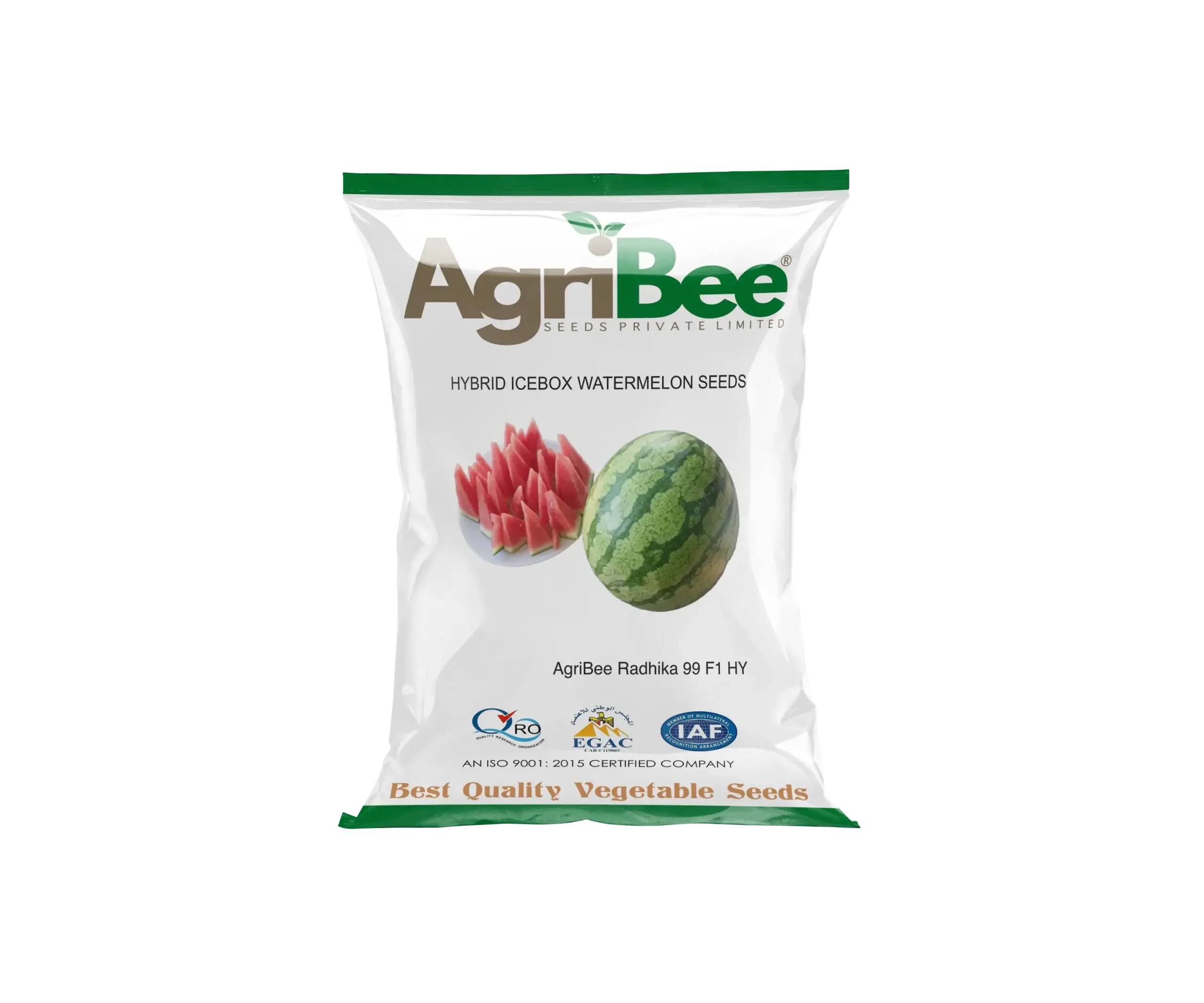
खेती एवं बुवाई निर्देशिका — IceBox Seeds AgriBee Radhika F1 HY
फसल के सर्वोत्तम प्रबंधन, रोग प्रतिरोधकता और प्रीमियम उत्पादन के लिए संपूर्ण चरणबद्ध कृषि निर्देशिका।
🌾 भूमि की तैयारी एवं खेत सुधार
खेत की समुचित जुताई एवं तैयारी से एकसमान अंकुरण और मजबूत जड़ों का विकास होता है।
🌱 आदर्श मिट्टी का प्रकार एवं pH
Well-drained sandy loam to loamy soils with pH 6.0–7.5. Deep, fertile soils with good organic matter content support vigorous vine growth and uniform fruit development.
✨ प्रमुख कृषि लाभ
Loose, warm sandy loam ensures rapid seed germination, deep root penetration, and excellent drainage — critical for preventing crown rot and promoting healthy fruit set.
- 1
Deep summer ploughing (25–30 cm) followed by 2–3 cross-harrowings to achieve fine tilth and destroy weed seeds.
- 2
Field leveling using laser levelling where possible; prepare raised beds (10–15 cm height) in low-drainage areas to prevent waterlogging.
- 3
Incorporate 8–10 tonnes per acre of well-decomposed FYM or compost during last ploughing to improve soil structure and moisture retention.
- 4
Conduct soil health test and apply limestone (200–250 kg/acre) if pH is below 5.5, or gypsum (300 kg/acre) if pH exceeds 8.0.
🌱 बुवाई का समय एवं विधि
सटीक बीज दर और सही दूरी से पौधों को पर्याप्त सूर्य का प्रकाश और संतुलित विकास मिलता है।
| मानक / पैरामीटर | अनुशंसा / निर्देश | कृषि महत्व |
|---|---|---|
| बुवाई समय सीमा | Kharif: June–July | Rabi: Oct–Nov | Summer: Jan–Feb | Aligns crop growth with favourable temperature and moisture regimes for optimal fruit development |
| बीज दर (प्रति एकड़) | 15–20 g per Acre | Ensures optimal plant population without overcrowding, maximising fruit size and vine health |
| कतार एवं पौधे का अंतर | 1.5 m (row-to-row) × 45–60 cm (plant-to-plant) | Provides adequate canopy spread, airflow, and sunlight penetration for fruit ripening and disease suppression |
| Sowing / Transplanting Depth | 2–2.5 cm depth | Ensures consistent emergence without burying cotyledons; shallow sowing promotes uniform germination |
💧 सिंचाई एवं जल प्रबंधन
उचित नमी प्रबंधन से पौधे की वानस्पतिक एवं फलने-फूलने की अवस्था में जोरदार विकास होता है।
☀️ जल आवश्यकता एवं सिंचाई प्रोफाइल
Moderately drought-sensitive during fruit development. Drip irrigation is highly recommended — supplies 25–30 mm water per irrigation at 3–4 day intervals during peak summer. Overhead sprinklers can be used in cooler seasons but increase foliar disease risk.
🌦️ नमी प्रबंधन
In rainfed zones, ensure good field drainage to avoid water stagnation. Mulching with straw or polyethylene film conserves soil moisture and reduces evaporation. Avoid moisture stress during flowering and early fruit set to prevent blossom-end drop and misshapen fruits.
- ✓
First irrigation immediately after sowing to ensure uniform germination, followed by light irrigations every 3–4 days until crop establishment.
- ✓
Vegetative phase: irrigate at 5–7 day intervals during active vine growth; maintain consistent soil moisture without waterlogging.
- ✓
Critical stages — flowering and fruit setting require regular irrigation (every 3–4 days in summer); moisture stress at fruit expansion causes small, deformed fruits with poor sweetness.
- ✓
Withhold irrigation 7–10 days before harvest to concentrate sugars, firm up flesh, and improve shelf life and transport durability.
🧪 उर्वरक एवं पोषण प्रबंधन
संतुलित पोषण से मजबूत पौधा संरचना और उच्च गुणवत्ता वाली उपज प्राप्त होती है।
| पोषक तत्व | अनुशंसित मात्रा (प्रति एकड़) | प्रयोग विधि एवं समय |
|---|---|---|
| नाइट्रोजन (N) | 60–70 kg/acre | 40 kg basal at sowing; 20–30 kg split top-dressed at 20 DAS and 40 DAS |
| Phosphorus (P2O5) | 30–40 kg/acre | 100% basal application with FYM at last harrowing |
| Potash (K2O) | 40–50 kg/acre | 50% basal + 50% at 35–40 DAS for fruit quality and sugar accumulation |
🌿 निराई-गुड़ाई एवं खरपतवार नियंत्रण
समय पर खरपतवार नियंत्रण से मुख्य फसल को पूर्ण पोषण और नमी मिलती है।
-
1
पहली निराई-गुड़ाई: Perform at 10–15 DAS using a inter-row hoe to keep the crop weed-free during early vegetative growth when competition is most damaging.
-
2
Second Weeding & Vine Training: Carry out at 25–30 DAS; lightly heel in vines to encourage adventitious rooting and improve nutrient uptake. Remove competing lateral shoots.
-
3
Mulching and Fruit Lifting: Apply black polyethylene mulch at sowing to suppress weeds, conserve moisture, and keep fruits clean. Place straw pads or raise fruits off soil at 40 DAS to prevent soil-borne rot and sunscald.
🛡️ कीट एवं रोग नियंत्रण
फसल की सक्रिय निगरानी और एकीकृत प्रबंधन से रोगमुक्त एवं स्वस्थ फसल सुनिश्चित होती है।
🐛 कीट प्रबंधन एवं रोकथाम
- Aphids (Aphis gossypii): Cause curling and yellowing of leaves with honeydew soot mould. Spray Imidacloprid 17.8% SL at 0.3 ml/L or Thiamethoxam 25% WG at 0.2 g/L. Introduce ladybird beetles for biological control.
- Fruit Borer (Helicoverpa armigera): Larvae bore into young fruits causing entry holes and pulp damage. Spray Chlorantraniliprole 18.5% SC at 0.3 ml/L or Emamectin benzoate 5% SG at 0.3 g/L. Deploy pheromone traps at 10/acre for monitoring.
- తెలుపుfly (Bemisia tabaci): Suck sap causing leaf wilting and virus transmission. Spray Confidor 20% SL at 0.5 ml/L or Acetamiprid 20% SP at 0.2 g/L. Use yellow sticky traps at 10/acre.
🔬 रोग नियंत्रण एवं उपचार
- Powdery Mildew (Erysiphe cichoracearum): తెలుపు powdery patches on leaves reducing photosynthesis. Spray Sulphur WG at 2 g/L or Myclobutanil 6.9% WP at 0.5 g/L. Ensure proper spacing for canopy ventilation.
- Fusarium Wilt (Fusarium oxysporum f. sp. nucolinum): Yellowing and wilting of vines from base; brown vascular discoloration. drench with Carbendazim 50% WP at 2 g/L or Pseudomonas fluorescence at 10 g/L. Rotate cucurbits for 2–3 years.
- Downy Mildew (Pseudoperonospora cubensis): Angular yellow lesions on upper leaf surface with purple sporulation beneath. Spray Metalaxyl 35% WS at 1.5 g/L or Mancozeb 75% WP at 2 g/L every 10–12 days during humid weather.
✂️ कटाई एवं उपज गुणवत्ता निर्देशिका
सही परिपक्वता पर कटाई से अधिकतम मंडी भाव और बेहतर भंडारण क्षमता मिलती है।
⏱️ कटाई समय एवं निर्धारण
First harvest begins at 70–75 days after sowing. Fruits may be picked individually as they mature; a second picking window may appear 5–7 days later for delayed maturing fruits.
⭐ उपज की गुणवत्ता एवं विशेषताएं
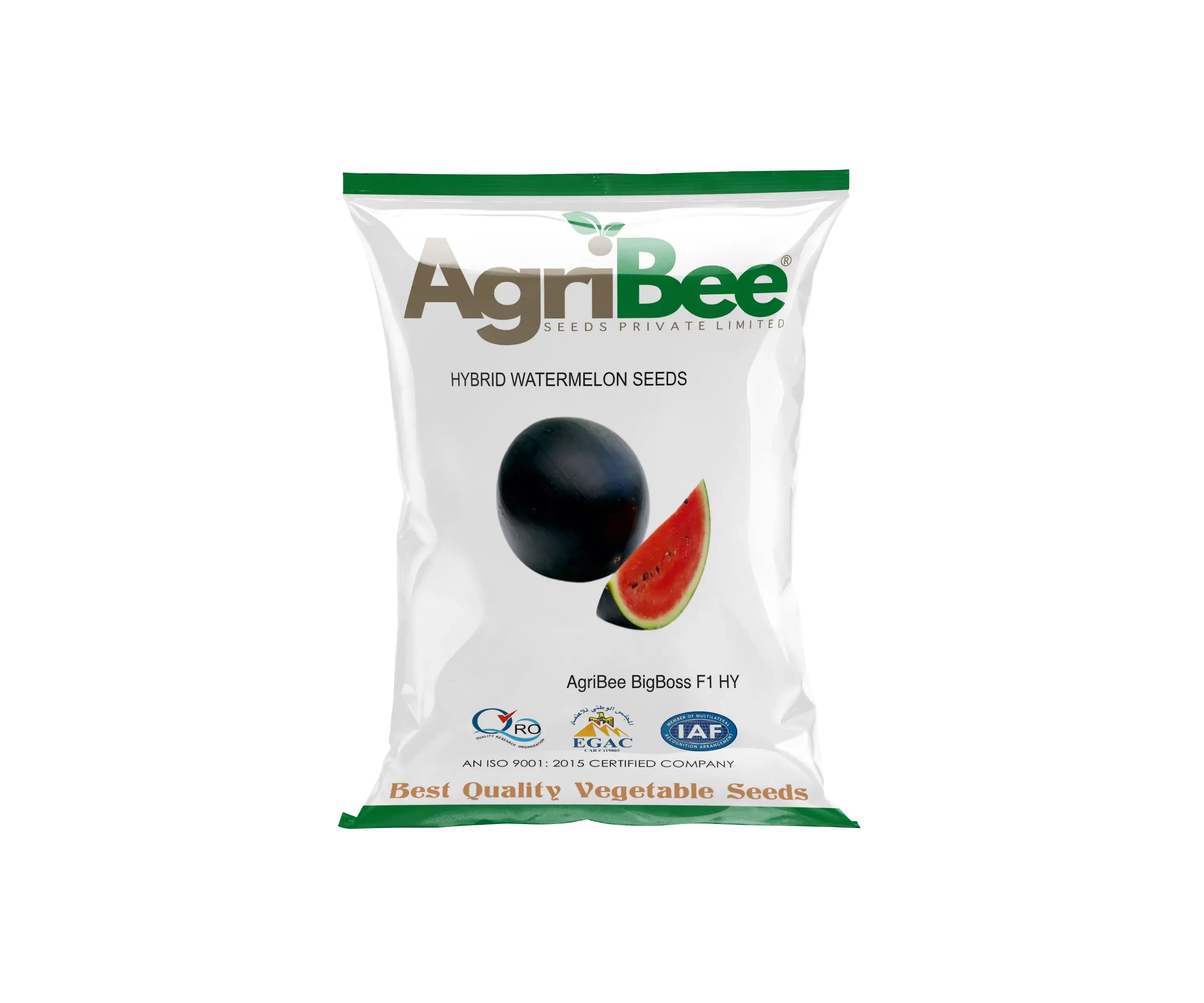
Deep red, crisp, very sweet flesh with high TSS content. Dark green to blackish rind with round to oval fruit shape weighing 2–4 kg. Excellent flavour profile and market appeal.
| गुणवत्ता मानक | कृषि मानक | किसान एवं मंडी लाभ |
|---|---|---|
| पहली कटाई / तुड़ाई Stage | 70–75 बुवाई के दिन बाद | Ensures peak sweetness, crisp texture, and early market arrival for better price realization |
| परिपक्वता के लक्षण | Dried tendril near petiole, dull rind sheen, cream-colored ground spot, firm pressure test | Prevents harvesting immaturity leading to poor flavour and short shelf life |
| भंडारण क्षमता एवं टिकाऊपन | 7–10 days under ambient conditions; 12–15 days at 10–12°C | Facilitates long-distance transport and extended sales window without quality loss |
| मंडी मांग एवं उपयुक्तता | Fresh table market, mandis, retail chains, and export-grade premium quality | Dark rind and deep red flesh attract premium rates in domestic and processed markets |
⭐ किस्म की विशेषताएं — IceBox Seeds AgriBee Radhika F1 HY
विशिष्ट विशेषताएं जो इस किस्म को भारतीय किसानों की पहली पसंद बनाती हैं।
🌿 किस्म की मुख्य विशेषताएं
AgriBee Radhika F1 HY is an elite icebox watermelon hybrid bred for early maturity, vine vigor, and consistent fruit set under diverse Indian growing conditions.
🌿 उपज की गुणवत्ता एवं रूप-रंग
Round to oval fruits with dark green to blackish rind; deep red, exceptionally crisp and sweet flesh with high TSS making it a top-choice for fresh consumption.
🌿 तनाव एवं रोग प्रतिरोधक क्षमता
Demonstrates strong field tolerance to Fusarium wilt and good resistance to powdery mildew and downy mildew pressures common in Indian watermelon belts.
🌿 वृद्धि स्वभाव एवं ओज (विगर)
Vigorous vining habit with well-branched runners; open canopy architecture promotes airflow, reduces humidity-related diseases, and supports healthy fruit development.
🌿 फसल अवधि एवं पकने का समय
Early-maturing at 70–75 days to first harvest, enabling timely crop rotation and multiple cropping opportunities across Kharif, Rabi, and Summer seasons.
🌿 मंडी एवं किसान प्राथमिकता
Farmers prefer Radhika F1 for its uniform fruit size (2–4 kg), attractive dark rind, outstanding taste, and reliable shelf life — commanding steady demand in mandis and retail outlets.