
Description
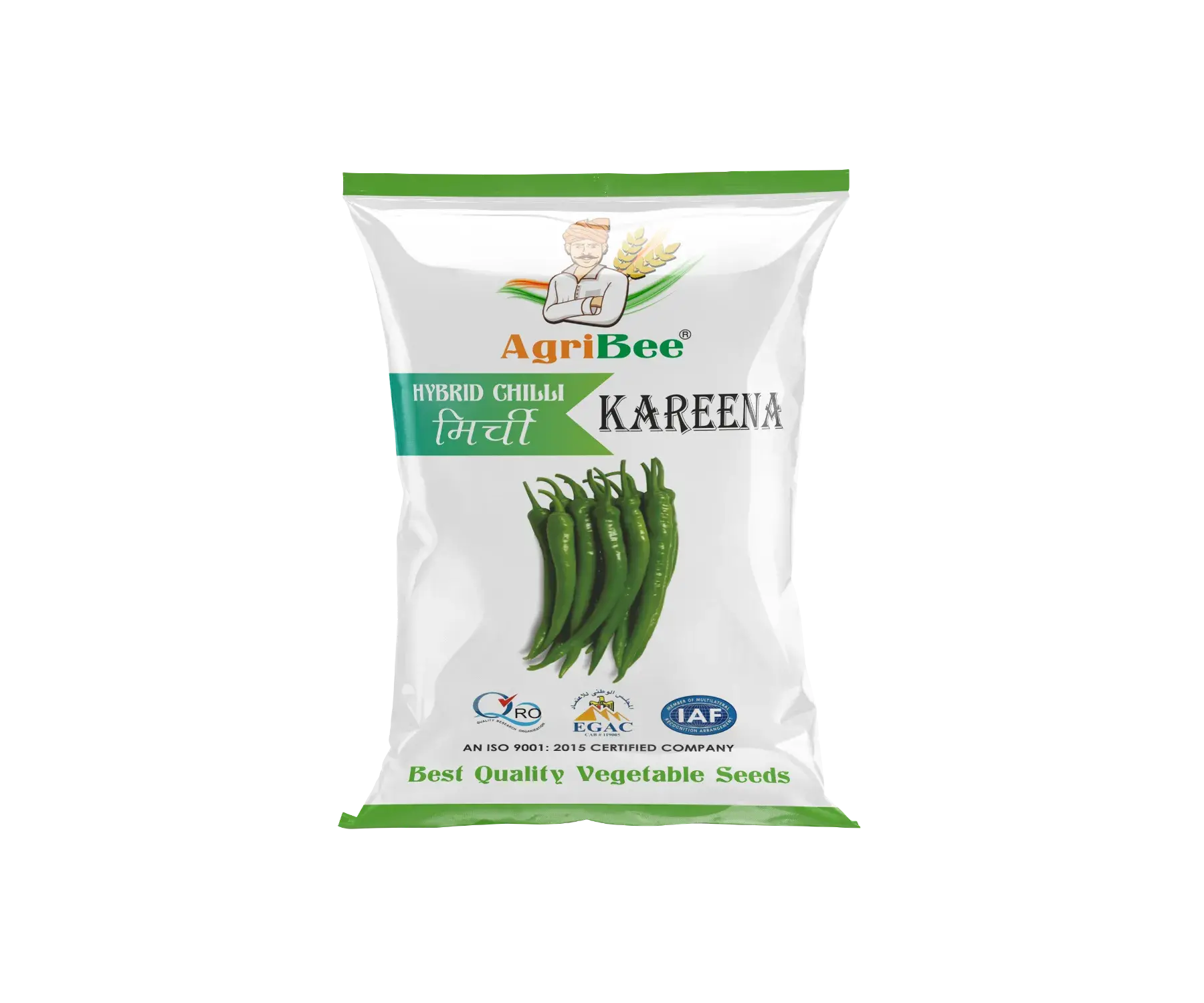
ખેતી અને વાવણી માર્ગદર્શિકા — મરચી Seeds – Karina
પાકના શ્રેષ્ઠ સંચાલન, રોગ પ્રતિકારક શક્તિ અને પ્રીમિયમ ગુણવત્તાવાળા ઉત્પાદન માટે સંપૂર્ણ વિગતવાર માર્ગદર્શિકા.
🌾 જમીનની તૈયારી અને ખેડ
જમીનની યોગ્ય તૈયારીથી એકસરખો ઉગાવો અને મૂળનો ઊંડો વિકાસ સુનિશ્ચિત થાય છે.
🌱 યોગ્ય જમીનનો પ્રકાર અને pH
Well-drained loamy or sandy-loam soils with a pH range of 6.0–7.5. મરચી thrives in soils with good organic matter content and adequate moisture retention without waterlogging.
✨ મુખ્ય કૃષિ ફાયદા
Loamy soils provide optimal root penetration, aeration, and nutrient availability, ensuring vigorous early growth and strong anchorage for long slender fruits.
- 1
Deep summer ploughing to a depth of 25–30 cm followed by 2–3 cross-harrowings to achieve fine tilth and destroy weed seeds.
- 2
Field leveling with laser leveling if possible; prepare adequate drainage channels to prevent water stagnation during heavy rains.
- 3
Incorporate 8–10 tonnes per acre of well-decomposed FYM or compost into the topsoil during the final harrowing to improve soil structure and microbial activity.
- 4
Conduct a soil test before sowing; if pH is below 6.0, apply agricultural lime at 200–250 kg/acre, and if above 7.5, incorporate gypsum at 150 kg/acre for balanced nutrient uptake.
🌱 વાવણીનો સમય અને પદ્ધતિ
Precise seed rate and spacing maximize light interception and canopy development.
| માપદંડ / પેરામીટર | ભલામણ / સૂચના | કૃષિ મહત્વ |
|---|---|---|
| વાવણી સમયમર્યાદા | Kharif: June–July | Rabi: October–November | Summer: March–April (under shade/net house) | Aligns germination and early growth with favorable temperature (25–30°C) and humidity, minimizing stress during seedling stage. |
| બિયારણનો દર (એકર દીઠ) | 40–50 g per Acre (Transplanted method) | Ensures optimal plant population of approximately 35,000–40,000 plants per acre for balanced canopy development. |
| હાર અને છોડ વચ્ચેનું અંતર | 60 cm (Row-to-Row) × 45 cm (Plant-to-Plant) | Provides adequate inter-row space for air circulation, pest management operations, and reduces humidity-related disease pressure. |
| Sowing / Transplanting Depth | Sow seeds at 0.5–1.0 cm depth in nursery; transplant at 15–20 cm depth ensuring 3–4 true leaves stage (25–30 DAT) | Optimal sowing depth ensures uniform emergence; proper transplanting depth establishes strong root system for sustained vegetative and reproductive growth. |
💧 પિયત અને પાણી વ્યવસ્થાપન
Adequate moisture regulation supports strong vegetative and reproductive growth.
☀️ પાણીની જરૂરિયાત અને પિયત પ્રોફાઇલ
મરચી is moderately drought-tolerant but performs best with consistent soil moisture. Under drip irrigation, apply 2–3 cm of water every 3–4 days during active growth. Drip fertigation is highly compatible with Karina chilli and improves water use efficiency by up to 40%. Avoid both waterlogging and prolonged dry spells, which can cause flower drop and sunscald on fruits.
🌦️ Soil ભેજ વ્યવસ્થાપન
In rainfed conditions, rely on residual soil moisture during the initial 20–25 days after transplanting. Apply mulch (straw or polythene) to conserve soil moisture and reduce evaporation. Provide 1–2 supplemental irrigations during critical fruit development stages if rainfall is insufficient. Avoid standing water for more than 24 hours as it rapidly induces root rot.
- ✓
First irrigation should be given immediately after transplanting (bare-root drench) followed by light irrigation after 2–3 days to promote root establishment.
- ✓
Vegetative phase (15–45 DAT): Irrigate at 5–7 day intervals depending on soil type; sandy soils require more frequent light irrigation while clay soils need longer intervals.
- ✓
Critical stages — flowering and fruit set (45–75 DAT): Maintain consistent soil moisture; water stress during this phase causes significant flower abortion and poor fruit set. Reduce irrigation slightly once fruits reach full size.
- ✓
Pre-harvest: Withhold irrigation 5–7 days before the last picking to improve fruit firmness, enhance pungency, and extend shelf life during transit.
🧪 ખાતર અને પોષણ વ્યવસ્થાપન
Balanced crop nutrition supports robust plant structure and premium produce quality.
| પોષક તત્વ | ભલામણ કરેલ માત્રા (એકર દીઠ) | ઉપયોગ પદ્ધતિ અને સમય |
|---|---|---|
| નાઇટ્રોજન (N) | 80–100 kg/acre | Apply 50% N basally at transplanting and remaining 50% as split top-dressing at 30 DAT and 60 DAT in equal splits. |
| ફોસ્ફરસ (P2O5) | 50–60 kg/acre | 100% applied basal along with FYM during final land preparation; incorporate into the root zone at planting. |
| પોટાશ (K2O) | 40–50 kg/acre | Apply 70% basal and remaining 30% at 60 DAT to support fruit development, pungency, and overall plant vigor. |
🌿 નિંદામણ નિયંત્રણ અને આંતરખેડ
Timely weed control ensures optimal nutrient and moisture availability for crop seedlings.
-
1
પ્રથમ નિંદામણ અને ગોડ: Carry out first weeding and shallow hoeing at 15–20 days after transplanting (DAT) to control early weed flush and improve soil aeration. Keep hoeing shallow (5 cm depth) to avoid root damage near the plant base.
-
2
બીજી વાવણી અને પાળા ચઢાવવા: Perform second weeding and earthing-up at 35–40 DAT to support branching stems, improve root oxygenation, and prevent lodging as the plant grows taller with fruit load. Mound soil gently around the base of each plant.
-
3
Mulching and Stake Support: Apply black polythene mulch or organic straw mulch immediately after transplanting to conserve moisture, suppress weeds, and maintain soil temperature. Install stake supports or low trellis netting at 45 DAT for plants with heavy fruit load to prevent branch breakage under the weight of long slender fruits.
🛡️ જીવાત અને રોગ નિયંત્રણ
Proactive crop monitoring and integrated management ensure healthy crop development.
🐛 જીવાત નિયંત્રણ અને સંરક્ષણ
- Mirid Bug (Heliothips armiger): Small slender insects causing silvering and scarring on young fruits. Control: Spray Malathion 50 EC at 1.5 ml/L or Imidacloprid 17.8 SL at 0.3 ml/L. Apply at early infestation stage, ideally during evening hours. Repeat after 10–12 days if needed.
- Thrips (Thrips tabaci): Causes silvery streaks and distortion on leaves and young fruits with characteristic black fecal spots. Control: Spray Spinosad 45 SC at 0.3 ml/L or acetamiprid 20 SP at 0.5 g/L. Use yellow sticky traps at 10 traps per acre for monitoring and mass trapping. Maintain weed-free field perimeter.
- Phytophthora Blight / Root Rot (Phytophthora capsici): Water-soaked lesions on stems and roots, wilting, and plant death especially in waterlogged conditions. Control: Drench soil with Metalaxyl 35 WP at 2.5 g/L or Copper oxychloride at 3 g/L at first sign. Ensure proper drainage and avoid overhead irrigation. Remove and destroy severely affected plants.
🔬 રોગ નિયંત્રણ અને ઉપચાર
- Bacterial Leaf Spot (Xanthomonas campestris pv. vesicatoria): Small water-soaked spots on leaves turning brown with yellow halos; can infect fruits causing circular sunken lesions. Control: Spray Copper hydroxide at 0.3% (3 g/L) or Kasugamycin at 0.1%. Use સંશોધન અને હાઇબ્રિડ disease-free seeds and practice crop rotation with non-Solanaceous crops for 2–3 years.
- Antraknose / Fruit Rot (Colletotrichum capsici): Circular sunken dark brown to black lesions on mature fruits, often with pinkish sporulation in humid conditions. Control: Spray Mancozeb 75 WP at 2 g/L or Chlorothalonil 50 WS at 2 g/L at 10-day intervals during fruit development. Harvest mature fruits promptly to reduce field infection.
- Powdery Mildew (Erysiphe cichoracearum): સફેદ powdery fungal growth on leaves and stems, reducing photosynthetic capacity and plant vigor. Control: Spray Wettable Sulphur at 2 g/L or Myclobutanil 5 WP at 0.5 g/L. Ensure proper spacing for air circulation and avoid excessive nitrogen that promotes succulent growth susceptible to infection.
✂️ કાપણી અને ગુણવત્તા માર્ગદર્શિકા
Harvesting at peak maturity ensures maximum commercial grade and long keeping quality.
⏱️ કાપણીનો સમય અને આયોજન
First harvest begins 65–70 days after transplanting (DAT). Subsequent pickings are made at 7–10 day intervals, totaling 5–7 harvest rounds over the cropping cycle. Each picking removes mature fruits while allowing new flowers and young fruits to develop on the plant.
⭐ ઉત્પાદનની ગુણવત્તા અને લક્ષણો
Karina produces long, slender dark green chilli fruits (8–10 cm) with a firm, crisp texture and high pungency. The fruits have a glossy skin, thick walls, and uniform size distribution, making them highly attractive in wholesale and retail markets. The dark green color at maturity indicates optimal chlorophyll content and antioxidant richness.
| ગુણવત્તા માપદંડ | કૃષિ ધોરણ | ખેડૂત અને બજાર ફાયદો |
|---|---|---|
| પ્રથમ વીણી / કાપણી Stage | 65–70 ફેરરોપણી પછીના દિવસો | Early market arrival enables farmers to fetch better prices before peak seasonal supply floods the mandis. |
| પરિપક્વતાના લક્ષણો | Fruits attain full length (8–10 cm), dark green glossy color, firm and crisp texture with high pungency | Ensures peak sensory and commercial quality; prevents over-maturity that leads to color fade and tissue softening. |
| સંગ્રહ ક્ષમતા અને ગુણવત્તા | 7–10 days under ambient conditions (25–30°C); up to 14–18 days under cool storage (8–10°C) | Excellent keeping quality allows transportation to distant markets and reduces post-harvest losses significantly. |
| બજાર માંગ અને યોગ્યતા | Fresh market (retail and wholesale mandis), export-grade quality, and processing units for dried/chilli powder production | Uniform long slender shape and dark green color attract premium rates from traders and processors seeking consistent supply. |
⭐ જાતની વિશેષતાઓ — મરચી Seeds – Karina
Distinguishing characteristics that make this variety a top choice for Indian growers.
🌿 જાતની મુખ્ય વિશેષતાઓ
Karina is an early-maturing chilli variety delivering first harvest within 65–70 days after transplanting, offering farmers a rapid return on investment and flexibility in crop planning under Indian farming systems.
🌿 ઉત્પાદનની ગુણવત્તા અને દેખાવ
Produces visually appealing long, slender fruits of 8–10 cm with a rich dark green color, thick walls, and a highly prized pungent heat profile that meets stringent market standards.
🌿 વાતાવરણ અને રોગ પ્રતિકારક ક્ષમતા
Demonstrates robust field tolerance to common chilli diseases including bacterial leaf spot, anthracnose, and powdery mildew, along with moderate resilience to heat and moisture fluctuations under Indian growing conditions.
🌿 વિકાસ અને છોડની જોમ
Exhibits strong vegetative vigor with well-branched architecture supporting heavy fruit load without lodging, thanks to sturdy stem strength and balanced canopy spread.
🌿 પાક સમયગાળો અને પાકવાનો સમય
The 65–70 day first harvest window enables multiple cropping cycles and seamless integration into diverse crop rotation sequences across Kharif, Rabi, and Summer seasons throughout India.
🌿 બજાર અને ખેડૂત પસંદગી
Trusted by AgriBee Seeds for its consistent fruit quality, high pungency, attractive dark green appearance, and reliable field performance — making it a preferred choice among progressive farmers, commission agents, and export-oriented buyers across India.