
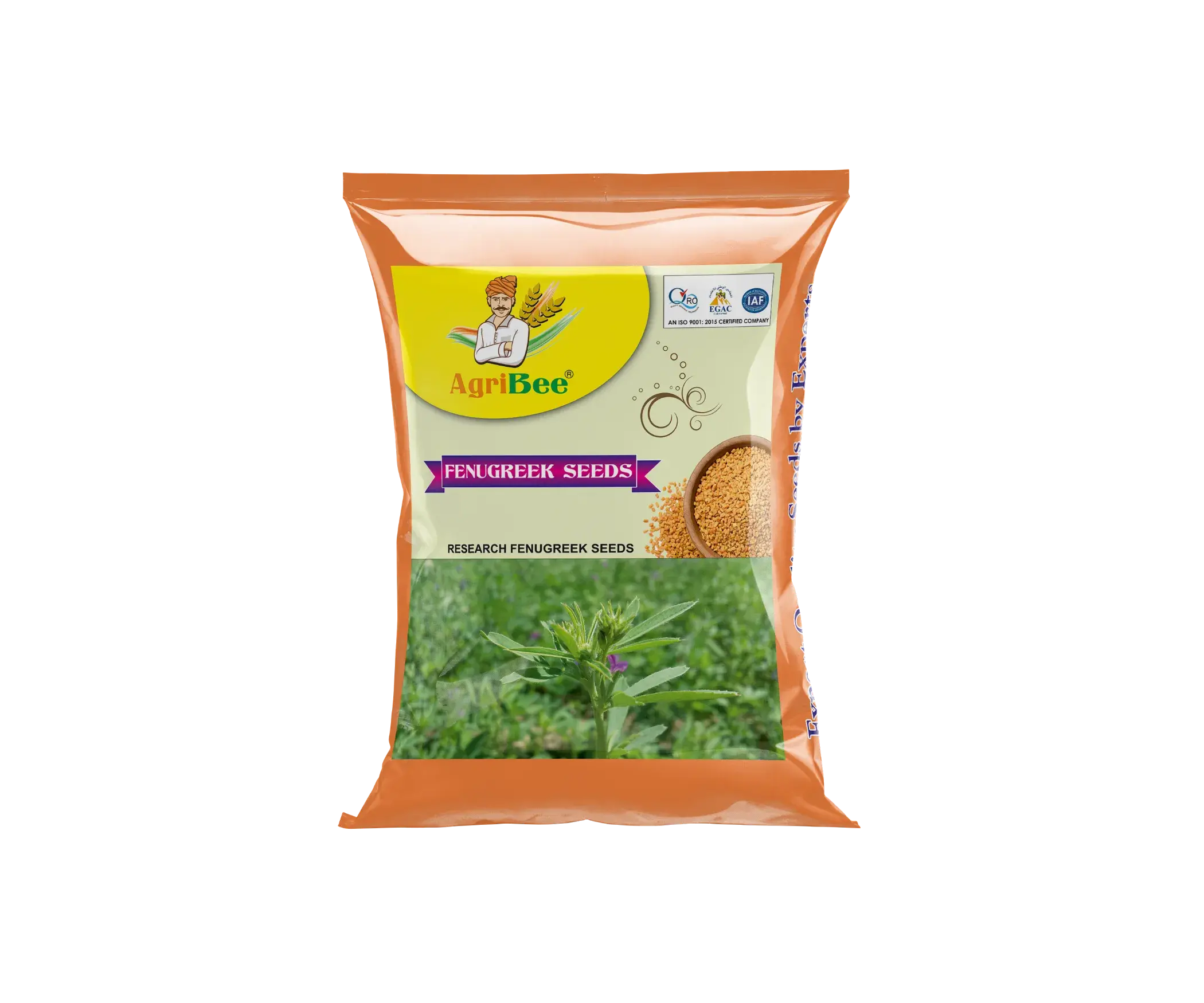
Description
ખેતી અને વાવણી માર્ગદર્શિકા — Fenugreek Seed Javra
પાકના શ્રેષ્ઠ સંચાલન, રોગ પ્રતિકારક શક્તિ અને પ્રીમિયમ ગુણવત્તાવાળા ઉત્પાદન માટે સંપૂર્ણ વિગતવાર માર્ગદર્શિકા.
🌾 જમીનની તૈયારી અને ખેડ
જમીનની યોગ્ય તૈયારીથી એકસરખો ઉગાવો અને મૂળનો ઊંડો વિકાસ સુનિશ્ચિત થાય છે.
🌱 યોગ્ય જમીનનો પ્રકાર અને pH
Well‑drained loamy to sandy‑loam soils with pH 6.5–8.0. Avoid heavy, waterlogged clays.
✨ મુખ્ય કૃષિ ફાયદા
Fine tilth and good drainage promote rapid germination and strong root anchorage.
- 1
Deep summer ploughing followed by 2–3 cross‑harrowings to obtain a fine, well‑crumbled seedbed.
- 2
Field leveling and preparation of drainage channels to prevent standing water.
- 3
Incorporation of 8–10 t/ha well‑decomposed FYM or compost during the last harrowing.
- 4
Soil health conditioning: apply gypsum (100 kg/ha) in saline‑alkali soils and lime (50 kg/ha) if pH is below 6.5.
🌱 વાવણીનો સમય અને પદ્ધતિ
Precise seed rate and spacing maximize light interception and canopy development.
| માપદંડ / પેરામીટર | ભલામણ / સૂચના | કૃષિ મહત્વ |
|---|---|---|
| વાવણી સમયમર્યાદા | October–November (Rabi) across most of India; June–July in Rajasthan/Madhya Pradesh for Kharif sowing. | Cool temperatures favour uniform germination and steady vegetative growth. |
| બિયારણનો દર (એકર દીઠ) | 4–5 kg per acre (10–12 kg/ha). | Maintains optimal plant population without overcrowding, ensuring each plant receives adequate light and nutrients. |
| હાર અને છોડ વચ્ચેનું અંતર | Row‑to‑row: 30 cm; Plant‑to‑plant: 5–7 cm (approx. 2 inch apart within the row). | Balanced spacing aids canopy spread, air circulation, and reduces humidity‑related disease pressure. |
| વાવણીની ઊંડાઈ | 1.5–2.0 cm in light soils; 2.5–3.0 cm in heavy soils. | Shallow sowing ensures quick emergence; deeper placement protects seeds in compact soils. |
💧 પિયત અને પાણી વ્યવસ્થાપન
Adequate moisture regulation supports strong vegetative and reproductive growth.
☀️ પાણીની જરૂરિયાત અને પિયત પ્રોફાઇલ
Fenugreek exhibits moderate drought tolerance but responds well to 3–4 light irrigations during dry spells. Drip irrigation with alternating‑row wetting is compatible and conserves water.
🌦️ Soil ભેજ વ્યવસ્થાપન
In rainfed areas, sow early to capture residual soil moisture. Mulching with straw (2–3 cm) conserves moisture and suppresses weeds.
- ✓
First irrigation at 15–20 days after sowing (DAS) to establish seedlings.
- ✓
Subsequent irrigations at 20–25 day intervals during vegetative phase, depending on soil texture and rainfall.
- ✓
Critical stage: Provide moisture at flowering (≈50 DAS) and pod‑filling (70–90 DAS); avoid water stress during these phases.
- ✓
Withhold irrigation completely 10–12 days before harvest to facilitate even drying and prevent seed moulding.
🧪 ખાતર અને પોષણ વ્યવસ્થાપન
Balanced crop nutrition supports robust plant structure and premium produce quality.
| પોષક તત્વ | ભલામણ કરેલ માત્રા (એકર દીઠ) | ઉપયોગ પદ્ધતિ અને સમય |
|---|---|---|
| નાઇટ્રોજન (N) | 20–25 kg N/acre (8–10 kg N/10 kg seed for inoculant) | 100% basal as urea (46‑0‑0) mixed with seed‑treatment microbials. |
| ફોસ્ફરસ (P2O5) | 40–50 kg P2O5/acre (250 kg DAP/acre or 125 kg SSP/acre) | 100% basal application at sowing, incorporated into the seed zone. |
| પોટાશ (K2O) | 20–25 kg K2O/acre (35 kg MOP/acre) | Split: 50% basal + 50% top‑dressed at 40 DAS for improved seed filling and disease resilience. |
🌿 નિંદામણ નિયંત્રણ અને આંતરખેડ
Timely weed control ensures optimal nutrient and moisture availability for crop seedlings.
-
1
પ્રથમ નિંદામણ અને ગોડ: Carry out at 15–20 DAS using a hand hoe or tractor‑drawn cultivator. Early weed control prevents competition during the critical seedling phase.
-
2
Second Weeding & Earthing‑Up: Perform at 30–35 DAS to loosen soil, improve aeration, and support root development. Light earthing‑up around plants helps stabilise stems.
-
3
વિશેષ આંતરખેડ કામગીરી: Apply organic mulch (straw or parchi) at 10–15 cm thickness after second weeding. Mulching conserves moisture, suppresses weeds, and keeps pods clean.
🛡️ જીવાત અને રોગ નિયંત્રણ
Proactive crop monitoring and integrated management ensure healthy crop development.
🐛 જીવાત નિયંત્રણ અને સંરક્ષણ
- Fenugreek Leaf Cutting Caterpillar (Spodoptera litura): Leaves appear skeletonised with irregular holes. Control: Spray neem‑based bio‑pesticide (Neem oil 5 ml/L) or carbendazim 50 WP (1 g/L) at 25 and 40 DAS. Also release parasitoid wasps Trichogramma spp. (1 lakh/acre) at first egg appearance.
- Aphids (Aphis craccivora): Yellowing and curling of leaves, honeydew secretion, sooty mould. Control: Spray imidacloprid 17.8 SL (0.3 ml/L) or thiamethoxam 25 WG (0.2 g/L) at 30 DAS. Encourage natural enemies like ladybird beetles and hoverflies.
- Pod Borer (Helicoverpa armigera): Boreholes in pods with frass and wilting tips. Control: Apply pheromone traps (10/acre) for monitoring. Spray baculovirus (NPV) at 250 LE/ha or chlorantraniliprole 18.4 SC (0.4 ml/L) at early flower stage.
🔬 રોગ નિયંત્રણ અને ઉપચાર
- Powdery Mildew (Erysiphe polygoni): સફેદ powdery growth on leaves and pods, leading to premature drying. Preventive spray: Sulphur dusting (8 kg/acre) or myclobutanil 12.5 WP (0.5 g/L) at 40 DAS and again at 60 DAS.
- Collar Rot (Macrophomina phaseolina): Wilting, dark lesions at soil‑line, plant death. Manage by seed treatment with carbendazim 50 WP (2 g/kg seed) + Trichoderma viride (10 g/kg seed). Avoid waterlogging and ensure proper drainage.
- Bacterial Blight (Xanthomonas campestris): Water‑soaked spots turning brown, necrotic margins, wilting. Control: Spray copper oxychloride 50 WP (3 g/L) at 30 and 50 DAS. Remove and burn infected plants immediately.
✂️ કાપણી અને ગુણવત્તા માર્ગદર્શિકા
Harvesting at peak maturity ensures maximum commercial grade and long keeping quality.
⏱️ કાપણીનો સમય અને આયોજન
First (and only) harvest at 109–111 days after sowing when 80–90% of pods turn brown and seeds harden.
⭐ ઉત્પાદનની ગુણવત્તા અને લક્ષણો
Seeds are uniform, hard, and possess a characteristic yellowish‑brown colour with a pungent, slightly bitter aroma. વધુ (High) essential‑oil content and consistent seed size ensure excellent market appeal.
| ગુણવત્તા માપદંડ | કૃષિ ધોરણ | ખેડૂત અને બજાર ફાયદો |
|---|---|---|
| કાપણીનો તબક્કો | 109–111 Days After Sowing | Ensures peak seed maturity, optimal flavour compound concentration, and uniform Colour. |
| પરિપક્વતાના લક્ષણો | Pods turn light brown, seeds rattle inside when shaken, plant foliage begins to yellow. | Prevents over‑maturity that leads to pod shattering and seed discolouration. |
| સંગ્રહ ક્ષમતા અને ગુણવત્તા | 4–6 months under cool, dry storage (<12% moisture content). | Facilitates long‑distance transport and extended sales window without mould or insect damage. |
| બજાર માંગ અને યોગ્યતા | Ideal for spice markets, Ayurvedic/pharmaceutical processing, and export. | Uniform seed size and colour attract premium rates from traders and processors. |
⭐ જાતની વિશેષતાઓ — Fenugreek Seed Javra
Distinguishing characteristics that make this variety a top choice for Indian growers.
🌿 જાતની મુખ્ય વિશેષતાઓ
Early‑flowering genetics (49–50 DAS) with balanced plant stature (40–80 cm) allow flexible scheduling and efficient land use.
🌿 ઉત્પાદનની ગુણવત્તા અને દેખાવ
Seeds exhibit a consistent yellowish‑brown hue, firm texture, and high essential‑oil content, meeting stringent spice‑grade standards.
🌿 વાતાવરણ અને રોગ પ્રતિકારક ક્ષમતા
Moderate tolerance to water‑stress and resilient against common foliar diseases when integrated pest‑management practices are followed.
🌿 વિકાસ અને છોડની જોમ
Bushy, upright habit with prolific branching ensures even light interception and sturdy pod‑bearing capacity.
🌿 પાક સમયગાળો અને પાકવાનો સમય
Maturity in 109–111 days enables timely land preparation for subsequent Rabi or summer crops, supporting multiple cropping systems.
🌿 બજાર અને ખેડૂત પસંદગી
AgriBee’s Fenugreek Seed Javra is trusted for its predictable performance, attractive seed colour, and reliable field vigour under diverse Indian agro‑conditions.