

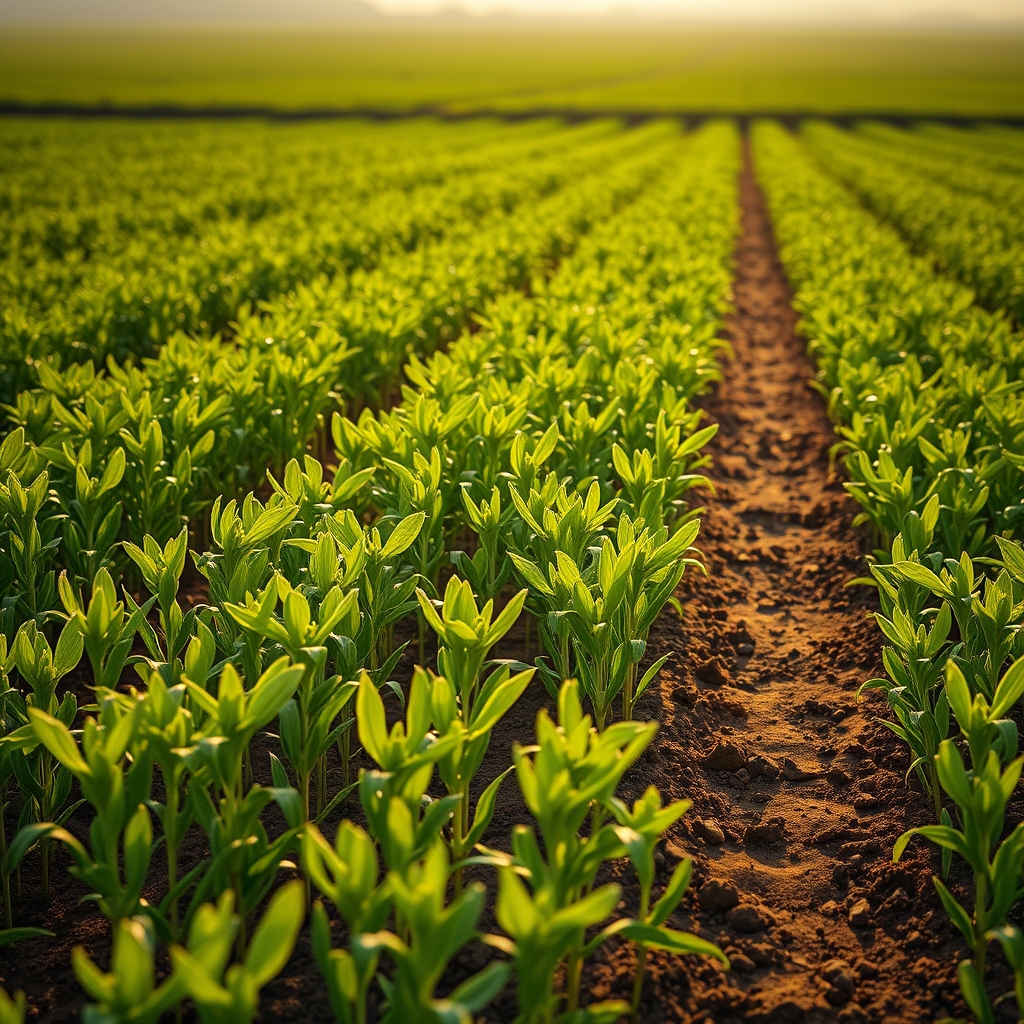
- Sowing Window: Mid-October to early November (Rabi season)
- Seed Rate: 25-30 kg/acre (Kabuli), 35-40 kg/acre (Desi)
- Critical Disease: Dry root rot (Fusarium udum) – prevent with Trichoderma + carbendazim
- Yield Target: 20-25 quintals/acre (hybrid varieties from AgriBee Seeds reach 30+ qtl)
Agro-Climatic Requirements & Soil Preparation
Chickpea (Cicer arietinum L.) thrives in semi-arid to sub-humid regions with well-drained soils. The crop prefers a temperature range of 15–30°C and cannot tolerate frost or waterlogging. For Desi chana farming, slightly alkaline to neutral soils (pH 6.5–8.0) are optimal, while Kabuli chana farming performs best in sandy loam soils with good drainage and moderate organic matter content (0.5–1.5%).
Soil preparation begins with deep ploughing (2–3 passes) during the summer fallow period to break hardpan and improve soil structure. Incorporate 10–15 tons/acre of well-decomposed farmyard manure (FYM) or compost to enhance soil organic carbon (>0.75%). Ensure proper levelling and thatch removal before sowing. Avoid sowing in low-lying areas prone to waterlogging, as this increases risk of dry root rot and damping-off diseases.
Scientific Seed Treatment Protocol
Effective seed treatment is critical for preventing soilborne pathogens like Fusarium udum (causing dry root rot) and ensuring uniform germination. Follow this step-by-step protocol:
| Treatment Step | Product | Dosage | Notes |
|---|---|---|---|
| Water Soaking | Clean water | 5–6 hours | Softens seed coat for better treatment adhesion |
| Fungicide Dressing | Carbendazim 50 WP | 2 g/kg seed | Controls Fusarium, Rhizobium killer |
| Bio-Inoculant | Trichoderma viride | 109 CFU/g | Apply as slurry coating; suppresses dry root rot |
| Rhizobium Inoculation | Rhizobium leguminosarum bv. viceae | 109 CFU/g | Enhances biological nitrogen fixation |
Sowing Methods, Row Spacing & Plant Population Dynamics
Sow treated seeds at a depth of 4–5 cm using the nipping technique for hybrid varieties promoted by AgriBee Seeds. This method involves planting seeds in paired rows spaced 30 cm apart within the pair and 60 cm between pairs, allowing easier mechanical weeding and improved aeration.
For Desi chana farming, maintain a plant population of 75,000–90,000 plants/acre with row spacing of 22–25 cm. In Kabuli chana farming, space rows at 30–37 cm with 50,000–60,000 plants/acre due to larger plant stature. Thinning should be done carefully at the 2-leaf stage to avoid root disturbance. Intercropping with mustard or lentil is practiced in some systems but not recommended for pure stands aiming for high yields.
Integrated Pest & Disease Management (IDM) Schedule
Implementing a proactive IDM strategy is essential for managing pests and diseases effectively:
| Pest/Disease | Control Agent | Dosage/Acre | Timing |
|---|---|---|---|
| Dry Root Rot | Carbendazim 50 WP | 1.5 kg + T. viride 5 kg | Soil drench at sowing |
| Pod Borer (Helicoverpa armigera) | Spinosad 44 SC | 350 ml in 200 L water | First spray at 50% flowering |
| Aphids (Aphis craccivora) | Imidacloprid 17.8 SL | 400 ml in 200 L water | Early vegetative stage |
| Leaf Miner | Abamectin 1.8 EC | 250 ml in 200 L water | Repeat every 10 days if needed |
For pod borer IDM, combine early monitoring with pheromone traps and timely application of spinosad or Bacillus thuringiensis (Bt) kurstaki (1 kg/ha). Rotate chemical classes to prevent resistance buildup. AgriBee Seeds’ hybrid chickpeas show moderate resistance to pod borer and reduced incidence of dry root rot when grown under recommended agronomic practices.
Irrigation & Fertigation Water Schedule
Chickpea is relatively drought-tolerant but responsive to supplemental irrigation. Provide 4–5 irrigations depending on monsoon arrival and rainfall distribution:
- Sowing to Germination: Light irrigation (5–7 cm)
- Establishment to Branching: Moderate irrigation (10–12 cm)
- Flowering to Pod Development: Critical irrigation (15–20 cm)
- Pod Maturation: Stop irrigation 30–40 days before harvest
Apply nitrogen @ 15–20 kg/acre as basal or split doses through urea. Phosphorus (@ 40–60 kg P2O5/acre) and potassium (@ 20–30 kg K2O/acre) are applied at sowing. Foliar spray of micronutrients (zinc sulfate 5 g/L + boric acid 0.5 g/L) during flowering improves pod set and grain quality.
Harvesting, Sun Drying & Mandi Quality Standards
Harvest chickpea crops when 80–85% of pods turn brownish-black and mature. Yield 80–90 days after sowing for Desi types and 100–110 days for Kabuli. Uproot entire plants or cut stems 10–15 cm above ground. Stack in small bundles and sun-dry for 3–5 days until moisture drops below 12%.
Ensure post-harvest handling meets mandi quality standards: bold seed size (>7 mm for Kabuli), moisture <14%, foreign matter <2%, and damage <3%. Store dried produce in jute or breathable bags in cool, dry conditions to prevent weevil infestation. AgriBee Seeds’ high-yielding hybrids deliver superior test weights (>350 g/1000 seeds) and excellent market acceptance in both domestic and export markets.
वाणिज्यिक खेती के लिए हाइब्रिड एवं रिसर्च बीज प्राप्त करें
एग्रीबी सीड्स प्राइवेट लिमिटेड से सीधे 100% असली, सॉर्टेक्स-क्लीन्ड हाइब्रिड बीज गारंटीड अंकुरण के साथ प्राप्त करें।