
Description
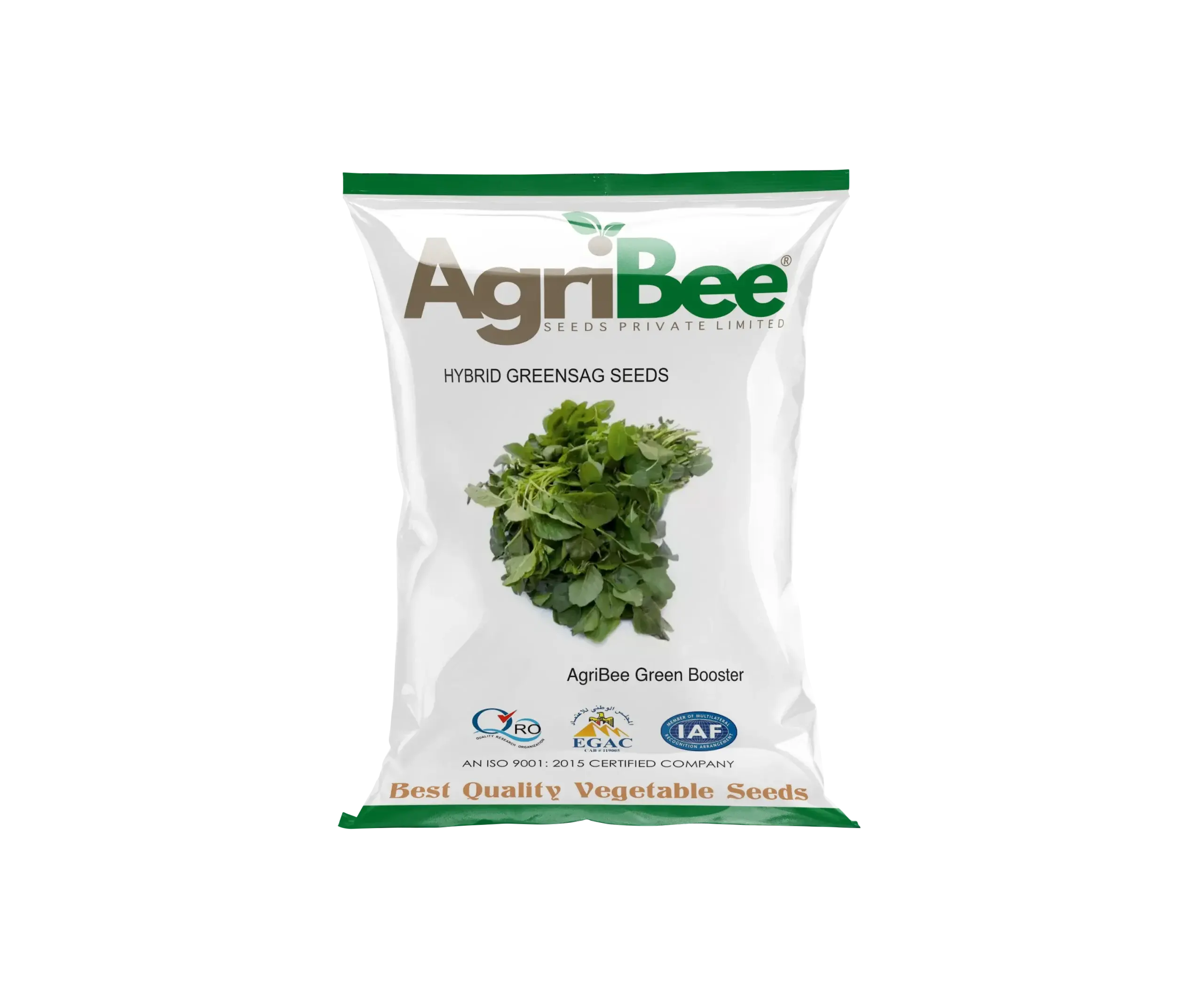
खेती एवं बुवाई निर्देशिका — Saag Seeds AgriBee हरा Booster
फसल के सर्वोत्तम प्रबंधन, रोग प्रतिरोधकता और प्रीमियम उत्पादन के लिए संपूर्ण चरणबद्ध कृषि निर्देशिका।
🌾 भूमि की तैयारी एवं खेत सुधार
खेत की समुचित जुताई एवं तैयारी से एकसमान अंकुरण और मजबूत जड़ों का विकास होता है।
🌱 आदर्श मिट्टी का प्रकार एवं pH
Well-drained loamy to sandy-loam soils with pH 6.0–7.5. The crop thrives in fertile soils rich in organic matter and shows moderate tolerance to marginal soils.
✨ प्रमुख कृषि लाभ
Loose, well-aerated seedbed ensures rapid and uniform germination of tiny amaranth seeds, promoting strong early root establishment and vigorous juvenile foliage development.
- 1
Deep summer ploughing followed by 2–3 cross-harrowings to achieve fine, crumbly tilth essential for small-seeded amaranth germination.
- 2
Field leveling with contour bonding and preparation of effective drainage channels to prevent waterlogging during heavy Kharif rains.
- 3
Incorporation of 8–10 tonnes per acre of well-decomposed FYM or vermicompost into the topsoil during the last harrowing to enhance soil structure and moisture retention.
- 4
Soil health conditioning: Apply agricultural lime at 200–250 kg/acre in acidic soils (pH < 6.0); ensure proper drainage in heavy clay soils to avoid seed rot.
🌱 बुवाई का समय एवं विधि
सटीक बीज दर और सही दूरी से पौधों को पर्याप्त सूर्य का प्रकाश और संतुलित विकास मिलता है।
| मानक / पैरामीटर | अनुशंसा / निर्देश | कृषि महत्व |
|---|---|---|
| बुवाई समय सीमा | Kharif: Mid-June to mid-July | Rabi: Early October to mid-November | Summer: February to early March | Amaranth is warm-season tolerant; kharif sowing aligns with monsoon moisture while rabi/summer sowing requires protected irrigation for consistent foliage quality. |
| बीज दर (प्रति एकड़) | 40–50 g/acre (broadcaster) | 60–70 g/acre (line sowing at 30 cm row spacing) | Optimal seed rate ensures adequate plant population without overcrowding, maintaining leaf tenderness and reducing disease susceptibility. |
| कतार एवं पौधे का अंतर | 30 cm x 10 cm (Row-to-Row x Plant-to-Plant) for line sowing; broadcast at wider spacing for home gardens | Proper spacing promotes canopy air circulation, reduces humidity-related diseases, and allows uniform leaf expansion for broad, tender foliage. |
| बुवाई की गहराई | 0.5–1.0 cm (very shallow — cover seeds lightly with fine soil or sand) | Amaranth seeds are minute and require shallow sowing for successful emergence; deep sowing severely reduces germination and seedling vigor. |
💧 सिंचाई एवं जल प्रबंधन
उचित नमी प्रबंधन से पौधे की वानस्पतिक एवं फलने-फूलने की अवस्था में जोरदार विकास होता है।
☀️ जल आवश्यकता एवं सिंचाई प्रोफाइल
Amaranth saag is moderately drought-tolerant once established but requires consistent soil moisture during the rapid vegetative phase (DAS 5–25) for optimal leaf tenderness and nutritional quality. Drip irrigation is highly compatible and recommended for water efficiency, delivering 2–3 light irrigations per week depending on soil texture and ambient temperature.
🌦️ Soil नमी प्रबंधन
Under rainfed conditions, ensure pre-sowing irrigation to trigger germination. Mulching with straw or organic matter helps retain soil moisture and suppress weeds. Avoid waterlogging at any stage as standing water causes root rot and seedling damping-off.
- ✓
First Irrigation: Apply light irrigation immediately after sowing using a rose can or gentle sprinkler to ensure seed germination and soil contact.
- ✓
Vegetative Phase Irrigation: Maintain light and frequent irrigations every 2–3 days during DAS 5–25 to support rapid leaf growth and maintain tenderness.
- ✓
Critical Growth Stage Irrigation: Consistent moisture between DAS 10–25 is critical for maximum foliage biomass and nutrient density; even short moisture stress leads to fibrous, bitter leaves.
- ✓
Pre-Harvest Water Withholding: Reduce irrigation frequency 1–2 days before each cut to improve post-harvest handling and extend shelf life of harvested greens.
🧪 उर्वरक एवं पोषण प्रबंधन
संतुलित पोषण से मजबूत पौधा संरचना और उच्च गुणवत्ता वाली उपज प्राप्त होती है।
| पोषक तत्व | अनुशंसित मात्रा (प्रति एकड़) | प्रयोग विधि एवं समय |
|---|---|---|
| नाइट्रोजन (N) | 30–40 kg/acre | 50% basal at sowing + 50% top-dressing at DAS 15 alongside light irrigation |
| फॉस्फोरस (P2O5) | 20–25 kg/acre | 100% basal application incorporated during final land preparation as DAP (18:46:0) |
| पोटाश (K2O) | 15–20 kg/acre | 100% basal along with P and half N; split remaining half at first interculture for improved leaf quality and stress tolerance |
🌿 निराई-गुड़ाई एवं खरपतवार नियंत्रण
समय पर खरपतवार नियंत्रण से मुख्य फसल को पूर्ण पोषण और नमी मिलती है।
-
1
First Weeding & Thinness: Perform first weeding and thinning at DAS 7–10 when seedlings have 2–3 true leaves. Remove weak, diseased, or crowded seedlings to maintain uniform plant spacing and reduce competition for nutrients and light.
-
2
Second Weeding & Shallow Hoeing: Carry out second weeding at DAS 15–18 with shallow inter-row hoeing to aerate the soil surface and control late-emerging weeds. Avoid deep hoeing to prevent damage to the shallow root system of amaranth.
-
3
Mulching and Top-Dressing: Apply organic mulch (paddy straw or neem leaves) at 500–700 kg/acre after second weeding to conserve soil moisture, suppress weeds, and regulate soil temperature. Simultaneously apply top-dressing fertilizer and perform gentle earthing-up around the base of plants for improved stability.
🛡️ कीट एवं रोग नियंत्रण
फसल की सक्रिय निगरानी और एकीकृत प्रबंधन से रोगमुक्त एवं स्वस्थ फसल सुनिश्चित होती है।
🐛 कीट प्रबंधन एवं रोकथाम
- Amaranth Bug / Leaf Miner (Liriomyza spp.): Small miners create white serpentine trails on leaves; adults cause stippling damage. Control: Spray Neem-based formulation (Neem oil 3 ml/litre water) or use yellow sticky traps at 10 traps/acre. For severe infestation, apply Imidacloprid 17.8% SL at 0.3 ml/litre water.
- Aphids (Aphis gossypii): Colonies on underside of leaves cause curling, yellowing, and honeydew secretion leading to sooty mould. Control: Spray Actara 25 WG at 0.2 g/litre or imidacloprid 70 WS at 0.3 g/litre. Release ladybird beetles (Harmonia axyridis) at 5,000/acre as biological control.
- Fruit & Shoot Borer (Leucinodes orbonalis): Larvae bore into young shoots and tender leaves causing wilting and necrotic holes. Control: Apply Spinetoram 45 SC at 0.5 ml/litre or Cartap hydrochloride 4G at 1 g/litre. Remove and destroy infested shoots manually and practice crop rotation.
🔬 रोग नियंत्रण एवं उपचार
- Damping-Off (Pythium spp./Rhizoctonia solani): Seedlings collapse at the soil line with water-soaked lesions; high humidity and over-irrigation predispose infection. Preventive: Seed treatment with Thiram or Carbendazim at 2–3 g/kg seed. Soil drench with Copper oxychloride 0.3% at DAS 7 if symptoms appear.
- Leaf Spot (Cercospora amaranthi): Circular to angular brown spots with grey centres on leaves, leading to premature defoliation. Control: Spray Mancozeb 75 WP at 2 g/litre or Chlorothalonil 50 WP at 2 g/litre at 10-day intervals. Remove and burn heavily infected plant residues post-harvest.
- Powdery Mildew (Erysiphe cichoracearum): सफ़ेद powdery fungal growth on leaf surfaces, primarily under humid conditions with poor air circulation. Preventive: Ensure proper spacing for canopy aeration. Curative: Spray Sulphur 80 WP at 2 g/litre or Wettable Sulphur at 3 g/litre every 7–10 days.
✂️ कटाई एवं उपज गुणवत्ता निर्देशिका
सही परिपक्वता पर कटाई से अधिकतम मंडी भाव और बेहतर भंडारण क्षमता मिलती है।
⏱️ कटाई समय एवं निर्धारण
First cutting at 25–30 days after sowing. Subsequent cuts may be taken at 12–15 day intervals, allowing the crop to produce 3–4 harvestable cuts per cycle. Cut at ground level using a sharp knife or sickle, leaving a small stubble for regrowth.
⭐ उपज की गुणवत्ता एवं विशेषताएं
Premium saag quality features broad, tender, vibrant dark-green leaves with a mild, slightly sweet taste highly prized in Indian households. Leaves should be crisp, free from bitterness, fibrous strands, or pest damage, with high visual freshness and minimal wilting.
| गुणवत्ता मानक | कृषि मानक | किसान एवं मंडी लाभ |
|---|---|---|
| पहली कटाई / तुड़ाई Stage | 25–30 बुवाई के दिन बाद | Ensures peak foliage tenderness, early market arrival, and optimal nutritional content including iron, calcium, and vitamins A and C. |
| परिपक्वता के लक्षण | Leaves are fully expanded, dark green, and tender; stems are succulent and not yet woody; plant height reaches 20–30 cm | Harvesting at this window prevents stem toughening and maintains superior eating quality preferred by consumers. |
| भंडारण क्षमता एवं टिकाऊपन | 2–3 days at ambient temperature; up to 5–7 days under refrigerated conditions (8–10°C) with perforated poly bags | Tender saag retains colour, texture, and nutritional value when harvested at proper maturity and handled with care post-cutting. |
| मंडी मांग एवं उपयुक्तता | Fresh local markets, urban mandis, institutional catering, and direct farm-gate sales; suitable for value-added processing into frozen greens and ready-to-cook packs | Short crop duration and multiple cut potential enable farmers to supply fresh saag continuously throughout the season at premium prices. |
⭐ किस्म की विशेषताएं — Saag Seeds AgriBee हरा Booster
विशिष्ट विशेषताएं जो इस किस्म को भारतीय किसानों की पहली पसंद बनाती हैं।
🌿 किस्म की मुख्य विशेषताएं
AgriBee हरा Booster delivers rapid 25–30 day first harvest with exceptional regrowth vigour, enabling multiple cutting cycles from a single sowing for sustained fresh produce availability.
🌿 उपज की गुणवत्ता एवं रूप-रंग
Produces broad, tender, dark-green leaves with a mild flavour and high nutritional density rich in iron, calcium, folate, and vitamins A and C—ideal for health-conscious consumers.
🌿 तनाव एवं रोग प्रतिरोधक क्षमता
Demonstrates strong field tolerance to common leaf spot and powdery mildew conditions under Indian growing environments, with good resilience against moderate moisture stress post-establishment.
🌿 वृद्धि स्वभाव एवं ओज (विगर)
Upright, bushy plant architecture with vigorous lateral branching ensures dense canopy coverage, rapid leaf production, and consistent regrowth after each cutting operation.
🌿 मंडी एवं किसान प्राथमिकता
Farmers favour this variety for its short crop cycle enabling quick turnaround and multiple income events from one planting. Dealers and traders prefer it for consistent supply, attractive leaf appearance, excellent shelf life, and strong consumer demand in both rural and urban market channels across India.