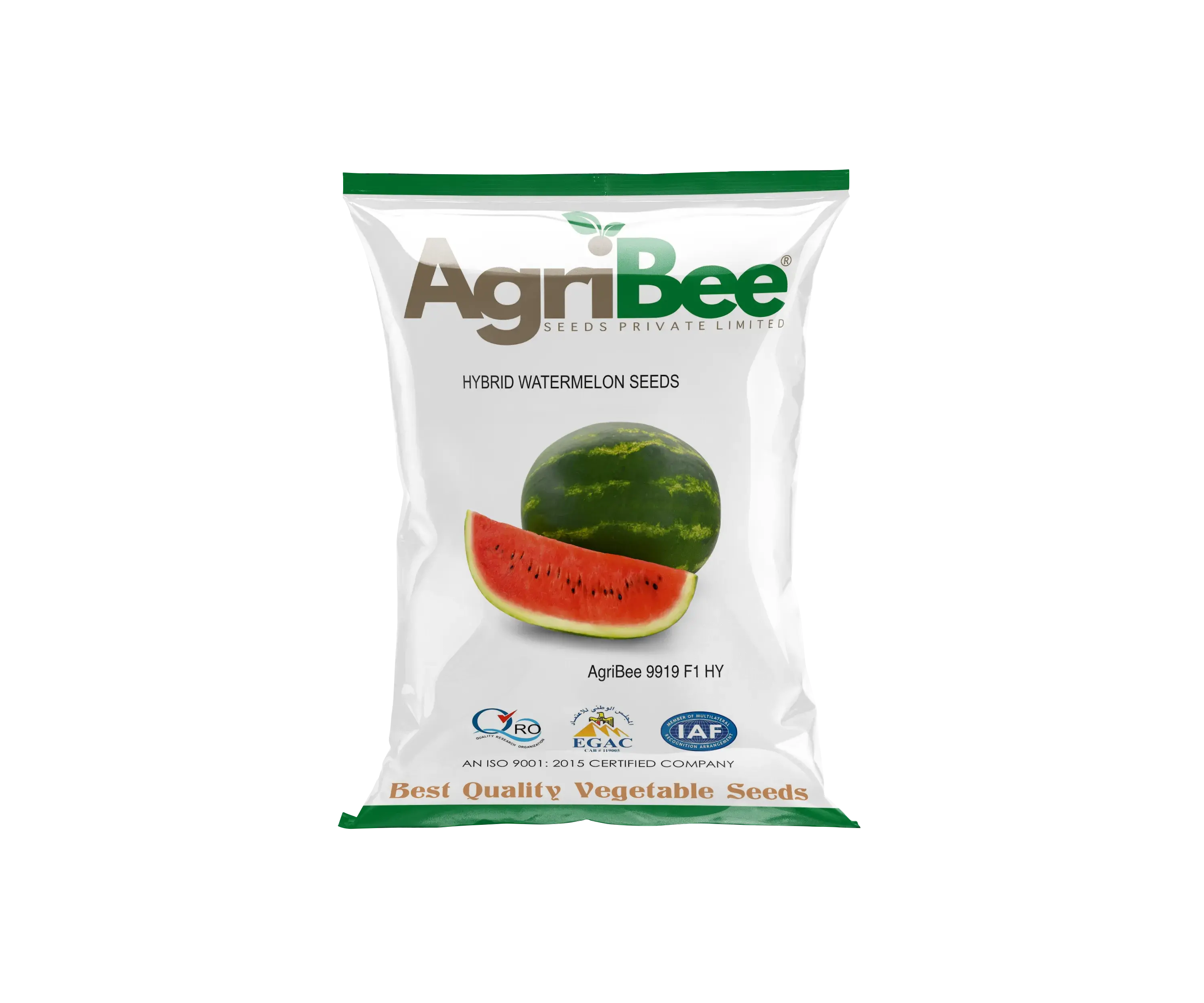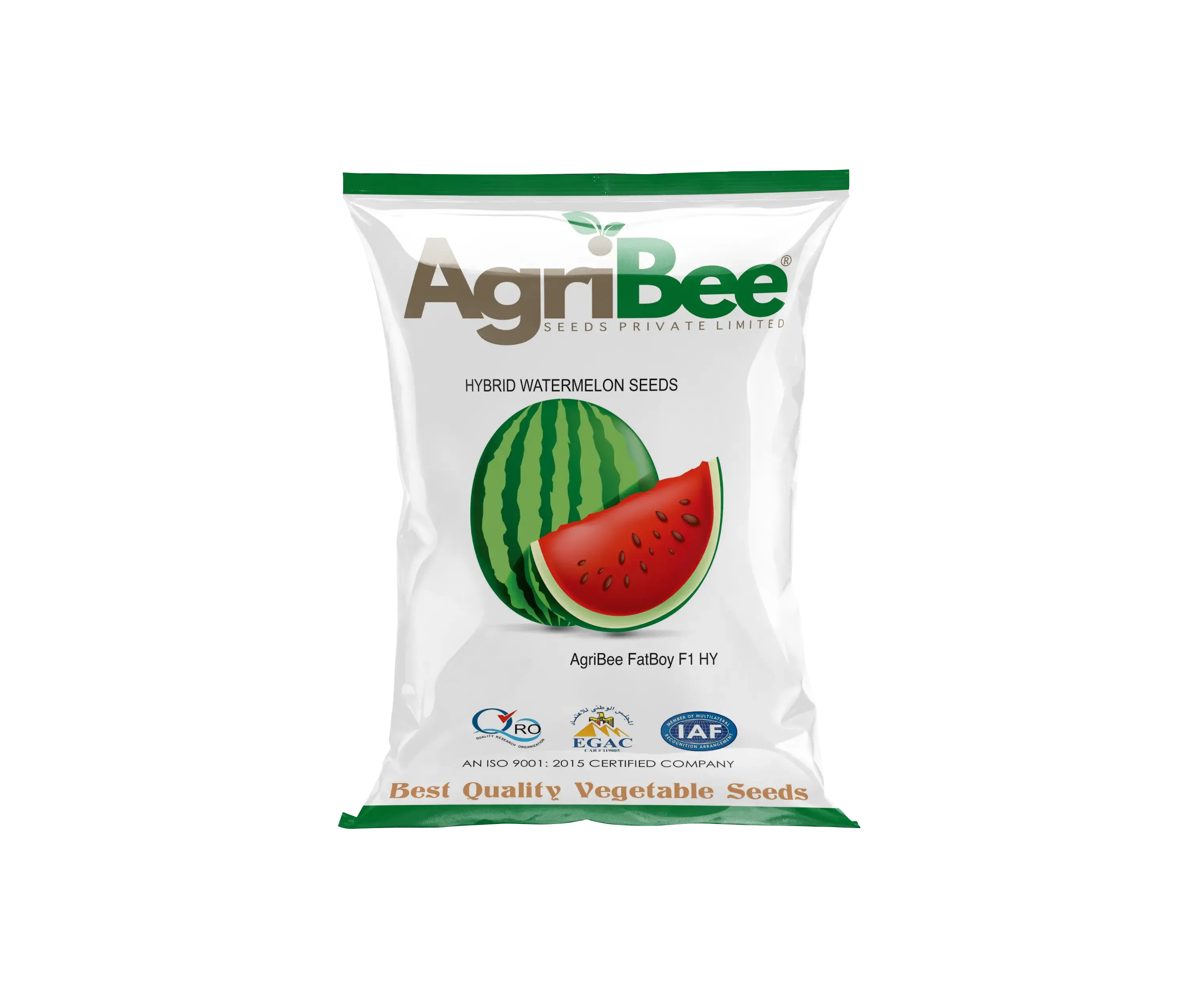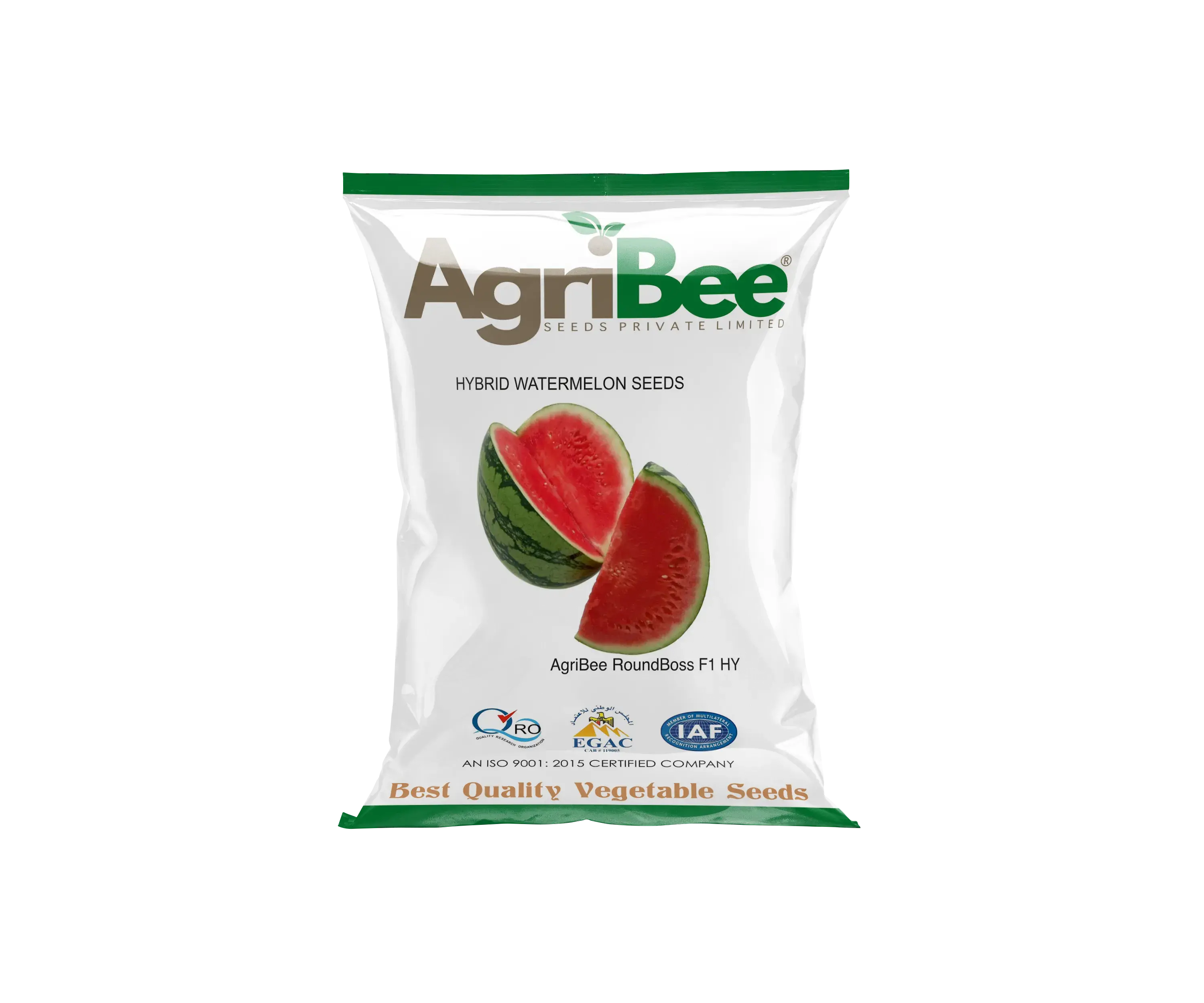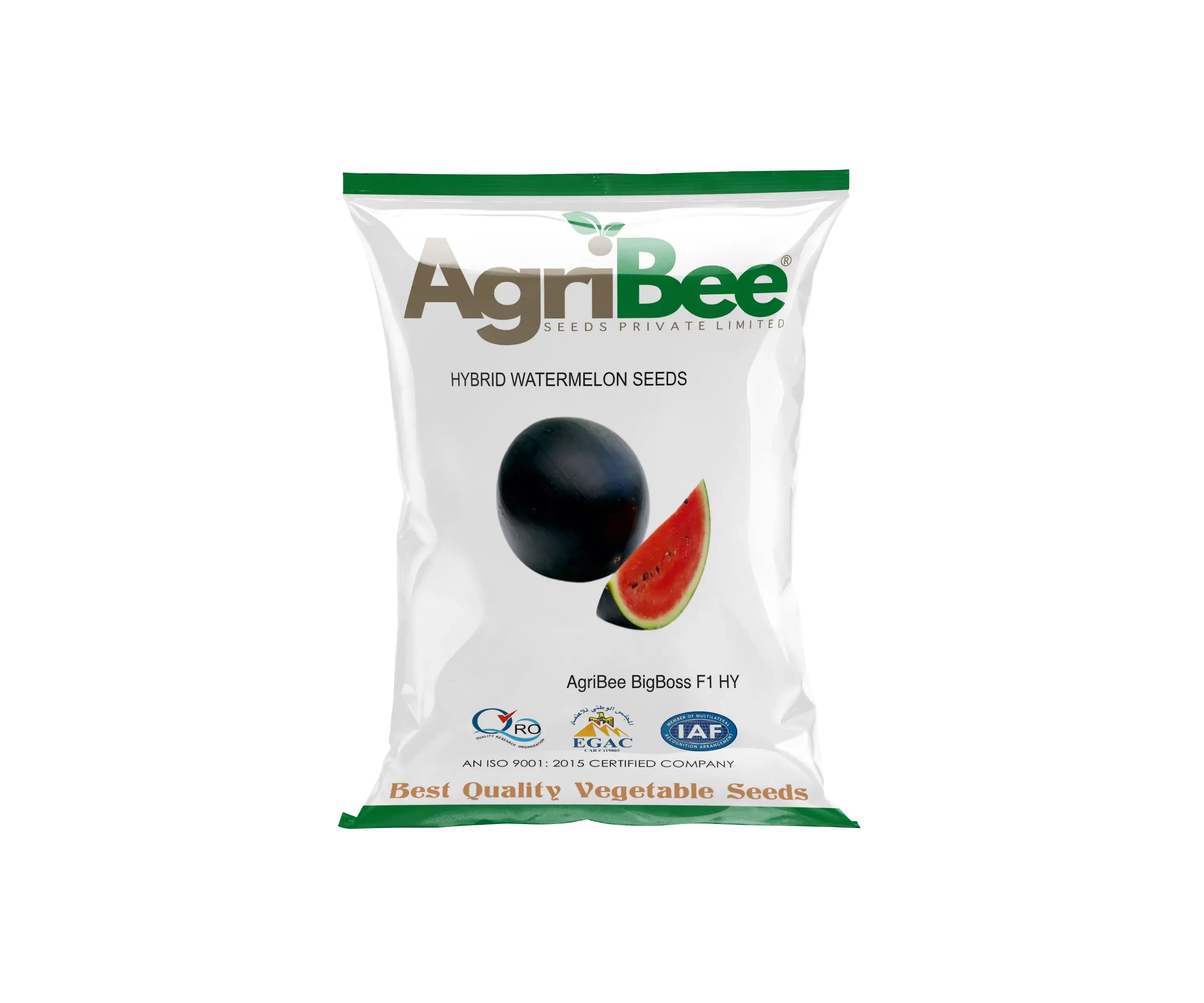

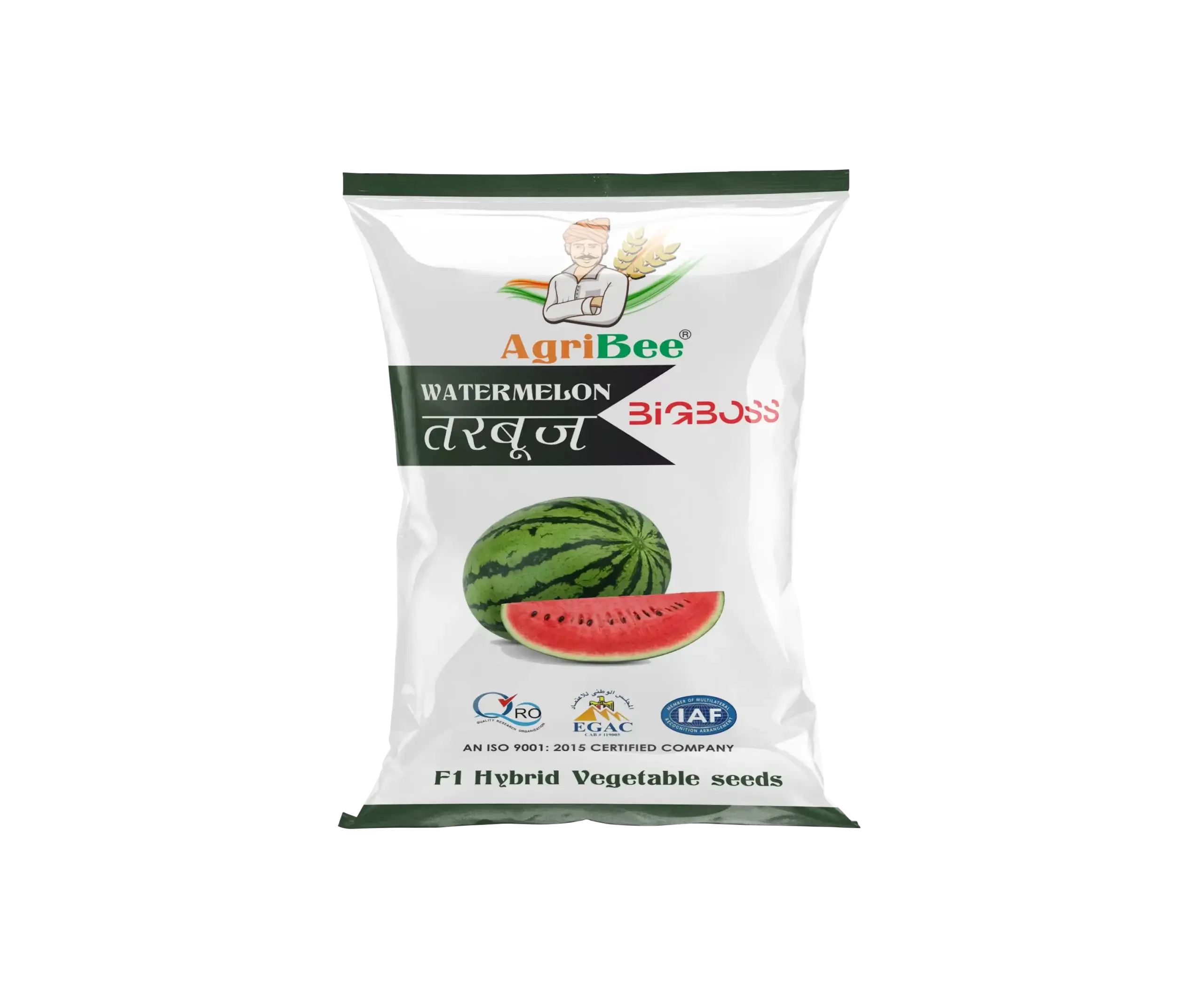
Description
खेती एवं बुवाई निर्देशिका — तरबूज Seeds – BigBoss
फसल के सर्वोत्तम प्रबंधन, रोग प्रतिरोधकता और प्रीमियम उत्पादन के लिए संपूर्ण चरणबद्ध कृषि निर्देशिका।
🌾 भूमि की तैयारी एवं खेत सुधार
खेत की समुचित जुताई एवं तैयारी से एकसमान अंकुरण और मजबूत जड़ों का विकास होता है।
🌱 आदर्श मिट्टी का प्रकार एवं pH
Well-drained sandy loam to loamy soils with pH 6.0–7.5. तरबूज thrives in light, warm soils that provide excellent drainage and root penetration. Heavy clay or waterlogged soils must be avoided due to susceptibility to root rot and poor fruit development.
✨ प्रमुख कृषि लाभ
Loose, well-aerated seedbed ensures rapid germination, strong taproot establishment, and uniform vine spread—critical for achieving deep red, crisp flesh with consistent sweetness.
- 1
Deep summer ploughing to 25–30 cm followed by 2–3 cross-harrowings to obtain a fine, clod-free tilth.
- 2
Field leveling and creation of well-defined drainage channels to prevent water stagnation during monsoon rains.
- 3
Incorporation of 8–10 tonnes per acre of well-decomposed FYM or vermicompost during the last harrowing for improved soil structure and moisture retention.
- 4
Soil health conditioning: if pH is below 6.0, apply 200–250 kg/acre of agricultural lime 15 days before sowing; if above 7.5, incorporate gypsum at 250 kg/acre.
🌱 बुवाई का समय एवं विधि
सटीक बीज दर और सही दूरी से पौधों को पर्याप्त सूर्य का प्रकाश और संतुलित विकास मिलता है।
| मानक / पैरामीटर | अनुशंसा / निर्देश | कृषि महत्व |
|---|---|---|
| बुवाई समय सीमा | June–July (Kharif) in Gujarat, Maharashtra, MP; October–November (Rabi) in Rajasthan, North India; March–April (Summer) under irrigated protected conditions in South India | तरबूज is a warm-season crop; sowing after the last frost and when soil temperature reaches 18–20°C ensures rapid germination and vigorous early growth. |
| बीज दर (प्रति एकड़) | 1.5–2.0 kg per acre for direct sowing; 500–600 g per acre for transplanting | Ensures optimum plant population of approximately 6,000–8,000 plants per acre, preventing overcrowding and promoting healthy vine development and fruit expansion. |
| कतार एवं पौधे का अंतर | Row-to-row: 1.2–1.5 m; Plant-to-plant: 45–60 cm (broad row spacing recommended for oblong/round fruit types) | Adequate spacing allows full canopy spread, improves air circulation, reduces humidity-related disease pressure, and supports development of 4–8 kg fruits without contact with moist soil. |
| Sowing / Transplanting Depth | 2.5–3.0 cm for direct sowing; seed depth 1.5–2.0 cm in nursery trays | Proper depth ensures consistent moisture contact for imbibition and uniform emergence; excessive depth delays germination and increases seedling mortality. |
💧 सिंचाई एवं जल प्रबंधन
उचित नमी प्रबंधन से पौधे की वानस्पतिक एवं फलने-फूलने की अवस्था में जोरदार विकास होता है।
☀️ जल आवश्यकता एवं सिंचाई प्रोफाइल
तरबूज requires moderate and well-distributed moisture throughout its growth cycle. While it has moderate drought tolerance once established, sustained soil moisture is essential during flowering and fruit development for optimal fruit sizing, flesh texture, and sugar accumulation. Drip irrigation with fertigation is highly recommended for efficient water use and uniform crop performance.
🌦️ Soil नमी प्रबंधन
During critical stages—flowering, fruit set, and fruit expansion—moisture stress leads to poor fruit set, fruit drop, and sunken or misshapen fruits. Mulching with straw or polyethylene film helps maintain consistent soil moisture and reduces evaporation loss in rainfed situations.
- ✓
First irrigation should be applied immediately after sowing to ensure seed coat softening and uniform germination within 5–7 days.
- ✓
Vegetative phase (20–40 DAS): light and frequent irrigation at 5–7 day intervals to support vigorous vine growth and lateral branch development.
- ✓
Critical stage (40–70 DAS): maintain consistent soil moisture at field capacity during flowering, fruit set, and active fruit expansion; water stress during this period severely impacts fruit quality and sweetness.
- ✓
Pre-harvest (last 10–12 days before harvest): reduce irrigation frequency significantly to allow fruit maturation and sugar concentration; avoid overhead watering to prevent fruit cracking and disease incidence.
🧪 उर्वरक एवं पोषण प्रबंधन
संतुलित पोषण से मजबूत पौधा संरचना और उच्च गुणवत्ता वाली उपज प्राप्त होती है।
| पोषक तत्व | अनुशंसित मात्रा (प्रति एकड़) | प्रयोग विधि एवं समय |
|---|---|---|
| नाइट्रोजन (N) | 60–80 kg/acre | Basal: 40% N at sowing as urea; Top-dress: 30% N at 25 DAS as split application; Final 30% N at 40 DAS to support fruit development |
| फॉस्फोरस (P2O5) | 40–50 kg/acre | 100% basal application at sowing through DAP or SSP incorporated during last harrowing |
| पोटाश (K2O) | 50–60 kg/acre | 60% K at basal through MOP; remaining 40% split and applied at flowering and fruit-setting stages for improved fruit sweetness, firmness, and shelf life |
🌿 निराई-गुड़ाई एवं खरपतवार नियंत्रण
समय पर खरपतवार नियंत्रण से मुख्य फसल को पूर्ण पोषण और नमी मिलती है।
-
1
पहली निराई-गुड़ाई: Perform shallow hoeing and manual weeding at 15–20 DAS before vine closure. This preserves soil aeration and eliminates early weed competition without damaging the shallow root system.
-
2
Second Weeding & Vine Training: At 30–35 DAS, undertake inter-row hoeing and gently train main vines outward to utilize available ground space evenly. Remove any excess runners that crowd the central framework to improve airflow and reduce fungal disease risk.
-
3
Mulching and Fruit Lift Support: Lay black plastic mulch or organic straw mulch at planting to conserve moisture and suppress weeds. Place fruits on clean straw pads or small wooden platforms as they develop to prevent soil contact, reduce disease incidence, and maintain uniform dark-green rind appearance.
🛡️ कीट एवं रोग नियंत्रण
फसल की सक्रिय निगरानी और एकीकृत प्रबंधन से रोगमुक्त एवं स्वस्थ फसल सुनिश्चित होती है।
🐛 कीट प्रबंधन एवं रोकथाम
- Aphids (Aphis gossypii): Sucking sap from tender shoots and leaves causing curling, yellowing, and sooty mould. Control: Spray Imidacloprid 17.8% SL at 0.3 ml/litre or Neem-based formulation (Azadirachtin 1%) at 2 ml/litre. Repeat after 10–12 days if infestation persists.
- Fruit Borer / Stem Borer (Helicoverpa armigera): Larvae bore into young fruits causing direct damage and secondary infections. Control: Install pheromone traps at 10/acre for monitoring. Spray Chlorantraniliprole 18.5% SC at 0.3 ml/litre or Bacillus thuringiensis at 2 g/litre during early instar stage.
- सफ़ेदfly (Bemisia tabaci): Leaves yellow and curl; transmit viral diseases such as Cucurbit yellow stunting disorder. Control: Spray Thiamethoxam 25% WG at 0.2 g/litre or Yellow sticky traps at 10/acre. Remove and destroy heavily infested plant debris promptly.
🔬 रोग नियंत्रण एवं उपचार
- Powdery Mildew (Podosphaera xanthii): सफ़ेद powdery growth on upper leaf surface causing premature leaf senescence. Control: Spray Sulphur dusting (80% WP) at 2.5 kg/acre or Myclobutanil 6.9% WG at 0.3 g/litre. Ensure adequate spacing for canopy ventilation.
- Downy Mildew (Pseudoperonospora cubensis): Angular yellow lesions on upper leaf surface with purple-grey sporulation underneath. Control: Spray Mancozeb 75% WP at 2.5 g/litre or Metalaxyl + Mancozeb at 2 g/litre. Avoid overhead irrigation and remove infected leaves.
- Fusarium Wilt (Fusarium oxysporum f. sp. nivele): Wilting of vines, yellowing starting from base, and vascular browning. Control: Practice 3–4 year crop rotation with non-cucurbits. Apply Trichoderma viride at 5 kg/acre mixed with FYM as soil drench at planting. Remove and burn severely infected plants.
✂️ कटाई एवं उपज गुणवत्ता निर्देशिका
सही परिपक्वता पर कटाई से अधिकतम मंडी भाव और बेहतर भंडारण क्षमता मिलती है।
⏱️ कटाई समय एवं निर्धारण
First harvest begins at 75–80 days after sowing. Fruits are picked individually as they reach maturity over a 10–12 day window. Avoid harvest during peak afternoon heat to minimize field heat and fruit stress.
⭐ उपज की गुणवत्ता एवं विशेषताएं
Fruit exhibits deep red, crisp flesh with high brix sweetness, a thick yet firm rind in dark green with attractive striping, and excellent internal consistency. The oblong to round shape ensures uniform market presentation and high consumer acceptability.
| गुणवत्ता मानक | कृषि मानक | किसान एवं मंडी लाभ |
|---|---|---|
| पहली कटाई / तुड़ाई Stage | 75–80 बुवाई के दिन बाद | Ensures peak flavor development, optimal flesh colour, and early market entry for better price realization. |
| परिपक्वता के लक्षण | Tendril nearest to fruit peduncle becomes completely dry and brown; fruit belly develops a creamy yellow patch; rind loses gloss and becomes slightly dull; fruit sounds hollow when tapped. | Prevents harvesting immaterial fruit with watery flesh and poor sweetness, and avoids over-maturity leading to texture breakdown. |
| भंडारण क्षमता एवं टिकाऊपन | 7–10 days under ambient conditions; up to 14–18 days under cool storage at 8–10°C with 85–90% relative humidity. | Robust rind and firm flesh provide excellent post-harvest longevity, supporting long-distance transport and extended marketing windows. |
| मंडी मांग एवं उपयुक्तता | Ideal for fresh table trade, local mandis, and urban wholesale markets. Attractive dark-green striped rind and deep red crisp flesh command premium rates. | उच्च (High) visual appeal and superior eating quality drive strong trader and consumer preference, ensuring consistent demand across seasons. |
⭐ किस्म की विशेषताएं — तरबूज Seeds – BigBoss
विशिष्ट विशेषताएं जो इस किस्म को भारतीय किसानों की पहली पसंद बनाती हैं।
🌿 किस्म की मुख्य विशेषताएं
BigBoss delivers outstanding field performance under diverse Indian growing conditions, combining early maturity with exceptional fruit uniformity and vigour—making it a dependable choice for commercial watermelon cultivation.
🌿 उपज की गुणवत्ता एवं रूप-रंग
Deep red, crisp flesh with very sweet flavour and high brix content. Dark green striped to solid rind provides excellent visual appeal, strong transport resilience, and broad consumer acceptance.
🌿 तनाव एवं रोग प्रतिरोधक क्षमता
Strong field tolerance to common cucurbit diseases including powdery mildew and Fusarium wilt, along with moderate resilience to heat and moisture fluctuations, ensuring stable performance across Kharif and Rabi seasons.
🌿 वृद्धि स्वभाव एवं ओज (विगर)
Vigorous vining habit with well-branched runners that efficiently cover the ground. Compact yet expansive growth supports heavy fruit load of 4–8 kg without excessive vine congestion.
🌿 फसल अवधि एवं पकने का समय
Early maturing at 75–80 days to first harvest, enabling flexible crop scheduling, multiple cropping opportunities, and timely market capture during high-demand periods.
🌿 मंडी एवं किसान प्राथमिकता
Trusted by progressive farmers and traders across Gujarat, Maharashtra, Rajasthan, MP, and South India for its consistent fruit quality, attractive appearance, and reliable field performance season after season.