
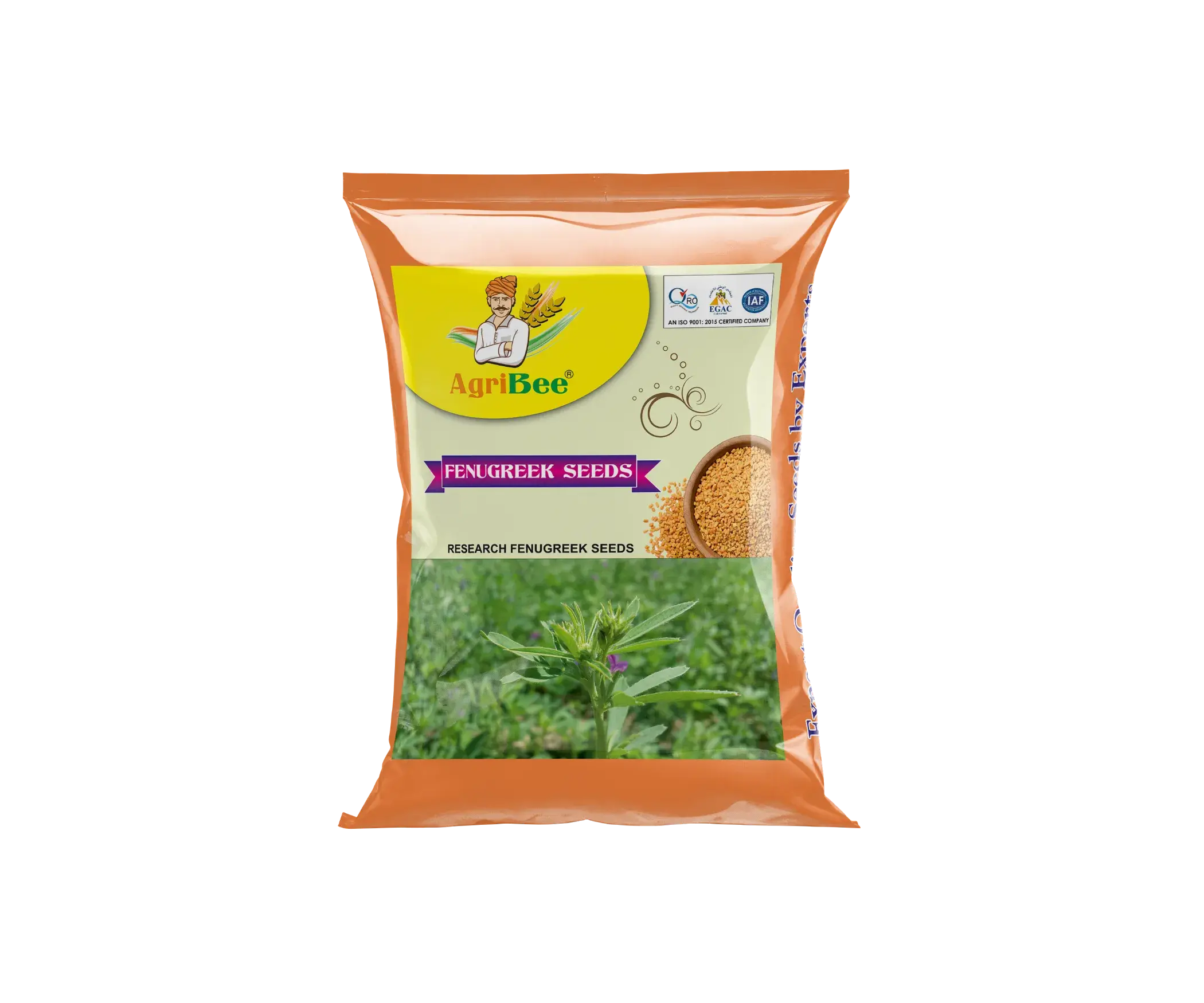
Description
खेती एवं बुवाई निर्देशिका — Fenugreek Seed Javra
फसल के सर्वोत्तम प्रबंधन, रोग प्रतिरोधकता और प्रीमियम उत्पादन के लिए संपूर्ण चरणबद्ध कृषि निर्देशिका।
🌾 भूमि की तैयारी एवं खेत सुधार
खेत की समुचित जुताई एवं तैयारी से एकसमान अंकुरण और मजबूत जड़ों का विकास होता है।
🌱 आदर्श मिट्टी का प्रकार एवं pH
Well‑drained loamy to sandy‑loam soils with pH 6.5–8.0. Avoid heavy, waterlogged clays.
✨ प्रमुख कृषि लाभ
Fine tilth and good drainage promote rapid germination and strong root anchorage.
- 1
Deep summer ploughing followed by 2–3 cross‑harrowings to obtain a fine, well‑crumbled seedbed.
- 2
Field leveling and preparation of drainage channels to prevent standing water.
- 3
Incorporation of 8–10 t/ha well‑decomposed FYM or compost during the last harrowing.
- 4
Soil health conditioning: apply gypsum (100 kg/ha) in saline‑alkali soils and lime (50 kg/ha) if pH is below 6.5.
🌱 बुवाई का समय एवं विधि
सटीक बीज दर और सही दूरी से पौधों को पर्याप्त सूर्य का प्रकाश और संतुलित विकास मिलता है।
| मानक / पैरामीटर | अनुशंसा / निर्देश | कृषि महत्व |
|---|---|---|
| बुवाई समय सीमा | October–November (Rabi) across most of India; June–July in Rajasthan/Madhya Pradesh for Kharif sowing. | Cool temperatures favour uniform germination and steady vegetative growth. |
| बीज दर (प्रति एकड़) | 4–5 kg per acre (10–12 kg/ha). | Maintains optimal plant population without overcrowding, ensuring each plant receives adequate light and nutrients. |
| कतार एवं पौधे का अंतर | Row‑to‑row: 30 cm; Plant‑to‑plant: 5–7 cm (approx. 2 inch apart within the row). | Balanced spacing aids canopy spread, air circulation, and reduces humidity‑related disease pressure. |
| बुवाई की गहराई | 1.5–2.0 cm in light soils; 2.5–3.0 cm in heavy soils. | Shallow sowing ensures quick emergence; deeper placement protects seeds in compact soils. |
💧 सिंचाई एवं जल प्रबंधन
उचित नमी प्रबंधन से पौधे की वानस्पतिक एवं फलने-फूलने की अवस्था में जोरदार विकास होता है।
☀️ जल आवश्यकता एवं सिंचाई प्रोफाइल
Fenugreek exhibits moderate drought tolerance but responds well to 3–4 light irrigations during dry spells. Drip irrigation with alternating‑row wetting is compatible and conserves water.
🌦️ Soil नमी प्रबंधन
In rainfed areas, sow early to capture residual soil moisture. Mulching with straw (2–3 cm) conserves moisture and suppresses weeds.
- ✓
First irrigation at 15–20 days after sowing (DAS) to establish seedlings.
- ✓
Subsequent irrigations at 20–25 day intervals during vegetative phase, depending on soil texture and rainfall.
- ✓
Critical stage: Provide moisture at flowering (≈50 DAS) and pod‑filling (70–90 DAS); avoid water stress during these phases.
- ✓
Withhold irrigation completely 10–12 days before harvest to facilitate even drying and prevent seed moulding.
🧪 उर्वरक एवं पोषण प्रबंधन
संतुलित पोषण से मजबूत पौधा संरचना और उच्च गुणवत्ता वाली उपज प्राप्त होती है।
| पोषक तत्व | अनुशंसित मात्रा (प्रति एकड़) | प्रयोग विधि एवं समय |
|---|---|---|
| नाइट्रोजन (N) | 20–25 kg N/acre (8–10 kg N/10 kg seed for inoculant) | 100% basal as urea (46‑0‑0) mixed with seed‑treatment microbials. |
| Phosphorus (P2O5) | 40–50 kg P2O5/acre (250 kg DAP/acre or 125 kg SSP/acre) | 100% basal application at sowing, incorporated into the seed zone. |
| Potash (K2O) | 20–25 kg K2O/acre (35 kg MOP/acre) | Split: 50% basal + 50% top‑dressed at 40 DAS for improved seed filling and disease resilience. |
🌿 निराई-गुड़ाई एवं खरपतवार नियंत्रण
समय पर खरपतवार नियंत्रण से मुख्य फसल को पूर्ण पोषण और नमी मिलती है।
-
1
पहली निराई-गुड़ाई: Carry out at 15–20 DAS using a hand hoe or tractor‑drawn cultivator. Early weed control prevents competition during the critical seedling phase.
-
2
Second Weeding & Earthing‑Up: Perform at 30–35 DAS to loosen soil, improve aeration, and support root development. Light earthing‑up around plants helps stabilise stems.
-
3
विशेष अंतर-कृषि क्रियाएं: Apply organic mulch (straw or parchi) at 10–15 cm thickness after second weeding. Mulching conserves moisture, suppresses weeds, and keeps pods clean.
🛡️ कीट एवं रोग नियंत्रण
फसल की सक्रिय निगरानी और एकीकृत प्रबंधन से रोगमुक्त एवं स्वस्थ फसल सुनिश्चित होती है।
🐛 कीट प्रबंधन एवं रोकथाम
- Fenugreek Leaf Cutting Caterpillar (Spodoptera litura): Leaves appear skeletonised with irregular holes. Control: Spray neem‑based bio‑pesticide (Neem oil 5 ml/L) or carbendazim 50 WP (1 g/L) at 25 and 40 DAS. Also release parasitoid wasps Trichogramma spp. (1 lakh/acre) at first egg appearance.
- Aphids (Aphis craccivora): Yellowing and curling of leaves, honeydew secretion, sooty mould. Control: Spray imidacloprid 17.8 SL (0.3 ml/L) or thiamethoxam 25 WG (0.2 g/L) at 30 DAS. Encourage natural enemies like ladybird beetles and hoverflies.
- Pod Borer (Helicoverpa armigera): Boreholes in pods with frass and wilting tips. Control: Apply pheromone traps (10/acre) for monitoring. Spray baculovirus (NPV) at 250 LE/ha or chlorantraniliprole 18.4 SC (0.4 ml/L) at early flower stage.
🔬 रोग नियंत्रण एवं उपचार
- Powdery Mildew (Erysiphe polygoni): ਚਿੱਟਾ powdery growth on leaves and pods, leading to premature drying. Preventive spray: Sulphur dusting (8 kg/acre) or myclobutanil 12.5 WP (0.5 g/L) at 40 DAS and again at 60 DAS.
- Collar Rot (Macrophomina phaseolina): Wilting, dark lesions at soil‑line, plant death. Manage by seed treatment with carbendazim 50 WP (2 g/kg seed) + Trichoderma viride (10 g/kg seed). Avoid waterlogging and ensure proper drainage.
- Bacterial Blight (Xanthomonas campestris): Water‑soaked spots turning brown, necrotic margins, wilting. Control: Spray copper oxychloride 50 WP (3 g/L) at 30 and 50 DAS. Remove and burn infected plants immediately.
✂️ कटाई एवं उपज गुणवत्ता निर्देशिका
सही परिपक्वता पर कटाई से अधिकतम मंडी भाव और बेहतर भंडारण क्षमता मिलती है।
⏱️ कटाई समय एवं निर्धारण
First (and only) harvest at 109–111 days after sowing when 80–90% of pods turn brown and seeds harden.
⭐ उपज की गुणवत्ता एवं विशेषताएं
Seeds are uniform, hard, and possess a characteristic yellowish‑brown colour with a pungent, slightly bitter aroma. ਉੱਚਾ essential‑oil content and consistent seed size ensure excellent market appeal.
| गुणवत्ता मानक | कृषि मानक | किसान एवं मंडी लाभ |
|---|---|---|
| कटाई की अवस्था | 109–111 Days After Sowing | Ensures peak seed maturity, optimal flavour compound concentration, and uniform Colour. |
| परिपक्वता के लक्षण | Pods turn light brown, seeds rattle inside when shaken, plant foliage begins to yellow. | Prevents over‑maturity that leads to pod shattering and seed discolouration. |
| भंडारण क्षमता एवं टिकाऊपन | 4–6 months under cool, dry storage (<12% moisture content). | Facilitates long‑distance transport and extended sales window without mould or insect damage. |
| मंडी मांग एवं उपयुक्तता | Ideal for spice markets, Ayurvedic/pharmaceutical processing, and export. | Uniform seed size and colour attract premium rates from traders and processors. |
⭐ किस्म की विशेषताएं — Fenugreek Seed Javra
विशिष्ट विशेषताएं जो इस किस्म को भारतीय किसानों की पहली पसंद बनाती हैं।
🌿 किस्म की मुख्य विशेषताएं
Early‑flowering genetics (49–50 DAS) with balanced plant stature (40–80 cm) allow flexible scheduling and efficient land use.
🌿 उपज की गुणवत्ता एवं रूप-रंग
Seeds exhibit a consistent yellowish‑brown hue, firm texture, and high essential‑oil content, meeting stringent spice‑grade standards.
🌿 तनाव एवं रोग प्रतिरोधक क्षमता
Moderate tolerance to water‑stress and resilient against common foliar diseases when integrated pest‑management practices are followed.
🌿 वृद्धि स्वभाव एवं ओज (विगर)
Bushy, upright habit with prolific branching ensures even light interception and sturdy pod‑bearing capacity.
🌿 फसल अवधि एवं पकने का समय
Maturity in 109–111 days enables timely land preparation for subsequent Rabi or summer crops, supporting multiple cropping systems.
🌿 मंडी एवं किसान प्राथमिकता
AgriBee’s Fenugreek Seed Javra is trusted for its predictable performance, attractive seed colour, and reliable field vigour under diverse Indian agro‑conditions.