Description
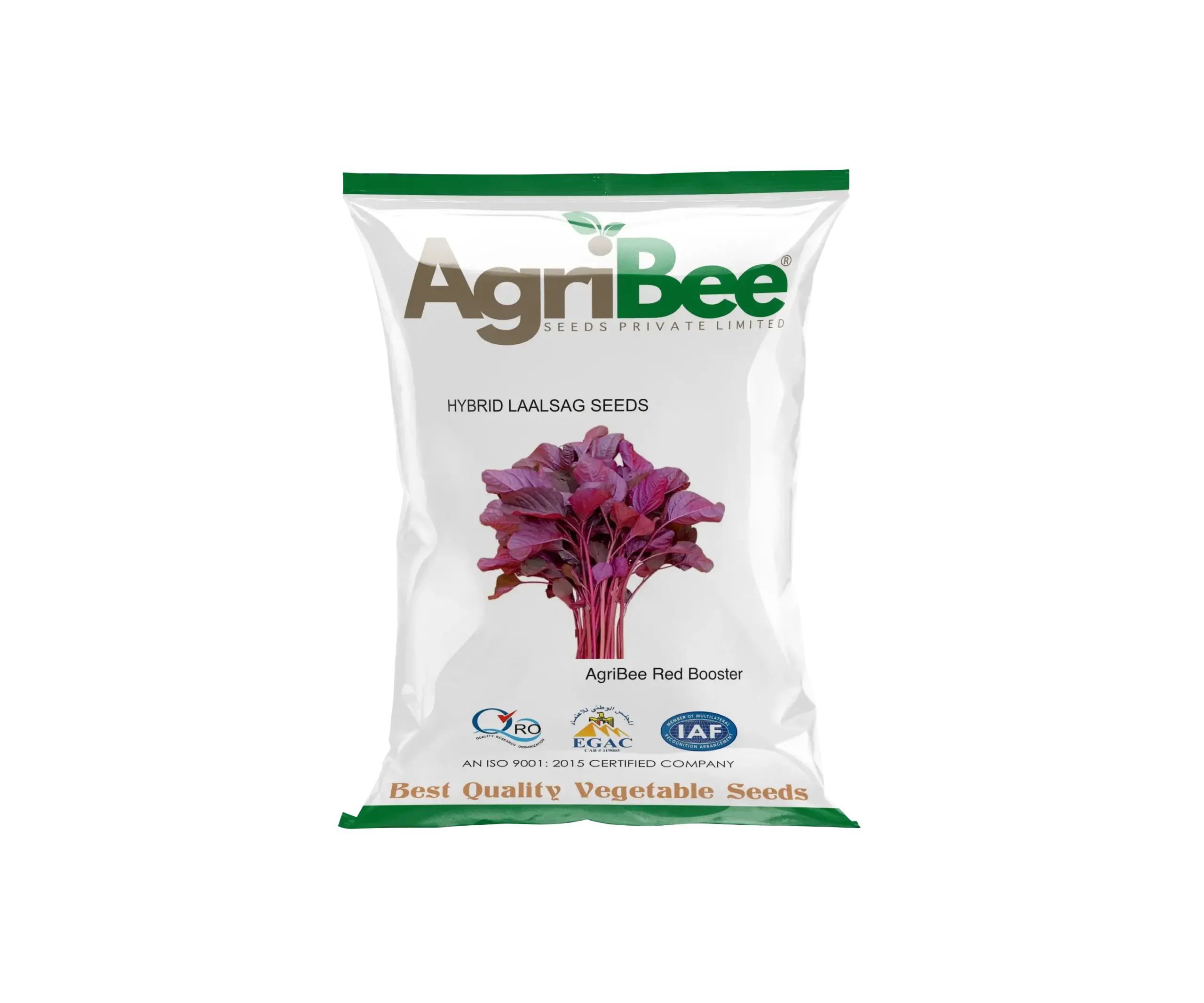
Farming & Cultivation Guide — Saag Seeds AgriBee Red Booster
Complete step-by-step agronomic guide for optimal crop management, disease resistance, and premium produce quality.
🌾 Soil Preparation & Field Prep
Proper land preparation ensures uniform seedling emergence and robust root anchorage.
🌱 Ideal Soil Type & pH
Well-drained sandy loam to loamy soils with good organic matter content. Preferred pH range: 6.0–7.5. The crop tolerates slightly acidic to neutral conditions and performs well under marginal soils but requires adequate drainage to prevent waterlogging.
✨ Core Advantage
Fine tilth and loose soil structure ensure rapid seed germination and strong early root establishment, critical for a fast-growing saag crop harvested within 25–30 days.
- 1
Deep summer ploughing followed by 2–3 cross-harrowings to achieve fine, crumbly tilth for uniform seedbed preparation.
- 2
Field leveling and creation of drainage channels to prevent water stagnation, which Amaranth is highly sensitive to.
- 3
Incorporation of 8–10 tonnes per acre of well-decomposed Farm Yard Manure (FYM) or compost during final harrowing to enhance soil fertility and moisture retention.
- 4
Soil health conditioning with lime application (200–250 kg/acre) in slightly acidic soils to maintain optimal pH for nutrient availability and root development.
🌱 Sowing Time & Method
Precise seed rate and spacing maximize light interception and canopy development.
| Parameter | Recommendation | Agronomic Importance |
|---|---|---|
| Sowing Window | Kharif: Mid-June to mid-September | Rabi: October to February | Summer: March to May (irrigated) | Amaranth is warm-season but adapts well across Indian agro-climatic zones. Kharif sowing benefits from natural monsoon moisture while Rabi offers cooler conditions yielding tender foliage with enhanced shelf life. |
| Seed Rate | 3–4 kg/acre for broadcast; 2.5–3 kg/acre for line sowing at 30 cm row spacing | Optimal seed rate ensures sufficient plant population without overcrowding, promoting healthy leaf expansion and preventing disease pressure from dense canopies. |
| Spacing | Row-to-row: 25–30 cm × Plant-to-plant: 10–15 cm (for multiple cutting); 30 × 15 cm for single-cut hybrid vigor | Proper spacing ensures adequate air circulation between plants, reduces humidity-related diseases, supports broad leaf spread, and facilitates multiple cutting operations. |
| Sowing Depth | 0.5–1.0 cm (very shallow — seeds are tiny and require light for optimal germination) | Shallow sowing ensures rapid and uniform emergence. Covering beyond 1 cm significantly reduces germination percentage due to limited seed energy reserves in Amaranth. |
💧 Irrigation & Water Management
Adequate moisture regulation supports strong vegetative and reproductive growth.
☀️ Water Requirement Profile
Amaranth exhibits moderate drought tolerance once established but requires consistent soil moisture during the vegetative phase (DAS 1–25) for tender leaf production. The crop thrives under 4–5 light irrigations at 5–7 day intervals in Kharif and 7–10 day intervals in Rabi. Drip irrigation is highly compatible and recommended for water efficiency, delivering 2–3 mm per irrigation cycle. Avoid drought stress immediately before the first cutting, as it causes leaf toughening and reduced palatability.
🌦️ Soil Moisture Management
In rainfed pockets, ensure the seedbed retains surface moisture through light mulching with straw or green leaf litter. Monitor soil moisture at 5 cm depth — if dry, provide a light sprinkler irrigation. Critical moisture stress during DAS 15–25 directly impacts leaf tenderness and overall foliage quality. Mulching helps conserve soil moisture and suppresses weeds simultaneously.
- ✓
First Irrigation: Apply 2–3 days after sowing if soil is dry, ensuring seedbed moisture without waterlogging. Light irrigation using sprinkler or careful furrow watering is recommended.
- ✓
Vegetative Phase: Maintain light and frequent irrigations every 5–7 days during DAS 5–25. Consistent moisture ensures rapid canopy development and tender leaf formation essential for saag quality.
- ✓
Critical Growth Stage: At DAS 20–25 (pre-harvest), ensure adequate soil moisture to support leaf expansion and prevent fiber development that compromises taste and texture.
- ✓
Pre-Harvest Water Withholding: Reduce irrigation frequency to every 7–10 days after the first cutting to promote foliage firmness and extend post-harvest shelf life. Avoid overhead watering immediately before harvest to reduce spoilage risk.
🧪 Fertilizer & Nutrition Management
Balanced crop nutrition supports robust plant structure and premium produce quality.
| Nutrient | Recommended Dose (per Acre) | Application Method & Timing |
|---|---|---|
| Nitrogen (N) | 40–50 kg N/acre | 50% basal at sowing + 50% top-dressing at DAS 15 (after first weeding). Split application promotes sustained vegetative growth and nitrogen availability for successive cuttings. |
| Phosphorus (P2O5) | 25–30 kg P2O5/acre | 100% basal application at sowing through DAP (18:46:0) or Single Super Phosphate. Uniform basal P ensures strong early root development and efficient nutrient uptake. |
| Potash (K2O) | 20–25 kg K2O/acre | 100% basal application through MOP (60% K2O). Potash enhances leaf turgor, color intensity, and disease resistance. For multiple-cut systems, apply 10 kg K2O/acre as foliar spray after each cutting to sustain foliage quality. |
🌿 Interculture & Weed Management
Timely weed control ensures optimal nutrient and moisture availability for crop seedlings.
-
1
First Weeding & Hoeing: Perform shallow hand hoeing or rotavator weeding at DAS 7–10 to eliminate early weed flush. Amaranth seedlings are slow initially and highly vulnerable to weed competition during the first two weeks. Keep the inter-row area clean to reduce moisture loss and pest habitats.
-
2
Second Weeding & Thinings: Conduct second weeding at DAS 15–18 along with thinning to maintain recommended plant spacing. Remove weak, diseased, or crowded seedlings to allow optimal leaf expansion. Light earthing-up around the base improves root zone aeration and anchors plants for subsequent cuttings.
-
3
Mulching and Post-Cutting Care: Apply straw or green mulch (2–3 tonnes/acre) between rows after the first cutting to conserve moisture, suppress regrowth weeds, and maintain soil temperature. After each cutting, apply a light top-dressing of urea (5–7 kg/acre) and water immediately to stimulate rapid regrowth for the next harvest cycle.
🛡️ Pest & Disease Management
Proactive crop monitoring and integrated management ensure healthy crop development.
🐛 Insect Pest Management
- Aphids (Greenfly & Blackfly): Sucking sap from tender leaves causing curling, yellowing, and honeydew soot mold. Control: Spray Imidacloprid 17.8% SL at 0.3 ml/Liter water OR Neem-based pesticide (Azadirachtin 1%) at 3 ml/Liter. Apply at early infestation stage (DAS 10–15), repeating at 5-day intervals if needed.
- Whitefly: Adults and nymphs cluster on leaf undersides, extracting cell sap and transmitting viral pathogens. Yellow sticky traps at 10 traps/acre serve as monitoring tools. Control: Spray Thiamethoxam 25% WG at 0.2 g/Liter OR Chlorantraniliprole 18.4% SC at 0.3 ml/Liter. Focus spray on leaf undersides where populations concentrate.
- Leaf Beetles (Cribrocis spp.): Larvae and adults chew irregular holes in leaves, reducing marketable foliage quality. Control: Spray Spinosad 45% SC at 0.3 ml/Liter OR Bacillus thuringiensis (Bt) based biopesticide at 2 g/Liter. Apply in evening hours for maximum larval contact. Sanitation — remove and destroy infested plant debris between cuttings.
🔬 Disease Control
- Damping-off (Pythium spp.): Seedlings collapse at soil level with water-soaked, darkened stems shortly after emergence. Prevention: Treat seeds with Trichoderma viride at 4 g/kg seed OR Carbendazim at 2 g/kg seed before sowing. Ensure well-drained seedbeds and avoid excessive irrigation. Remove and burn infected seedling patches immediately.
- Late Blight / Leaf Spot (Phytophthora blight): Brown to black irregular lesions on leaves with white sporulation on undersides in humid conditions. Control: Spray Metalaxyl + Mancozeb (64%) at 2.5 g/Liter OR Copper oxychloride at 3 g/Liter as preventive spray starting at DAS 20. Improve airflow through proper spacing and remove severely infected foliage after each cutting.
- Powdery Mildew (Erysiphe cichoracearum): White powdery fungal growth on leaf surfaces, reducing photosynthetic capacity and leaf quality in dry, humid conditions. Control: Spray Sulphur dust (80%) at 15–20 kg/acre OR Myclobutanil at 0.1 g/Liter. Preventive application at DAS 20 is critical. Avoid overhead irrigation to reduce leaf wetness duration.
✂️ Harvesting & Produce Quality Guide
Harvesting at peak maturity ensures maximum commercial grade and long keeping quality.
⏱️ Harvesting Schedule & Timing
First cutting at 25–30 Days after Sowing when plants reach 15–20 cm height with 6–8 expanded broad leaves. Subsequent cuttings at 7–10 day intervals (minimum 7 days for regrowth). Up to 3–5 cuts are achievable in a single crop cycle. Cut at 3–5 cm above ground level using a sharp knife or sickle to preserve growing points for regrowth.
⭐ Produce Quality Characteristics
Harvested foliage exhibits vibrant deep red to maroon leaf coloration characteristic of the Red Booster variety. Leaves are broad, tender, and uniform in size with smooth margins. The taste is mildly sweet with subtle earthy notes, highly nutritious with elevated iron, calcium, and vitamin A content. Stems are thin and edible, contributing to minimal waste and high marketable performance percentage.
| Quality Parameter | Agronomic Standard | Farmer & Market Benefit |
|---|---|---|
| First Harvest Stage | 25–30 Days after Sowing, when foliage reaches 15–20 cm height with 6–8 mature leaves | Ensures peak tenderness, optimal nutritional quality, and early market arrival capturing premium pre-monsoon or early winter prices |
| Harvest Maturity Signs | Deep red coloration fully developed; leaves broad and turgid; stems still tender and not fibrous; plant height 15–20 cm | Visual cues confirm readiness without over-maturity, preventing leaf toughening, color fading, and market rejection |
| Shelf Life & Keeping Quality | 3–4 days at ambient temperature (25–30°C); up to 7–10 days under cool storage (8–10°C with 90% RH) | Excellent post-harvest durability enables transport to distant mandis and retail outlets, reducing wastage and expanding market reach for farmers |
| Market Suitability | Fresh table consumption, local sabzi mandis, urban supermarkets, hotels, and restaurants seeking premium colored saag varieties | Vibrant red coloration commands higher prices in urban markets; multiple cutting cycles provide continuous income stream throughout the cropping season |
⭐ Varietal Features — Saag Seeds AgriBee Red Booster
Distinguishing characteristics that make this variety a top choice for Indian growers.
🌿 Core Variety Highlight
AgriBee Red Booster is a specially selected Amaranth saag variety renowned for its striking red-to-maroon leaf pigmentation, combining ornamental appeal with culinary excellence for discerning consumers and high-end market channels.
🌿 Produce Quality & Appearance
Produces uniformly broad, tender leaves with rich deep red coloring throughout the leaf blade. The vivid hue is retained post-harvest longer than green varieties, giving the produce a visually premium appearance that attracts buyers in metropolitan and export-oriented markets.
🌿 Stress & Disease Tolerance
Demonstrates good field tolerance to common Amaranth pests (aphids, whiteflies) and diseases (damping-off, leaf spot). The variety maintains foliage quality under moderate heat and humidity stress, making it suitable for diverse Indian growing conditions from Kharif through Rabi seasons.
🌿 Growth Habit & Vigor
Compact to semi-erect plant architecture with vigorous early growth, ensuring rapid canopy closure within 15–20 days. Strong branching potential supports multiple cutting cycles with consistent regrowth quality and minimal plant exhaustion across harvest sessions.
🌿 Crop Duration & Earliness
Earliest maturation among commercial Amaranth saag types at 25–30 days to first harvest, enabling rapid crop turnover, flexible planting schedules, and integration into intensive rotational farming systems with minimal land idle period.
🌿 Market & Farmer Preference
Highly preferred by progressive farmers due to multiple cutting capability, strong regrowth after harvest, and consistent demand for red-colored saag in urban and hotel channels. The compact plant habit allows closer spacing and higher planting density, maximizing land use efficiency and providing sustained income across multiple harvest cycles.