Description
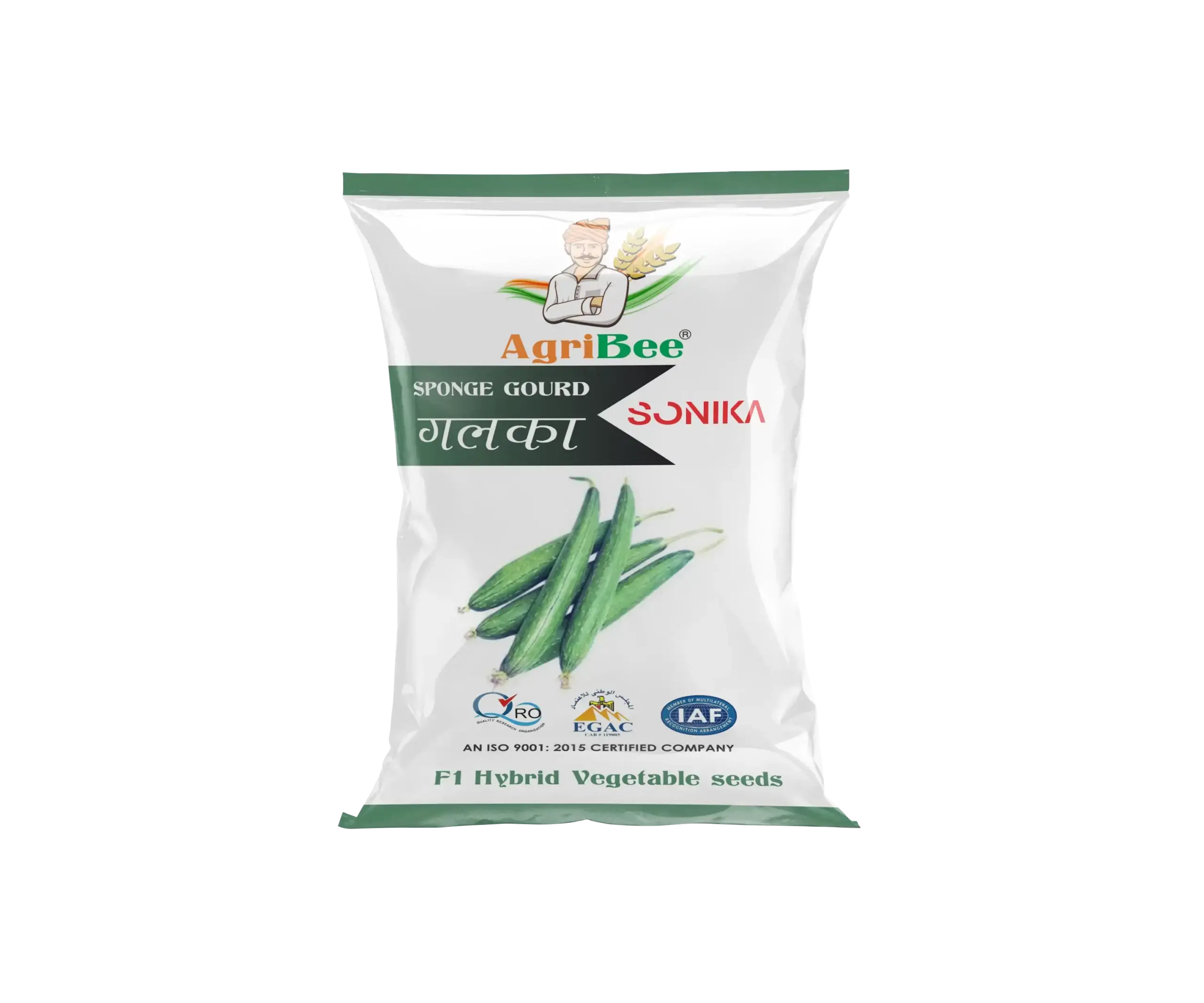
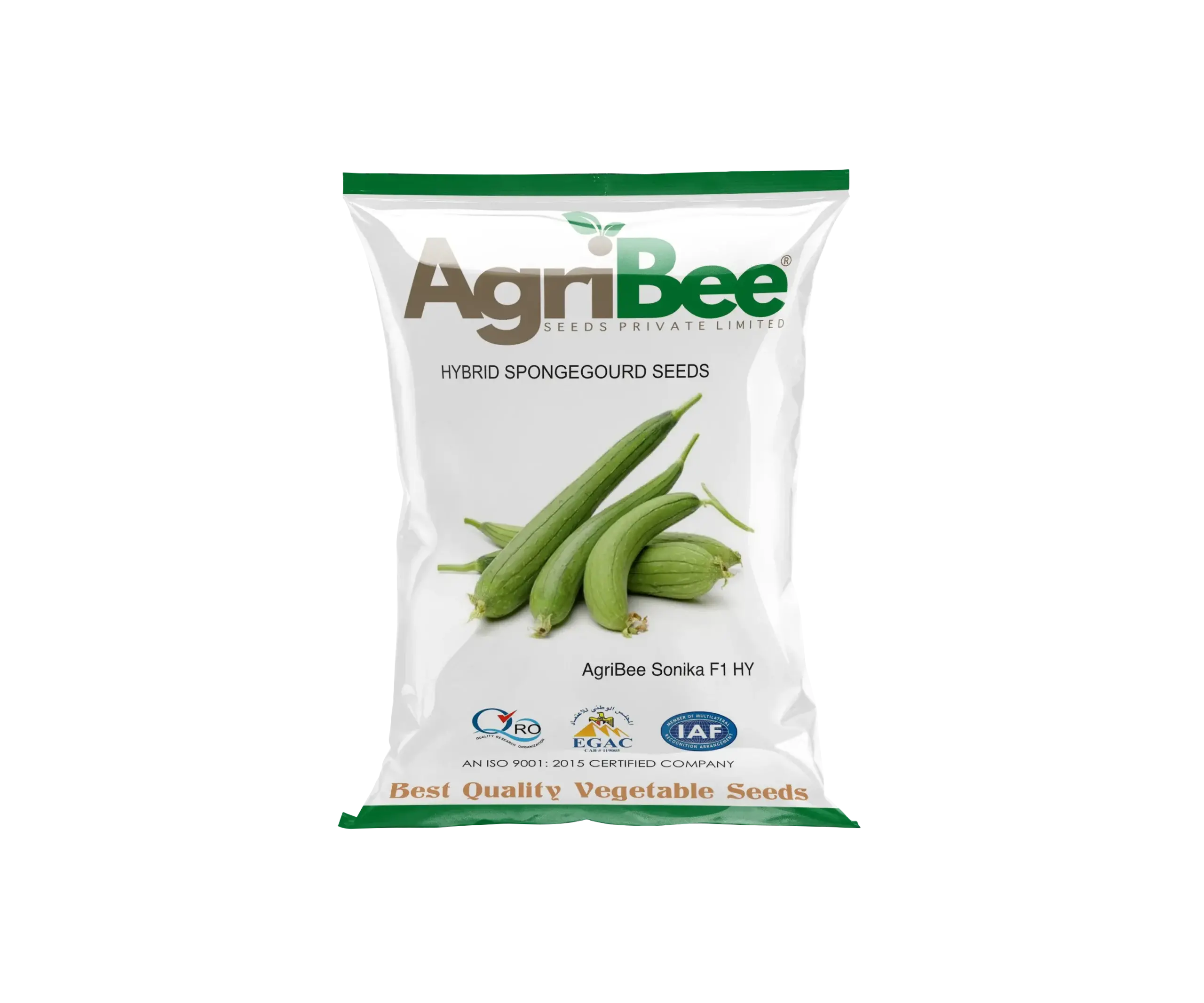
Farming & Cultivation Guide — Sponge Gourd Seeds AgriBee Sonika F1 HY
Complete step-by-step agronomic guide for optimal crop management, disease resistance, and premium produce quality.
🌾 Soil Preparation & Field Prep
Proper land preparation ensures uniform seedling emergence and robust root anchorage.
🌱 Ideal Soil Type & pH
Well-drained sandy loam to loamy soils with pH 6.0 – 7.5. Sponge gourd thrives in warm, fertile soils with good organic matter and moderate moisture-holding capacity. Waterlogged or heavy clay soils must be avoided.
✨ Core Advantage
Loose, well-aerated seedbed ensures rapid germination, strong radicle emergence, and healthy root anchorage for vigorous vining growth.
- 1
Deep summer ploughing to 25–30 cm followed by 2–3 cross-harrowings for fine tilth and weed seed burial.
- 2
Field leveling with board furrows or raised beds (15 cm height) to ensure effective drainage, especially during heavy monsoon rains.
- 3
Incorporate 8–10 tonnes per hectare of well-decomposed FYM or vermicompost during final harrowing to improve soil structure and water retention.
- 4
Test soil pH; if below 5.5, apply agricultural lime at 250–300 kg/ha 15 days before sowing. If alkaline (pH >7.5), apply gypsum at 200 kg/ha.
🌱 Sowing Time & Method
Precise seed rate and spacing maximize light interception and canopy development.
| Parameter | Recommendation | Agronomic Importance |
|---|---|---|
| Sowing Window | June – July for Kharif; October – November for Rabi; February – March in shielded zones for Summer | Sponge gourd is a warm-season crop; sowing after the last frost and when soil temperature reaches 20–25°C ensures uniform germination and avoids chilling damage to seedlings. |
| Seed Rate | 1.5 – 2.0 kg per hectare for direct sowing; 500 – 750 g per hectare for transplanted method | Optimized seed rate maintains recommended plant population without wastage, ensuring each vine has adequate space for canopy spread and fruit development. |
| Spacing | 60 – 75 cm between rows × 40 – 50 cm between plants | Adequate spacing promotes air circulation within the canopy, reduces humidity-related disease pressure, and facilitates easy harvesting operations. |
| Sowing / Transplanting Depth | 2 – 3 cm depth for direct sowing; seedlings transplanted at 2 – 3 true-leaf stage into 10 – 12 cm deep pits | Proper seeding depth ensures adequate soil contact for imbibition and uniform emergence. Shallow sowing risks desiccation; excessive depth delays germination. |
💧 Irrigation & Water Management
Adequate moisture regulation supports strong vegetative and reproductive growth.
☀️ Water Requirement Profile
Sponge gourd requires moderate and consistent soil moisture throughout its life cycle. The crop is moderately drought-sensitive during flowering and fruit-setting stages. Drip irrigation with mulch is highly recommended — it conserves water, suppresses weeds, and keeps foliage dry, reducing disease incidence. Under sprinkler or furrow irrigation, apply 4–5 cm of water per event at 7–10 day intervals depending on soil type and weather conditions.
🌦️ Soil Moisture Management
In rainfed environments, ensure the field is well-levelled with adequate drainage channels to prevent water stagnation. Apply organic mulch (paddy straw or grass) at 3–4 tonnes/ha immediately after sowing to conserve soil moisture and moderate soil temperature. Avoid moisture stress between flower initiation and young fruit development, as even brief dry spells can cause flower drop and fruit deformity.
- ✓
First irrigation should be applied 2–3 days after sowing (or 1 day after transplanting) to promote seed germination and seedling establishment.
- ✓
During the active vegetative phase (20–40 DAS), irrigate at 7–10 day intervals to sustain rapid vine growth and leaf expansion.
- ✓
Critical irrigation window: flowering through fruit set and young fruit development (35–60 DAS). Maintain consistent soil moisture; water stress during this phase reduces fruit set quality and causes malformation.
- ✓
Withhold irrigation 3–4 days before harvest to improve fruit firmness, reduce post-harvestwilting, and extend shelf life.
🧪 Fertilizer & Nutrition Management
Balanced crop nutrition supports robust plant structure and premium produce quality.
| Nutrient | Recommended Dose (per Acre) | Application Method & Timing |
|---|---|---|
| Nitrogen (N) | 60 – 80 kg/ha | 50% basal at final ploughing + 50% top-dressed at 25–30 DAS. Split application prevents vegetative over-growth and supports sustained fruit production. |
| Phosphorus (P2O5) | 40 – 50 kg/ha | 100% basal application incorporated during final harrowing as DAP (18:46:00) or single super phosphate to promote root development and early flower initiation. |
| Potash (K2O) | 40 – 50 kg/ha | 100% basal or split — 50% at basal and 50% at first side-dressing. Potash enhances fruit firmness, dark green coloration, and overall produce quality. |
🌿 Interculture & Weed Management
Timely weed control ensures optimal nutrient and moisture availability for crop seedlings.
-
1
First Weeding & Hoeing: Carry out at 10–12 DAS using a hand hoe or cultivator. Remove weeds before they compete for nutrients and light. Light earthing-up around the base of young plants improves root aeration and stabilizes seedlings.
-
2
Second Weeding & Inter-row Cultivation: Conduct at 25–30 DAS when the canopy begins to close. Break soil crust formed after irrigation or rainfall. This stage is critical for maintaining a weed-free field before vine coverage suppresses weed germination naturally.
-
3
Trellising, Pruning & Mulching: Install trellis nets or stakes at 20–25 DAS when vines start climbing. Train main tendrils upward. Remove excessive lateral shoots and suckers to direct photosynthates toward fruit development. Apply organic mulch (paddy straw 3–4 cm layer) around the base to conserve moisture, moderate soil temperature, and suppress late-germinating weeds.
🛡️ Pest & Disease Management
Proactive crop monitoring and integrated management ensure healthy crop development.
🐛 Insect Pest Management
- Fruit &Shoot Borer (Diaphania hyalinata): Larvae bore into tender shoots and young fruits causing wilting, tunneling, and fruit rot. Control: Spray neonics or bio-agent — Cartap hydrochloride 50 WP at 0.75 g/L OR Bacillus thuringiensis (Bt) at 250–500 mg/L. Apply at first sign of infestation, preferably in the evening. Repeat at 7-day intervals if needed.
- Whitefly (Bemisia tabaci): Sucks sap from underside of leaves, causes yellowing, curling, and sooty mold. Also vectors yellow mosaic virus. Control: Yellow sticky traps at 15 trap/acre. Spray Imidacloprid 17.8 SL at 0.3 mL/L OR Acetamiprid 20 SP at 0.5 g/L. Rotate with Neem-based products (Neem oil 3 mL/L) for resistance management.
- Cucumber Beetle / Fruit Beetle (Aulacophora femoralis): Adults chew holes in leaves and flowers; larvae attack roots. Control: Sprinkling dust of Carbendazim 50 WP @ 2 kg/ha on foliage OR spray Chlorantraniliprole 18.5 SC at 0.5 mL/L. Use pheromone traps (fruit borer specific) at 10 traps/acre for monitoring and mass trapping.
🔬 Disease Control
- Powdery Mildew (Erysiphe cichoracearum): White powdery patches on upper leaf surface, later causing leaf necrosis and premature senescence. Control: Spray Sulphur 80 WP at 2 g/L OR Myclobutanil 68.3 WG at 0.3 g/L at 10-day intervals starting from 30 DAS. Avoid overhead irrigation to keep foliage dry.
- Downy Mildew (Pseudoperonospora cubensis): Angular yellow lesions on upper leaf surface bounded by veins; grey-purple sporulation on lower surface. Control: Spray Mancozeb 75 WP at 2 g/L OR Metalaxyl + Mancozeb 35 WS at 2.5 g/L. Remove and destroy heavily infected leaves. Improve air circulation through proper spacing.
- Fruit Rot / Anthracnose (Colletotrichum orbiculare): Water-soaked circular spots on fruits that enlarge, turn brown-black, and cause fruit rot. Control: Spray Copper oxychloride 50 WP at 3 g/L OR Carbendazim 50 WP at 1 g/L. Ensure proper drainage, avoid water splashing onto fruits, and practice crop rotation with non-cucurbits for 2–3 years.
✂️ Harvesting & Produce Quality Guide
Harvesting at peak maturity ensures maximum commercial grade and long keeping quality.
⏱️ Harvesting Schedule & Timing
First picking begins 40–45 days after sowing. Subsequent pickings are taken at 2–3 day intervals throughout the harvest period. Regular harvesting at the tender stage encourages continued flowering and prolongs the productive span of the vine.
⭐ Produce Quality Characteristics
Fruits are cylindrical, smooth-skinned, dark green in color, averaging 35–40 cm in length and 4–5 cm in diameter with a weight range of approximately 75–125 g per fruit. The flesh is tender, mildly flavored, and suitable for fresh market consumption, processing, and regional culinary use.
| Quality Parameter | Agronomic Standard | Farmer & Market Benefit |
|---|---|---|
| First Harvest Stage | 40–45 Days after Sowing | Enables early market entry, commands premium prices during initial seasonal supply gaps, and stimulates continuous fruit set. |
| Harvest Maturity Signs | Fruit skin dark green, smooth, firm but tender; seeds not yet hardened; fruit cuts easily with a snipping motion | Ensures tender, palatable produce preferred by consumers; prevents fibrous, over-mature fruits unsuitable for table use. |
| Shelf Life & Keeping Quality | 3–5 days under ambient conditions (25–30°C); up to 7–10 days under cool storage (8–10°C with 90–95% RH) | Adequate shelf life supports transport to distant mandis and retail outlets; pre-cooling and careful handling further extend market window. |
| Market Suitability | Fresh table vegetable for local mandis, urban wholesale markets, and modern retail chains; also suitable for processing units and export-quality grading | Uniform cylindrical shape, dark green color, and smooth skin make this variety highly acceptable to traders, wholesalers, and discerning consumers seeking consistent produce quality. |
⭐ Varietal Features — Sponge Gourd Seeds AgriBee Sonika F1 HY
Distinguishing characteristics that make this variety a top choice for Indian growers.
🌿 Core Variety Highlight
AgriBee Sonika F1 HY is an early-maturing hybrid sponge gourd developed for rapid first harvest at 40–45 days, offering farmers a competitive edge through early market arrival and efficient use of the growing season.
🌿 Produce Quality & Appearance
Produces uniformly cylindrical, smooth-skinned fruits with rich dark green coloration. Each fruit averages 75–125 g, measuring 35–40 cm in length and 4–5 cm in diameter — visually appealing, consistent, and well-suited for grade-A market standards.
🌿 Stress & Disease Tolerance
Exhibits strong field tolerance to common cucurbit diseases including powdery mildew and downy mildew, along with moderate resilience to heat and intermittent moisture stress — essential traits for reliable performance across diverse Indian agro-climatic zones.
🌿 Growth Habit & Vigor
Vigorous vining habit with well-branched growth architecture. The plant establishes rapidly, produces abundant foliage, and supports prolific fruit set when trained on trellis or vertical support systems.
🌿 Crop Duration & Earliness
The 40–45 day first harvest window enables multiple cropping cycles and flexible crop rotation planning, making it ideal for farmers seeking to maximize land productivity and cash flow throughout the year.
🌿 Market & Farmer Preference
Farmers across India prefer AgriBee Sonika F1 HY for its uniform fruit morphology, attractive dark green color, consistent size grading, and robust vine vigor. Traders and commission agents favor this variety due to its excellent shelf life and high consumer demand in fresh vegetable markets.