
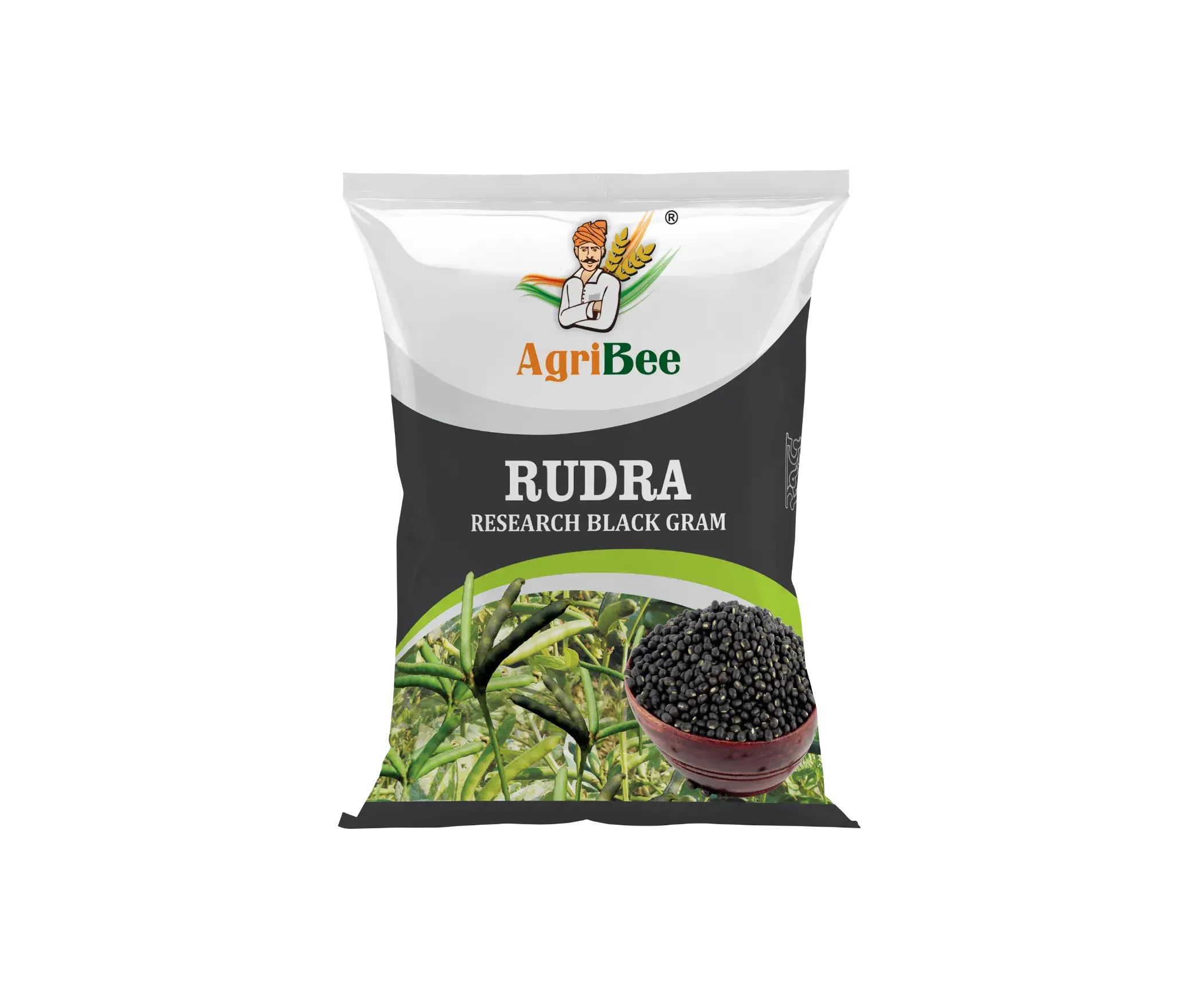
Description
ખેતી અને વાવણી માર્ગદર્શિકા — અડદ Rudra
પાકના શ્રેષ્ઠ સંચાલન, રોગ પ્રતિકારક શક્તિ અને પ્રીમિયમ ગુણવત્તાવાળા ઉત્પાદન માટે સંપૂર્ણ વિગતવાર માર્ગદર્શિકા.
🌾 જમીનની તૈયારી અને ખેડ
જમીનની યોગ્ય તૈયારીથી એકસરખો ઉગાવો અને મૂળનો ઊંડો વિકાસ સુનિશ્ચિત થાય છે.
🌱 યોગ્ય જમીનનો પ્રકાર અને pH
Well-drained sandy loam to clay loam soils; pH 6.0–7.8; medium fertility preferred.
✨ મુખ્ય કૃષિ ફાયદા
Adapted to diverse Indian agro-climates with deep taproot ensuring strong anchorage and efficient moisture/nutrient uptake.
- 1
Two to three deep ploughings in summer followed by harrowing and leveling for fine tilth.
- 2
Creation of raised beds or flats depending on rainfall intensity to ensure good drainage.
- 3
Incorporation of 5–8 tonnes/ha well-decomposed FYM or compost during last ploughing.
- 4
Soil testing and liming if pH <5.5; gypsum application in saline-affected patches.
🌱 વાવણીનો સમય અને પદ્ધતિ
Precise seed rate and spacing maximize light interception and canopy development.
| માપદંડ / પેરામીટર | ભલામણ / સૂચના | કૃષિ મહત્વ |
|---|---|---|
| વાવણી સમયમર્યાદા | Early June to mid-July (Kharif); early October to mid-November (Rabi) | Aligns with monsoon onset for guaranteed germination; avoids late-season waterlogging or frost stress. |
| બિયારણનો દર (એકર દીઠ) | 40–50 kg/ha (rainfed); 25–30 kg/ha (irrigated) | Ensures optimal plant population (150,000–200,000 plants/ha) for canopy closure and weed suppression. |
| હાર અને છોડ વચ્ચેનું અંતર | 45 cm (row-to-row) × 10 cm (plant-to-plant) | Balances light interception, air circulation, and branch expansion for uniform grain fill. |
| વાવણીની ઊંડાઈ | 3–5 cm in light soils; 4–6 cm in heavy soils | Promotes uniform emergence without burying cotyledons too deep, enhancing germination rate. |
💧 પિયત અને પાણી વ્યવસ્થાપન
Adequate moisture regulation supports strong vegetative and reproductive growth.
☀️ પાણીની જરૂરિયાત અને પિયત પ્રોફાઇલ
અડદ Rudra exhibits moderate drought tolerance due to its taproot system. Under rainfed conditions, rely on residual soil moisture; under irrigated systems, apply light irrigation at 25, 45, and 65 days after sowing to sustain vegetative growth and pod development.
🌦️ Soil ભેજ વ્યવસ્થાપન
Apply mulch (straw/paddy husk) immediately after sowing to conserve topsoil moisture. Avoid water stagnation; install drainage channels in heavy soils to prevent root rot during intense rainfall.
- ✓
First irrigation at 20–25 DAS if soil moisture is critically low; otherwise wait for natural rainfall.
- ✓
Light irrigation every 10–12 days during vegetative phase (30–50 DAS) to maintain foliage vigor.
- ✓
Critical: irrigation at flower initiation (42–45 DAS) and early pod-filling stage (60–70 DAS) to prevent floral abortion.
- ✓
Withhold irrigation 10–12 days before harvest to facilitate even pod desiccation and reduce shattering.
🧪 ખાતર અને પોષણ વ્યવસ્થાપન
Balanced crop nutrition supports robust plant structure and premium produce quality.
| પોષક તત્વ | ભલામણ કરેલ માત્રા (એકર દીઠ) | ઉપયોગ પદ્ધતિ અને સમય |
|---|---|---|
| નાઇટ્રોજન (N) | 20–25 kg N/ha | 50% basal at sowing as DAP; rest split and applied as urea at 30 DAS. |
| ફોસ્ફરસ (P₂O₅) | 40–50 kg P₂O₅/ha | 100% basal at sowing through Di-ammonium Phosphate (DAP) or Single Super Phosphate (SSP). |
| પોટાશ (K₂O) | 20–30 kg K₂O/ha | 100% basal at sowing as MOP; supports stalk strength and grain filling. |
🌿 નિંદામણ નિયંત્રણ અને આંતરખેડ
Timely weed control ensures optimal nutrient and moisture availability for crop seedlings.
-
1
પ્રથમ નિંદામણ અને ગોડ: Carry out at 15 DAS using hand hoe or rotary weeder. Maintains weed-free period crucial for seedling establishment and root aeration.
-
2
બીજી વાવણી અને પાળા ચઢાવવા: Perform at 30 DAS; lightly heap soil around bases to support branching and improve moisture retention near roots.
-
3
વિશેષ આંતરખેડ કામગીરી: Apply organic mulch (2–3 t/ha straw) after first weeding to suppress weeds and conserve soil moisture. Remove weak lateral suckers manually to direct nutrients toward main branches.
🛡️ જીવાત અને રોગ નિયંત્રણ
Proactive crop monitoring and integrated management ensure healthy crop development.
🐛 જીવાત નિયંત્રણ અને સંરક્ષણ
- pod borer (Helicoverpa armigera): Larvae bore into pods, causing defoliation and pod damage. Control: Spray neem-based biopesticide (Neem oil 3 ml/L water) or carbendazim 50 WP (0.1%) at 30 and 45 DAS. Use pheromone traps at 10/acre.
- green aphid (Aphis craccivora): Sucks sap from young shoots and pods, leading to curling and sooty mold. Control: Spray imidacloprid 17.8 SL (0.3 ml/L) or release ladybird beetles. Maintain field sanitation.
- jassid (Amrasca biguttula): Causes leaf yellowing and edge browning; vector of yellow mosaic virus. Control: Spray thiamethoxam 25 WG (0.2 g/L) or sticky yellow traps at 20 DAS. Remove infected plants promptly.
🔬 રોગ નિયંત્રણ અને ઉપચાર
- powdery mildew (Erysiphe cichoracearum): સફેદ powdery growth on leaves and pods; reduces photosynthetic area. Control: Spray wettable sulfur (2 g/L) or myclobutanil 70 WP (0.5 g/L) at first appearance. Ensure proper spacing for air circulation.
- yellow mosaic virus (YVMV): Vein clearing, leaf curling, stunting; transmitted by jassids. Control: Use સંશોધન અને હાઇબ્રિડ resistant seed; remove and destroy affected plants. Spray insecticides to control vector; apply foliar nutrients to boost recovery.
- anthracnose (Colletotrichum truncatum): Dark sunken lesions on stems and pods; causes cracking. Control: Seed treatment with trichoderma viride (4 g/kg seed). Field spray with copper oxychloride (3 g/L) at 30 DAS prophylactically.
✂️ કાપણી અને ગુણવત્તા માર્ગદર્શિકા
Harvesting at peak maturity ensures maximum commercial grade and long keeping quality.
⏱️ કાપણીનો સમય અને આયોજન
Harvest when 70–80% pods turn black/dark brown and plant stems dry (75–85 DAS). Cut entire plant at base, bundle, and sun-dry for 2–3 days before threshing.
⭐ ઉત્પાદનની ગુણવત્તા અને લક્ષણો
Seeds are uniformly black, small-sized (100-seed weight ~3.2 g), with smooth texture, high protein content, and excellent cooking quality. Foliage remains dense and green until maturity, indicating robust photosynthetic activity.
| ગુણવત્તા માપદંડ | કૃષિ ધોરણ | ખેડૂત અને બજાર ફાયદો |
|---|---|---|
| કાપણીનો તબક્કો | 75–85 days after sowing | Ensures full seed maturation and maximum grain quality with minimal shattering losses. |
| પરિપક્વતાના લક્ષણો | Pods dark brown/black, seeds hard and shiny, leaves yellowish-brown | Prevents over-maturity that leads to pod shattering and seed discoloration. |
| સંગ્રહ ક્ષમતા અને ગુણવત્તા | Seeds maintain viability and cooking quality for 8–10 months at ambient storage (moisture <10%) | Enables extended market availability and reduced post-harvest losses. |
| બજાર માંગ અને યોગ્યતા | Preferred for direct human consumption, retail packaging, and export markets due to uniform black color and small seed size | Fetches premium rates in domestic mandis and meets international grading standards. |
⭐ જાતની વિશેષતાઓ — અડદ Rudra
Distinguishing characteristics that make this variety a top choice for Indian growers.
🌿 Compact Growth Habit
છોડની ઊંચાઈ 30–40 cm with 4–5 well-branched stems, promoting efficient land use and ease of mechanized harvest.
🌿 Premium Seed Quality
Uniform black seed coat, small size (3.2 g/100 seeds), high protein content, and consistent cooking texture appreciated by consumers.
🌿 Disease & Stress Resilience
Inherent tolerance to yellow mosaic virus, powdery mildew, and Jassid attacks; moderate drought resilience ensures stable performance under variable rainfall.
🌿 Fast Maturity
Reaches 50% flowering in 42–45 days and full maturity in 75–85 days, enabling flexible cropping sequences and multiple crop cycles per year.
🌿 Vigorous Canopy Development
Lush foliage cover reduces weed pressure, conserves soil moisture, and sustains photosynthetic activity throughout pod-filling stage.
🌿 Farmer & Trader Preference
Reliable germination rate (>85%), uniform maturity, and excellent grain appearance make અડદ Rudra a trusted choice among growers and procurement agents across India.