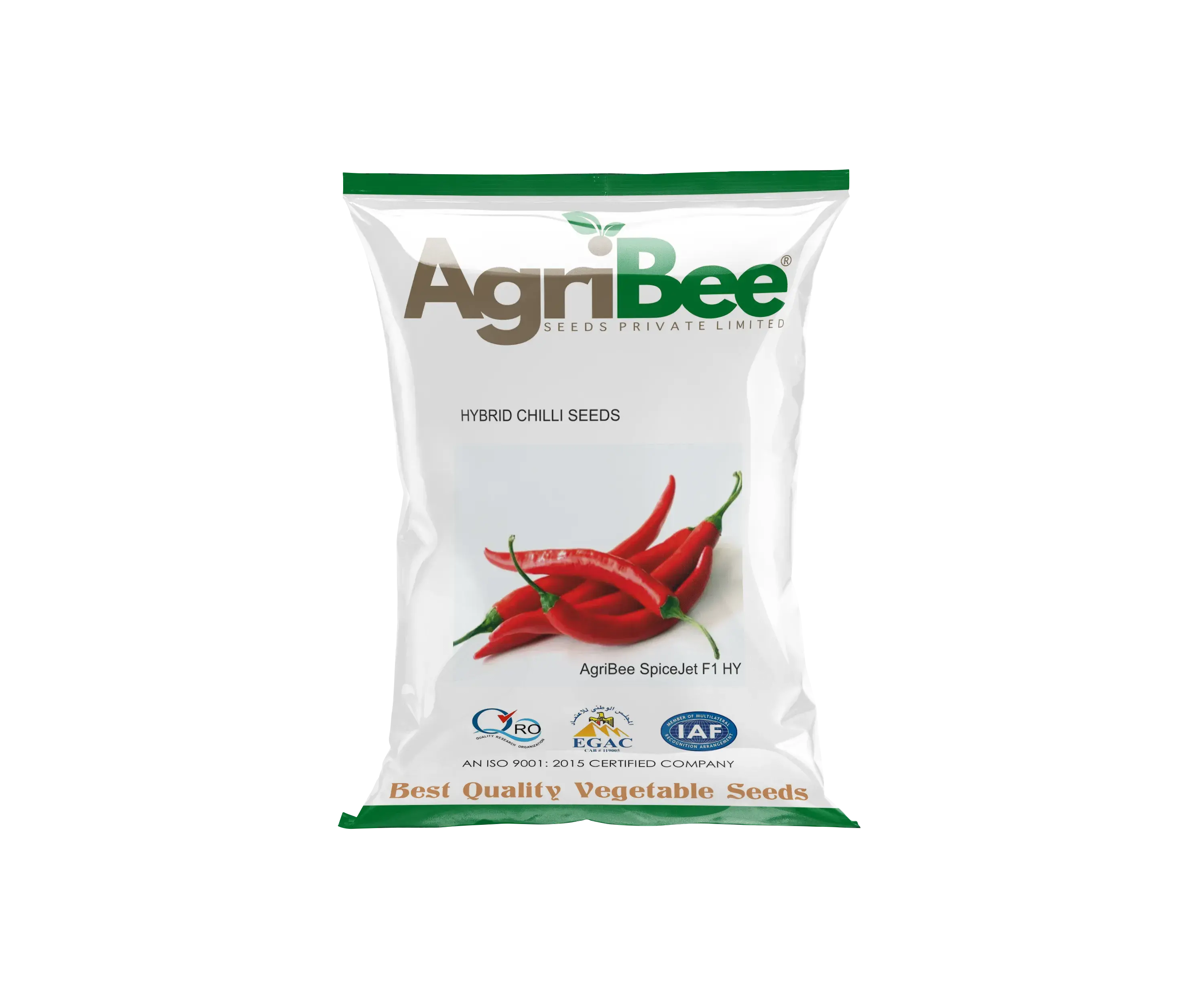

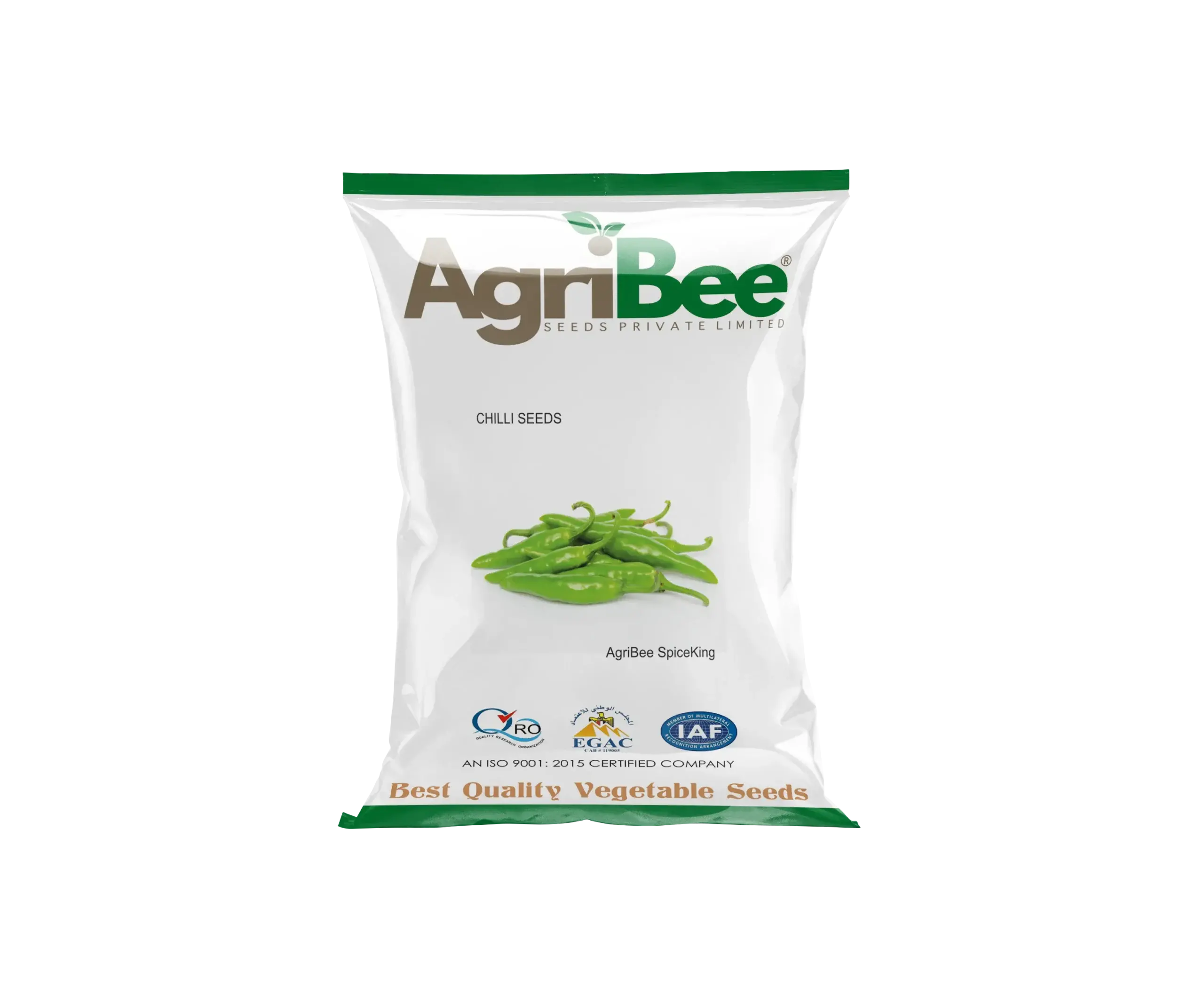
Description
शेती व लागवड संपूर्ण मार्गदर्शक — Chilli Seeds AgriBee SpiceKing
Complete step-by-step agronomic guide for optimal crop management, disease resistance, and premium produce quality.
🌾 जमिनीची पूर्वमशागत
Proper land preparation ensures uniform seedling emergence and robust root anchorage.
🌱 योग्य जमिनीचा प्रकार व सामू (pH)
Well-drained sandy loam to loamy soils with pH 6.0–7.5. Chilli thrives in soils with good organic matter content and moderate fertility. Heavy clay or waterlogged soils must be avoided as they promote root rot and poor plant establishment.
✨ प्रमुख कृषी फायदे
Loose, well-aerated seedbed promotes rapid germination, strong early root development, and uniform seedling emergence, which is critical for high fruit set and pungency expression in SpiceKing.
- 1
Deep summer ploughing to a depth of 25–30 cm followed by 2–3 cross-harrowings to achieve a fine, clod-free tilth for uniform seedbed preparation.
- 2
Field leveling using a laser leveler or board leveling to ensure even water distribution and prevent waterlogging in low patches during monsoon rains.
- 3
Incorporate 8–10 tonnes per hectare of well-decomposed Farm Yard Manure (FYM) or compost during the last harrowing to improve soil structure, water retention, and microbial activity.
- 4
Conduct a soil health test and adjust pH using agricultural limestone (if pH below 5.5) or gypsum (if pH above 8.0) to maintain the optimal range of 6.0–7.5 for nutrient availability.
🌱 पेरणीची वेळ व पद्धत
Precise seed rate and spacing maximize light interception and canopy development.
| निकष / मापदंड | शिफारस / पद्धत | कृषी महत्त्व |
|---|---|---|
| पेरणीची वेळ | Kharif: June–July | Rabi: October–November | Summer (protected): February–March | Aligns crop growth with favorable temperature and rainfall patterns; avoids extreme heat stress during fruiting and reduces incidence of viral vectors |
| बियाणे प्रमाण (प्रति एकर) | 250–300 g/ha for transplanting; 4–5 kg/ha for direct sowing | Ensures adequate plant population without crowding, enabling each plant to develop full canopy and productive branching |
| लागवडीतील अंतर | 45 cm (row-to-row) × 30 cm (plant-to-plant) | Optimizes canopy exposure to sunlight, improves air circulation within the crop, and facilitates interculture operations and harvesting |
| Sowing / Transplanting Depth | 0.5–1.0 cm for direct sowing; 2–3 true leaves stage (~25–30 days old) for transplanting | Shallow sowing ensures adequate oxygen supply for germination; proper transplanting age prevents root damage and reduces crop standstill |
💧 पाणी व्यवस्थापन
Adequate moisture regulation supports strong vegetative and reproductive growth.
☀️ Water Requirement Profile
Chilli is moderately drought-tolerant but performance optimal pungency and fruit quality under consistent moisture. Drip irrigation is highly recommended for SpiceKing as it delivers water and nutrients directly to the root zone, conserves water by up to 40%, and keeps foliage dry—thereby reducing fungal and bacterial disease incidence. Avoid flood irrigation as it promotes wilt and root rot pathogens.
🌦️ Soil Moisture Management
In rainfed conditions, adopt contour bunding and mulching to retain soil moisture. Apply a thick layer of straw mulch immediately after transplanting to reduce evaporation. Ensure the field has efficient drainage to remove excess water within 24 hours of heavy rainfall, as water stagnation beyond 48 hours can cause plant death in SpiceKing.
- ✓
First irrigation (laying water) should be applied within 24–48 hours after transplanting to reduce wilting stress and promote rapid root establishment.
- ✓
During the vegetative phase (2–6 weeks after transplanting), irrigate at 3–4 day intervals depending on soil texture and weather; maintain Soil Moisture at 60–70% of field capacity.
- ✓
Critical stages requiring consistent moisture: flowering (prevents flower drop), fruit set (7–21 DAT), and fruit development (21–50 DAT). Any moisture stress during these stages results in poor fruit set, sunscald, and reduced pungency.
- ✓
Reduce irrigation frequency 7–10 days before the final harvest to firm up fruit tissue and improve shelf life. Stop irrigation entirely two weeks after the last picking to aid crop drying and reduce disease carryover.
🧪 खत व्यवस्थापन
Balanced crop nutrition supports robust plant structure and premium produce quality.
| पोषक घटक | शिफारस केलेले प्रमाण (प्रति एकर) | वापरण्याची वेळ व पद्धत |
|---|---|---|
| नायट्रोजन (N) | 80–100 kg/ha | 50% basal at transplanting; remaining 50% split into two equal doses at 30 DAT and 45 DAT as foliar-applied urea spray or soil top-dressing with caution to avoid leaf burn. |
| फॉस्फरस (P2O5) | 50–60 kg/ha | 100% applied as DAP or SSP during final land preparation/basal application to promote root development and early floral initiation. |
| पोटॅश (K2O) | 40–50 kg/ha | Applied in two splits: 50% basal and 50% at 40–45 DAT to enhance fruit firmness, pungency, and disease resistance during the reproductive phase. |
🌿 तण नियंत्रण व आंतरमशागत
Timely weed control ensures optimal nutrient and moisture availability for crop seedlings.
-
1
First Weeding & Hoeing: Carry out the first shallow hoeing at 15–20 days after transplanting (DAT) to uproot early weed flush and aerate the topsoil. Use a hand hoe carefully to avoid damaging the shallow root system of young plants.
-
2
Second Weeding & Earthing-Up: Perform second weeding and light earthing-up at 30–35 DAT to support the developing branching habit of SpiceKing. Earthing-up prevents lodging as the plant grows taller and bears fruit weight along the slender stem.
-
3
Mulching and Staking Support: Apply black polyethylene mulch or straw mulch immediately after transplanting to suppress weeds, conserve soil moisture, and reflect sunlight onto lower canopy. For tall-growing SpiceKing plants in windy areas, install stake-and-string trellis systems at 45 DAT to prevent branch breakage under fruit load.
🛡️ कीड व रोग व्यवस्थापन
Proactive crop monitoring and integrated management ensure healthy crop development.
🐛 Insect Pest Management
- Aphids (Aphis gossypii): Cause curling, yellowing, and stunting; vectors mosaic viruses. Control: Spray Imidacloprid 17.8% SL at 0.3 ml/L or use yellow sticky traps at 10/100 m². Biological: Release Aphidius colemani or spray Neem oil (3%) at 5 ml/L. Repeat at 7-day intervals.
- Fruit Borer (Helicoverpa armigera): Larvae bore into fruits causing entry holes, frass excretion, and premature fruit drop. Control: Install pheromone traps at 10/100 m² for monitoring. Spray Chlorantraniliprole 18.5% SC at 0.3 ml/L or Bacillus thuringiensis (Bt) @ 2.5 g/L during early larval stage. Maintain field hygiene by removing infested fruits weekly.
- पांढराfly (Bemisia tabaci): Sucking damage causes leaf curling, honeydew secretion, and sooty mold; also transmits yellow vein mosaic virus. Control: Spray Thiamethoxam 25% WG at 0.2 g/L or Blue sticky traps at 10/100 m². Biological control with Encarsia formosa or predatory bugs. Remove alternate host weeds from field margins.
🔬 Disease Control
- Bacterial Wilt (Ralstonia solanacearum): Sudden wilting of one side of the plant with brown vascular discoloration. Prevention: Use disease-free hybrid & research seeds, practice 3-year crop rotation with non-Solanaceous crops, drench soil with Streptomyces griseoviridis (Sergeant) @ 10 g/L at transplanting and repeat at 30 DAT.
- Powdery Mildew (Erysiphe cichoracearum): पांढरा powdery growth on upper leaf surface, leading to chlorosis and defoliation. Control: Spray Sulphur 80% WP at 2.5 g/L or Potassium bicarbonate @ 3 g/L. Ensure adequate plant spacing for airflow and avoid overhead irrigation to keep foliage dry.
- Anthracnose / Fruit Rot (Colletotrichum capsici): Water-soaked lesions on mature fruits that develop into sunken, circular spots with salmon-colored spore masses in humid conditions. Prevention: Spraying Maneb + Zinc @ 2.5 g/L or Copper oxychloride @ 3 g/L at 15-day intervals from fruit setting stage. Remove and destroy infected fruits promptly to reduce inoculum spread.
✂️ काढणी व प्रत नियंत्रण
Harvesting at peak maturity ensures maximum commercial grade and long keeping quality.
⏱️ Harvesting Schedule & Timing
Begin first harvesting at 65–70 days after transplanting (DAT). Subsequent pickings should be conducted at 7–10 day intervals, totaling 5–7 harvest rounds over a 6–8 week cropping cycle. Harvest during early morning hours (6–10 AM) when fruit temperature is lowest to minimize field heat and preserve pungency compounds.
⭐ Produce Quality Characteristics
Dark green, glossy, long and slender fruits (8–10 cm) with high pungency, firm flesh, and uniform thickness. The fruit exhibits excellent wall density, minimal tapering at the tip, and a bright dark green color that commands premium prices in fresh vegetable markets and processing units.
| Quality निकष / मापदंड | Agronomic Standard | Farmer & Market Benefit |
|---|---|---|
| First काढणीची अवस्था | 65–70 Days after Transplanting (DAT) | Early harvesting enables farmers to capture early market windows with better price realization and shorter time-to-revenue |
| परिपक्वतेची लक्षणे | Dark green color, firm and taut skin, glossy surface, length 8–10 cm, and slender uniform shape | Ensures fruits are harvested at physiological maturity for maximum pungency, shelf stability, and consumer appeal |
| Shelf Life & Keeping Quality | 7–10 days under ambient conditions; 14–18 days under cold chain (8–10°C, 85–90% RH) | Extended shelf life reduces post-harvest losses, supports transport to distant mandis, and improves export readiness for SpiceKing's dense fruit structure |
| बाजार उपयुक्तता | Fresh table market, regional mandis, processed products (powder, paste, pickles), and export-oriented buyers | Long slender shape, high pungency, and dark green color make SpiceKing highly desirable across multiple market segments and value chains |
⭐ विविध वैशिष्ट्ये — Chilli Seeds AgriBee SpiceKing
Distinguishing characteristics that make this variety a top choice for Indian growers.
🌿 Core Variety उच्चlight
AgriBee SpiceKing delivers early maturity at 65–70 days after transplanting, providing farmers with faster crop turnover, reduced pest exposure window, and flexibility in crop planning and rotation schedules.
🌿 Produce Quality & Appearance
Produces uniformly dark green, long and slender fruits (8–10 cm) with high pungency, firm texture, and excellent gloss—meeting the strict aesthetic and flavor standards of modern retail and processing markets.
🌿 Stress & Disease Tolerance
Demonstrates strong field tolerance to common chilli pests including aphids, fruit borer, and whitefly, along with good resistance to bacterial wilt and anthracnose under integrated management practices.
🌿 Growth Habit & Vigor
Moderately compact plant architecture with vigorous lateral branching, upright fruit orientation, and robust stem strength—ensuring minimal lodging even under heavy fruit load and favorable wind conditions.
🌿 Market & Farmer Preference
Trusted by progressive chilli growers across India for its consistent fruit quality, high pungency profile, early market entry, and adaptability to both Kharif and Rabi seasons—making it a preferred choice among distributors, traders, and contract exporters.