Description
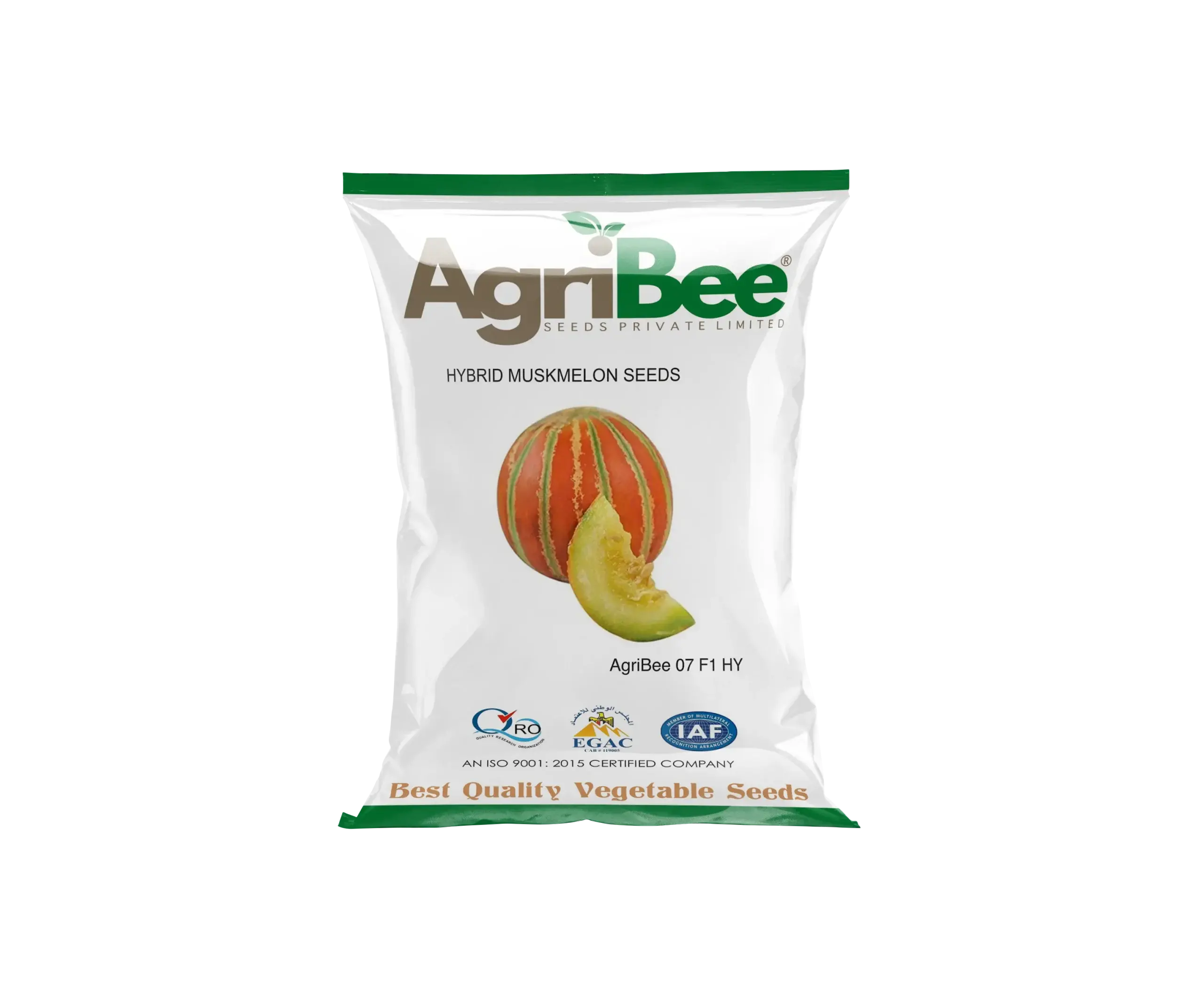
Farming & Cultivation Guide — Muskmelon Seeds AgriBee Golden 77 F1 HY
Complete step-by-step agronomic guide for optimal crop management, disease resistance, and premium produce quality.
🌾 Soil Preparation & Field Prep
Proper land preparation ensures uniform seedling emergence and robust root anchorage.
🌱 Ideal Soil Type & pH
Well-drained sandy loam to loamy soils with pH 6.0–7.5. Muskmelon thrives in light, warm soils that provide excellent drainage and root aeration, minimizing waterlogging risk.
✨ Core Advantage
Loose, well-aerated seedbed ensures rapid and uniform germination while preventing damping-off and promoting deep root penetration.
- 1
Deep summer ploughing to a depth of 25–30 cm followed by 2–3 cross-harrowings to achieve fine tilth and eliminate hard pans.
- 2
Formation of raised beds measuring 10–12 cm height, 120–150 cm width, with drainage channels of 30 cm width between beds for effective water management.
- 3
Incorporation of 15–20 tonnes per hectare of well-decomposed farmyard manure or compost during the final harrowing to improve soil structure and organic matter.
- 4
Soil solarization or liming applied in low-pH soils to raise pH to the optimal 6.0–7.5 range before bed formation.
🌱 Sowing Time & Method
Precise seed rate and spacing maximize light interception and canopy development.
| Parameter | Recommendation | Agronomic Importance |
|---|---|---|
| Sowing Window | October – November for Rabi season; February – March for Summer cultivation in North and Central India | Optimal temperature range of 20–30°C during germination and vegetative growth ensures uniform emergence and strong seedling development. |
| Seed Rate | 600–800 g per hectare (direct sowing) / 200–250 g per hectare (transplanting via nursery) | F1 hybrid seeds are cost-effective at lower rates while maintaining high germination and genetic purity for uniform crop stand. |
| Spacing | Row-to-row: 120–150 cm; Plant-to-plant: 45–60 cm on raised beds (two rows per bed) | Adequate inter-row spacing supports canopy spread, improves air circulation, reduces humidity-induced disease pressure, and facilitates field operations. |
| Sowing / Transplanting Depth | 2–3 cm depth for direct sowing; seedlings transplanted at 2–3 leaf stage with minimal root disturbance | Shallow sowing ensures rapid seedling emergence; deeper placement may delay germination and increase damping-off susceptibility. |
💧 Irrigation & Water Management
Adequate moisture regulation supports strong vegetative and reproductive growth.
☀️ Water Requirement Profile
Muskmelon has moderate drought tolerance but performs optimally with consistent moisture. Drip irrigation is highly recommended, delivering 2.5–4.0 litres per plant per session depending on soil texture and growth stage. Avoid furrow irrigation to prevent waterborne disease spread.
🌦️ Soil Moisture Management
In rainfed situations, ensure good surface drainage to prevent water stagnation. Mulching with straw or black polythene helps retain soil moisture and regulate rhizosphere temperature during dry spells.
- ✓
First irrigation transplanting/sowing immediately to settle the soil around roots and promote establishment.
- ✓
Vegetative phase (20–45 DAS): Light but frequent irrigation at 3–4 day intervals via drip to support rapid vine growth and foliage development.
- ✓
Critical stage — flowering through fruit development (45–70 DAS): Maintain consistent soil moisture; water stress during this period causes flower drop, poor fruit set, and fruit cracking. Apply 4–6 litres per plant every 2–3 days.
- ✓
Pre-harvest (last 7–10 days): Reduce irrigation frequency significantly to improve Brix content, firmness, and shelf life. Do not irrigate immediately before harvest.
🧪 Fertilizer & Nutrition Management
Balanced crop nutrition supports robust plant structure and premium produce quality.
| Nutrient | Recommended Dose (per Acre) | Application Method & Timing |
|---|---|---|
| Nitrogen (N) | 80–100 kg/ha | 50% basal at planting; 25% at 25 DAS as top-dressing; 25% at 45 DAS during fruit set stage |
| Phosphorus (P₂O₅) | 50–60 kg/ha | 100% basal application mixed with FYM and incorporated into the seedbed before sowing/transplanting |
| Potash (K₂O) | 80–100 kg/ha | 50% basal; 50% split at fruit development stage (50 DAS) to enhance fruit sweetness, colour, and firmness |
🌿 Interculture & Weed Management
Timely weed control ensures optimal nutrient and moisture availability for crop seedlings.
-
1
First Weeding & Hoeing: Carry out gentle hand weeding at 10–15 DAS to establish a weed-free seedbed. Shallow hoeing avoids root damage. Early weed competition control is critical during the first 3 weeks of crop growth.
-
2
Second Weeding & Earthing-Up: Perform second weeding at 25–30 DAS along with light earthing-up around plant bases to support trailing vines and improve root zone aeration. Maintain mulch coverage throughout.
-
3
Special Interculture Operation — Fruit Support Netting: As fruits develop (45–50 DAS), place each fruit in a mesh sling or soft net suspended from the vine or trellis to prevent fruit rot, soil contact, and direct sunlight scald. This is essential for maintaining fruit skin quality and netting uniformity.
🛡️ Pest & Disease Management
Proactive crop monitoring and integrated management ensure healthy crop development.
🐛 Insect Pest Management
- Cucurbit Leaf Curl Virus transmitted by whiteflies (Bemisia tabaci): Leaves show upward curling, yellowing, and stunting. Control: Install silver plastic mulch as a repellent; deploy yellow sticky traps at 15 traps/acre; spray Neem-based formulations (Azadirachtin 1% EC @ 2 ml/L) or Imidacloprid 17.8% SL @ 0.3 ml/L at early infection stages. Rogue infected plants immediately.
- Fruit Fly (Bactrocera cucurbitae): Adult flies lay eggs inside developing fruits causing larval damage and fruit rot. Control: Pheromone trap (Cuelure) @ 4 traps/acre; spray Spinosad 45% SC @ 0.3 ml/L or Phosalone 50% EC @ 1.5 ml/L as bait spray on protein bait pads placed near fruiting sites. Remove and destroy infested fruits.
- Spider Mites (Tetranychus urticae): Fine webbing on leaf underside with stippling and bronzing of foliage. Control: Spray Hexythiazox 5% WP @ 0.5 g/L or Abamectin 1.9% EC @ 0.5 ml/L. Maintain adequate soil moisture as mite infestation is exacerbated by dry conditions.
🔬 Disease Control
- Powdery Mildew (Podosphaera xanthii): White powdery growth on leaves and stems, leading to premature senescence. Control: Preventive spray of Sulphur 80% WP @ 2.5 g/L or Propineb 50% WP @ 2 g/L at 10-day intervals starting from 30 DAS. Biopreventive use of Trichoderma viride @ 5 g/kg soil at planting reduces inoculum load.
- Downy Mildew (Pseudoperonospora cubensis): Angular yellow lesions on upper leaf surface with fuzzy grey-purple sporulation on underside. Control: Apply Mancozeb 75% WP @ 2 g/L or Metalaxyl 35% WS @ 1 g/L at first sign of infection. Ensure proper plant spacing for canopy airflow to reduce humidity.
- Fusarium Wilt (Fusarium oxysporum f. sp. melonis): Wilting of vines starting from lower leaves, vascular browning on stem cross-section. Control: Use raised bed cultivation with impeccable drainage; drench soil with Carbendazim 50% WP @ 2 g/L at transplanting; practice 3–4 years crop rotation with non-cucurbit crops. Resistant rootstocks recommended where disease pressure is high.
✂️ Harvesting & Produce Quality Guide
Harvesting at peak maturity ensures maximum commercial grade and long keeping quality.
⏱️ Harvesting Schedule & Timing
First harvest commences at 70–75 days after sowing. Fruits are ready for picking when they exhibit full maturity signs. Harvest is typically completed within 15–20 days after first picking.
⭐ Produce Quality Characteristics
Salmon-orange flesh with exceptionally high Brix sweetness, firm texture, and attractive netted rind. Each fruit weighs 1.5–2.5 kg with round to oval shape, delivering uniform size and superior eating quality.
| Quality Parameter | Agronomic Standard | Farmer & Market Benefit |
|---|---|---|
| First Harvest Stage | 70–75 Days after Sowing — selective picking of mature fruits | Early harvest timing captures peak market prices and ensures fruit quality at commercial maturity. |
| Harvest Maturity Signs | Full abscission layer formation (fruit detaches easily with slight pressure), skin colour turning pale green to yellowish, netting becoming prominent and rough, characteristic aromatic fragrance at stem end | Proper maturity indexing prevents harvesting immature fruits with poor sweetness and over-mature fruits prone to spoilage. |
| Shelf Life & Keeping Quality | 7–10 days under ambient conditions (25–30°C); up to 14 days at 10–12°C with 85–90% relative humidity | Good post-harvest keeping quality enables transportation to distant markets and reduces post-harvest losses. |
| Market Suitability | Premium table fruit suitable for direct fresh market, high-end grocery chains, and urban mandis; attractive netting and salmon colour command price preimum | Uniform fruit appearance, balanced sweetness, and strong netting pattern make this variety a preferred choice for traders and exporters seeking consistent visual quality. |
⭐ Varietal Features — Muskmelon Seeds AgriBee Golden 77 F1 HY
Distinguishing characteristics that make this variety a top choice for Indian growers.
🌿 Core Variety Highlight
AgriBee Golden 77 F1 HY delivers robust field performance with balanced vigour, combining early responsiveness with sustained productive growth throughout the crop cycle under diverse Indian agro-climatic conditions.
🌿 Produce Quality & Appearance
Round to oval fruits with pronounced netting pattern, salmon-orange flesh exhibiting high soluble solids (Brix), firm texture, and appealing visual grading that meets premium market standards.
🌿 Stress & Disease Tolerance
Strong field resilience against common cucurbit pathogens including Fusarium wilt and powdery mildew, with maintained foliage health under moderate abiotic stress conditions typical of Indian growing environments.
🌿 Growth Habit & Vigor
Indeterminate vining habit with vigorous lateral branching, healthy dark green foliage canopy, and strong stem architecture capable of supporting multiple well-formed fruits per plant.
🌿 Crop Duration & Earliness
Early-maturing phenotype enabling first harvest in 70–75 days, providing flexibility in crop scheduling and facilitating timely land preparation for subsequent cultivations in intensive cropping systems.
🌿 Market & Farmer Preference
Trusted F1 hybrid from AgriBee Seeds with proven performance across Gujarat, Maharashtra, Rajasthan, Madhya Pradesh, and South India — preferred by progressive farmers for its uniform fruit appearance, reliable field vigor, and dependable market acceptability.