Description
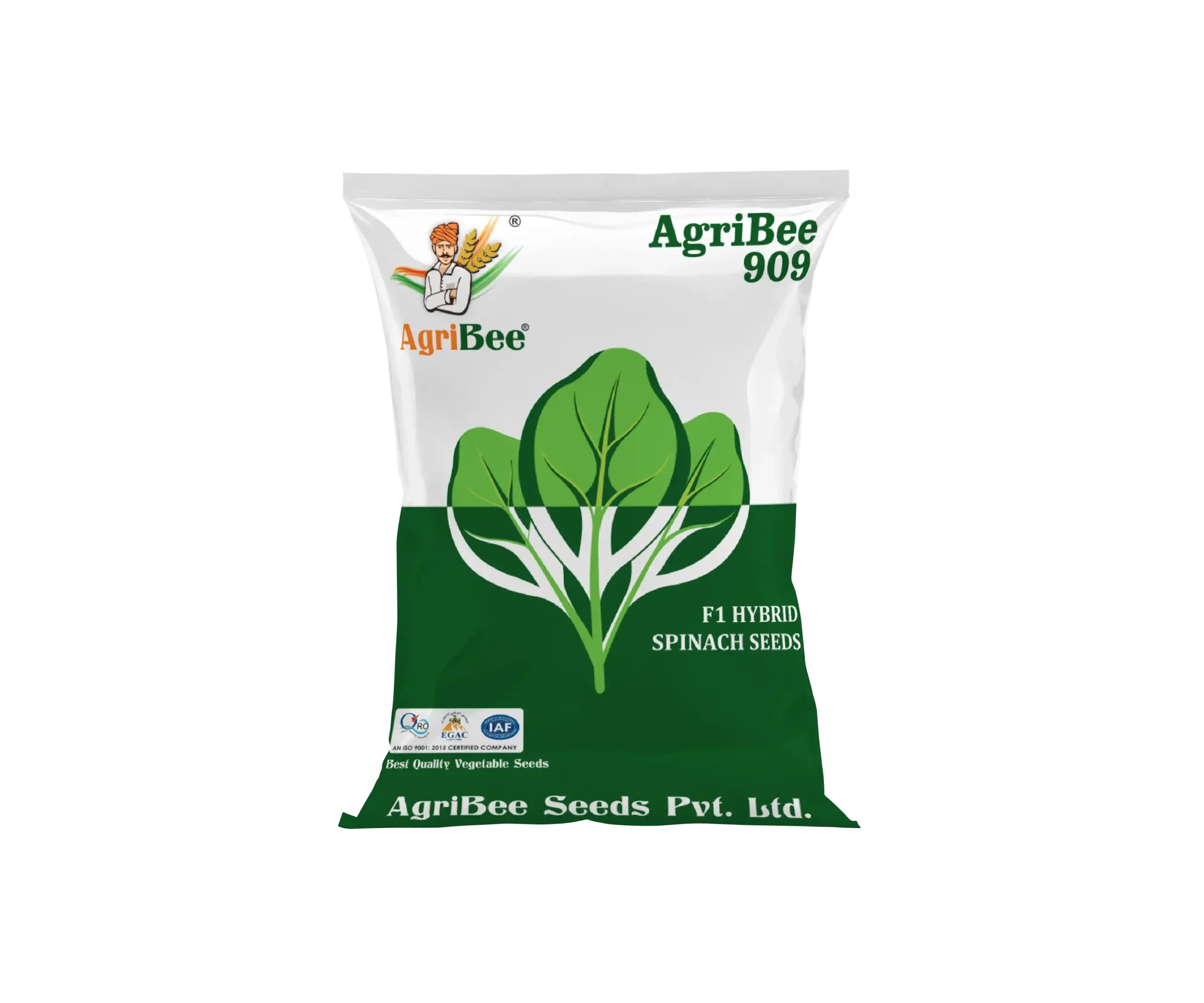
Farming & Cultivation Guide — Hybrid Spinach Seeds
Complete step-by-step agronomic guide for optimal crop management, disease resistance, and premium produce quality.
🌾 Soil Preparation & Field Prep
Proper land preparation ensures uniform seedling emergence and robust root anchorage.
🌱 Ideal Soil Type & pH
Well-drained sandy loam to loamy soils with good organic matter content; pH range 6.0–7.5. Soil should retain adequate moisture without water stagnation.
✨ Core Advantage
Fine, well-aerated seedbed promotes rapid and uniform germination of small spinach seeds, ensuring strong early root development and vigorous seedling emergence.
- 1
Deep ploughing in early summer followed by 2–3 harrowings to achieve a fine, clod-free tilth suitable for shallow-sown seeds.
- 2
Field leveling and creation of well-defined drainage channels to prevent waterlogging during heavy rains.
- 3
Incorporation of 15–20 tonnes per hectare of well-decomposed FYM or compost during the final harrowing to improve soil structure and moisture retention.
- 4
Application of sulphur or gypsum in slightly alkaline soils to bring pH within the optimal 6.0–7.5 range for nutrient availability.
🌱 Sowing Time & Method
Precise seed rate and spacing maximize light interception and canopy development.
| Parameter | Recommendation | Agronomic Importance |
|---|---|---|
| Sowing Window | Kharif: June–July | Rabi: October–November | Summer: February–March | Aligns sowing with favorable temperature and humidity for fastest germination and tender foliage production |
| Seed Rate | 10–15 kg/ha (broadCAST or line sowing); 25–30 kg/ha (nursery-transplanted) | Ensures adequate plant population without overcrowding, maintaining leaf size and quality |
| Spacing | 20–25 cm row-to-row × 10–15 cm plant-to-plant (line sowing) | Promotes canopy spread, improves air circulation, and reduces humidity-related disease pressure |
| Sowing Depth | 1–2 cm (shallow sowing; cover seeds lightly with fine soil) | Spinach seeds are small and require shallow burial for quick, uniform germination; deeper sowing delays emergence |
💧 Irrigation & Water Management
Adequate moisture regulation supports strong vegetative and reproductive growth.
☀️ Water Requirement Profile
Spinach is a shallow-rooted crop with moderate water requirement. It demands regular moisture but is moderately drought-sensitive during germination and early seedling stages. Drip irrigation with frequent, light applications is highly compatible and promotes uniform growth while minimizing foliar disease incidence.
🌦️ Soil Moisture Management
In rainfed situations, ensure the seedbed remains moist until germination (5–7 days). Use temporary mulch or light sprinkling if pre-monsoon showers are intermittent. Raised beds are recommended in high-rainfall zones to protect against water stagnation.
- ✓
First irrigation immediately after sowing to ensure seed-soil contact and initiate germination; critical within 24 hours.
- ✓
During the vegetative growth phase (15–30 DAS), irrigate at 3–4 day intervals depending on soil type and weather; maintain even soil moisture for tender leaf development.
- ✓
Critical stage is rapid leaf expansion (20–30 DAS); moisture stress at this stage causes leaf toughening, bitterness, and reduced overall foliage quality.
- ✓
Withhold irrigation 2–3 days before each cutting to reduce excess moisture in harvested foliage and improve shelf life during transport.
🧪 Fertilizer & Nutrition Management
Balanced crop nutrition supports robust plant structure and premium produce quality.
| Nutrient | Recommended Dose (per Acre) | Application Method & Timing |
|---|---|---|
| Nitrogen (N) | 60–80 kg/ha | 40 kg as basal at sowing; remaining 20–40 kg as top-dressing 15 days after first cut and after subsequent harvests |
| Phosphorus (P2O5) | 40 kg/ha | 100% basal application mixed with FYM and incorporated during final ploughing/harrowing |
| Potash (K2O) | 30 kg/ha | 100% basal; split application supports leaf turgidity, dark green coloration, and post-cut recovery |
🌿 Interculture & Weed Management
Timely weed control ensures optimal nutrient and moisture availability for crop seedlings.
-
1
First Weeding & Hoeing: Carried out 10–12 days after sowing; removes early weed flush and loosens soil crust, improving seedling establishment. Careful hand weeding preferred to avoid root damage.
-
2
Second Weeding & Inter-row Cultivation: Conducted at 20–25 days after sowing; clears late-emerging weeds and incorporates any remaining side-dressed nitrogen near the root zone for enhanced uptake.
-
3
Mulching and Post-Cut Crop Management: Organic mulching with straw between rows conserves soil moisture, suppresses weeds, and keeps harvested foliage clean. After each cut, light hoeing around remaining plant crowns stimulates tillering and regrowth.
🛡️ Pest & Disease Management
Proactive crop monitoring and integrated management ensure healthy crop development.
🐛 Insect Pest Management
- Aphids (Myzus persicae): Small green/black insects cluster on leaf undersides, causing curling and yellowing. Spray Imidacloprid 17.8% SL at 0.3 mL/L or Neem-based biopesticide at 3–5 mL/L. Repeat at 7-day interval if infestation persists.
- Leaf Miner (Liriomyza spp.): Miners create winding white trails inside leaves, reducing photosynthetic area and marketable appearance. Apply Profenophos 50% EC at 1.0 mL/L or Aureobasinium pullulans-based biocontrol spray at recommended label dose. Remove and destroy heavily infested leaves.
- Jassids / Leaf Hoppers (Amrasca biguttula): Sucking damage causes leaf edges to turn yellow-brown (hopper burn). Spray Thiamethoxam 25% WG at 0.2 g/L or Imidacloprid 70% WS at 0.3 g/L. Deploy yellow sticky traps at 15/m² for monitoring and reduction.
🔬 Disease Control
- Downy Mildew (Peronospora sp.): Appears as pale yellow patches on upper leaf surface with grayish-purple sporulation underneath in humid conditions. Preventive spray of Mancozeb 75% WP at 2.0 g/L or Metalaxyl + Mancozeb at 1.5 g/L every 10–12 days. Avoid overhead irrigation to reduce leaf wetness.
- Damping Off (Pythium spp. / Rhizoctonia spp.): Seedlings collapse at the soil line with water-soaked, dark lesions. Treat seeds with Trichoderma viride at 4 g/kg seed before sowing. Avoid waterlogging and ensure proper seedbed drainage.
- Leaf Spot / Anthracnose (Colletotrichum spp.): Circular brown spots with concentric rings develop on leaves, especially under cool moist conditions. Spray Copper oxychloride 50% WP at 2.5 g/L or Streptocycline at 0.5 g/10 L water as a preventive measure during high humidity periods.
✂️ Harvesting & Produce Quality Guide
Harvesting at peak maturity ensures maximum commercial grade and long keeping quality.
⏱️ Harvesting Schedule & Timing
First cutting is taken 30–40 days after sowing at 8–10 cm above ground level. Subsequent cuts follow at 10–15 day intervals, allowing 2–4 cuttings per crop cycle depending on fertility and moisture management.
⭐ Produce Quality Characteristics
Leaves are broad, dark green, tender, and free from fibrous texture. Foliage exhibits mild flavor with high juiciness, making it suitable for fresh salad, cooking, and processing applications.
| Quality Parameter | Agronomic Standard | Farmer & Market Benefit |
|---|---|---|
| First Harvest Stage | 30–40 days after sowing; leaves fully expanded but still tender | Enables early market entry with premium pricing and favorable seasonal demand |
| Harvest Maturity Signs | Dark green glossy leaves; plants reaching 15–20 cm height; before bolting onset | Prevents leaf toughening and bitterness associated with late or bolted foliage |
| Shelf Life & Keeping Quality | 3–5 days under ambient conditions; up to 7–10 days under cool (4–8°C) storage with high relative humidity | Supports wider distribution to distant mandis and retail markets with minimal post-harvest spoilage |
| Market Suitability | Fresh market (mandi/retail), urban supply chains, hotel and restaurant trade, and processed vegetable units | Versatile end-use appeal attracts diverse buyer segments and sustains steady income through multiple cuttings |
⭐ Varietal Features — Hybrid Spinach Seeds
Distinguishing characteristics that make this variety a top choice for Indian growers.
🌿 Core Variety Highlight
AgriBee Hybrid Spinach combines high germination vigor with rapid early growth, delivering robust field establishment and consistent foliage output across multiple cropping seasons in India.
🌿 Produce Quality & Appearance
Produces broad, dark green, glossy leaves with a tender texture and mild taste—highly preferred by consumers and commanding strong market acceptance.
🌿 Stress & Disease Tolerance
Demonstrates good tolerance to common leaf diseases including downy mildew and leaf spot, along with resilience under variable moisture conditions typical of Indian farming systems.
🌿 Growth Habit & Vigor
Upright, bushy plant architecture with strong leaf canopy development and excellent regrowth ability after each cutting, supporting repeated harvests from a single crop stand.
🌿 Crop Duration & Earliness
Early maturing nature with first harvest possible within 30–40 days after sowing, enabling fast crop turnover and flexible integration into diverse crop rotation sequences.
🌿 Market & Farmer Preference
Farmers favor this AgriBee hybrid for its reliability, multiple cutting potential, and premium leaf quality that meets both local mandi standards and modern retail supply chain requirements.