Description
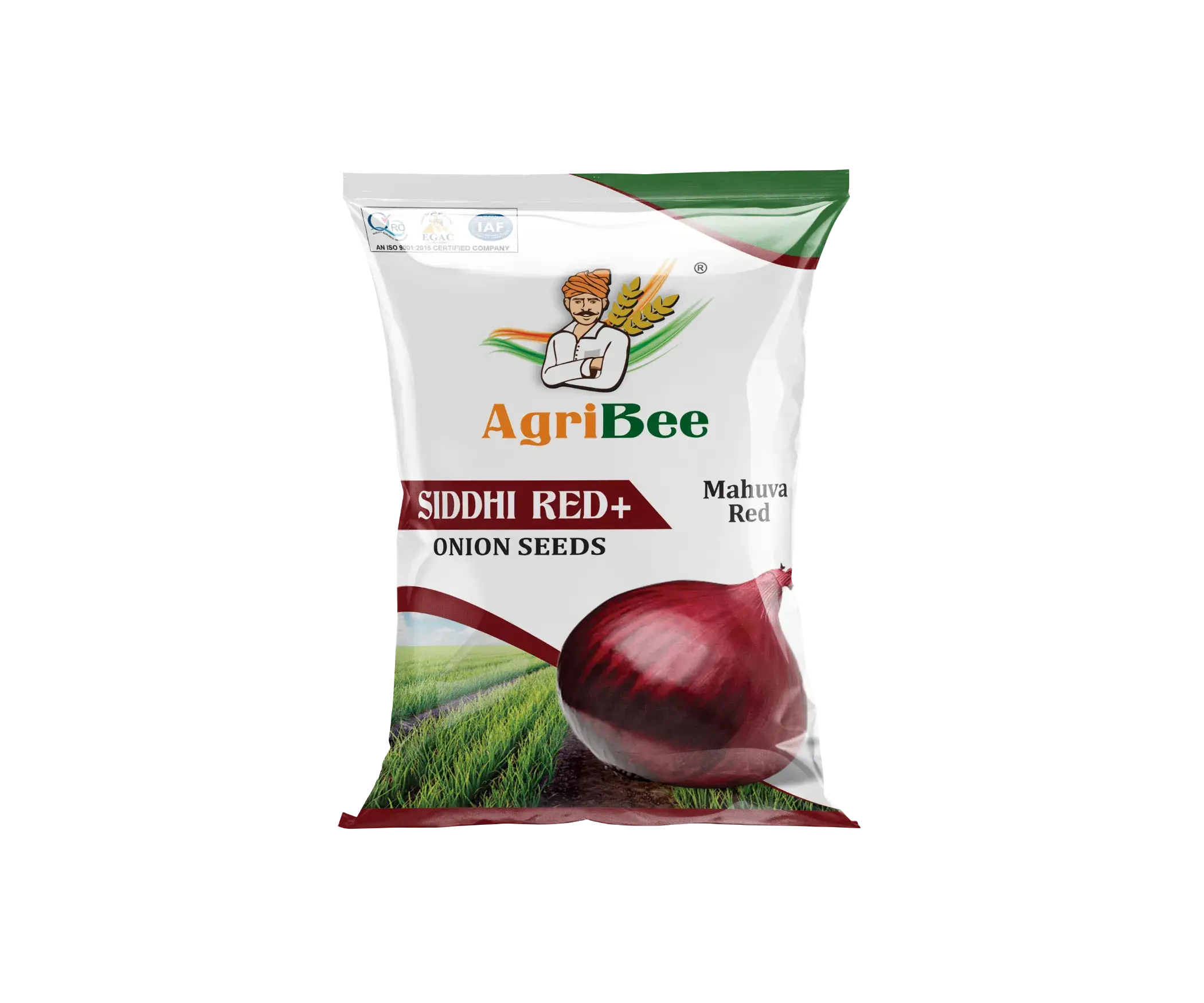
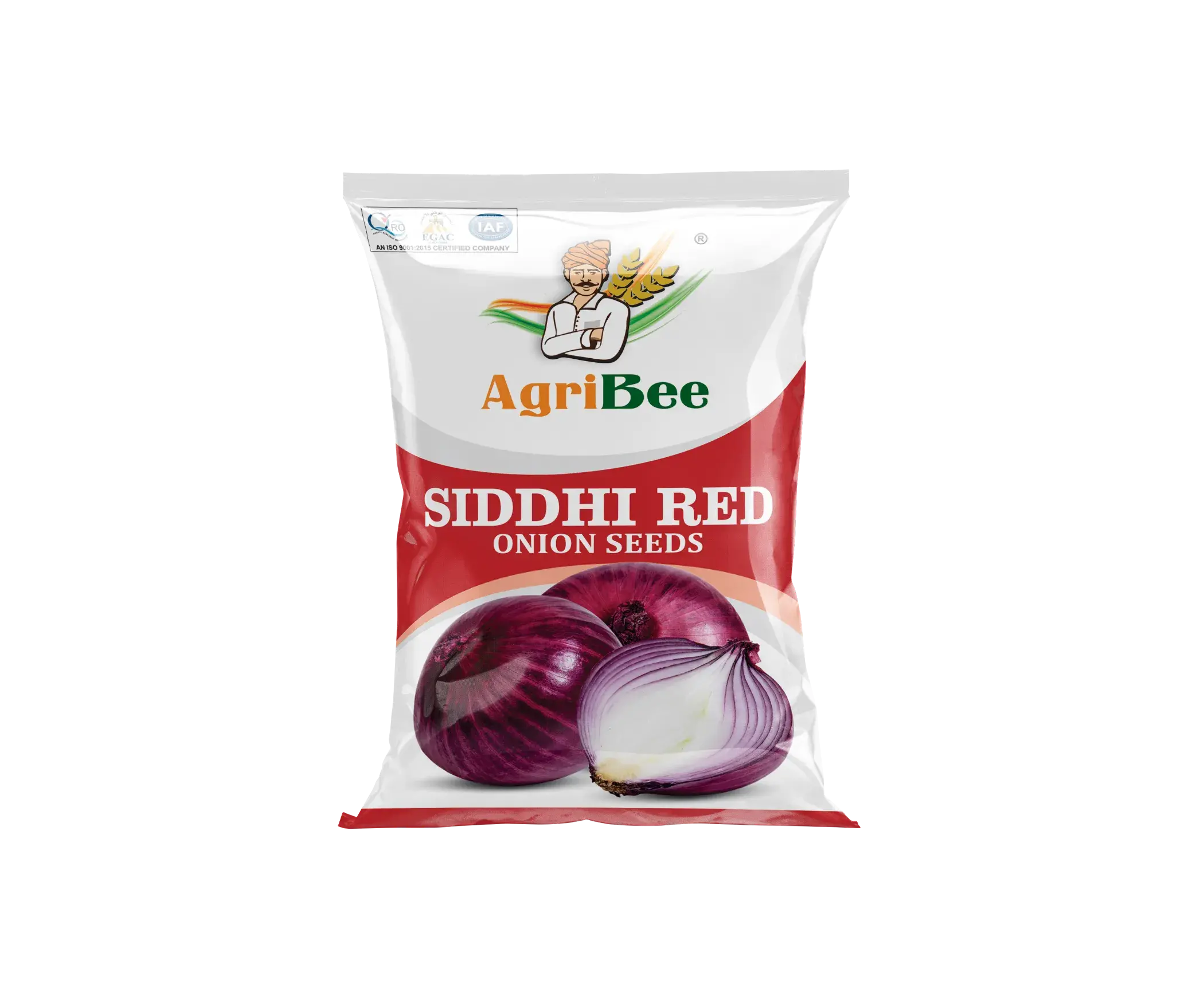
Farming & Cultivation Guide — Onion Siddhi Red
Complete step-by-step agronomic guide for optimal crop management, disease resistance, and premium produce quality.
🌾 Soil Preparation & Field Prep
Proper land preparation ensures uniform seedling emergence and robust root anchorage.
🌱 Ideal Soil Type & pH
Well-drained loamy to sandy-loam soils with pH 6.0–7.5. Free-draining soils are essential to prevent bulb rot and ensure proper bulb development. Allium crops are moderately sensitive to waterlogging.
✨ Core Advantage
Deep, fertile, well-aerated soil promotes rapid seedling emergence, strong root establishment, and uniform bulb development with dark red pigmentation.
- 1
Deep summer ploughing to 25–30 cm depth followed by 2–3 cross-harrowings to achieve fine tilth.
- 2
Field leveling with laser leveling where possible, and preparation of adequate drainage channels to prevent water stagnation.
- 3
Incorporation of 8–10 tonnes per acre of well-decomposed FYM or compost during the last harrowing for improved soil structure and moisture retention.
- 4
Soil health conditioning with gypsum (50 kg/acre in saline-affected areas) and sulfur (25 kg/acre) to optimize nutrient availability and bulb quality.
🌱 Sowing Time & Method
Precise seed rate and spacing maximize light interception and canopy development.
| Parameter | Recommendation | Agronomic Importance |
|---|---|---|
| Sowing Window | Kharif: June–mid-July | Hot Weather: March–April | Early Kharif sowing avoids peak rainfall stress during bulb formation; hot weather sowing enables pre-monsoon bulb maturity before monsoon humidity increases disease pressure. |
| Seed Rate | 5–6 kg/acre (direct seeding); 250–300 g nursery seed per acre for transplanting | Optimal seed rate ensures adequate plant population with uniform stand and prevents overcrowding that reduces bulb size and promotes diseases. |
| Spacing | 30 cm row-to-row × 10–12 cm plant-to-plant (Transplanted); 25–30 cm between rows (Direct-sown) | Adequate spacing ensures proper canopy ventilation, sunlight penetration, and uniform dark red bulb coloration while reducing disease incidence. |
| Sowing / Transplanting Depth | 1–1.5 cm depth for direct sowing; transplant seedlings at 4–5 leaf stage at same depth as in nursery | Shallow sowing ensures rapid and uniform germination; correct transplanting depth promotes strong bulb initiation and prevents lodging. |
💧 Irrigation & Water Management
Adequate moisture regulation supports strong vegetative and reproductive growth.
☀️ Water Requirement Profile
Onion requires moderate and consistent soil moisture throughout the growing period. The crop is moderately drought-sensitive, especially during bulbing stage. Drip irrigation is highly recommended with 4–6 mm irrigation every 3–4 days during vegetative growth and 6–8 mm every 2–3 days during bulb development. Avoid deficit irrigation during active bulb expansion as it leads to small bulb size and reduced quality. Onion can withstand short dry spells but prolonged moisture stress significantly affects foliage vigor and bulb uniformity.
🌦️ Soil Moisture Management
In rainfed Kharif conditions, ensure quick drainage after heavy showers to prevent rhizome rot. Use mulching (straw or polythene) to conserve soil moisture during hot weather crops. Raised bed cultivation with furrow irrigation helps maintain optimal soil moisture without waterlogging. Monitor soil moisture at 15–20 cm depth and irrigate when it reaches 50% depletion.
- ✓
First irrigation (after 5–7 days of sowing or 3–4 DAT for transplants) should be light and gentle to ensure uniform germination and seedling establishment.
- ✓
Vegetative phase (20–60 DAS/DAT): Irrigate at 8–10 day intervals maintaining soil moisture at field capacity. Avoid waterlogging; well-drained conditions promote healthy root and foliage development.
- ✓
Bulb initiation and enlargement phase (60–90 DAS/DAT): This is the most critical period requiring consistent moisture. Irrigate at 5–7 day intervals depending on soil type and weather. Even moisture distribution during this stage ensures uniform bulb size, dark red color intensity, and high quality.
- ✓
Pre-harvest withholding: Reduce irrigation frequency from 85 DAS and completely stop irrigation 10–12 days before harvest. This allows natural maturation, neck fading, and improves storage longevity and bulb firmness.
🧪 Fertilizer & Nutrition Management
Balanced crop nutrition supports robust plant structure and premium produce quality.
| Nutrient | Recommended Dose (per Acre) | Application Method & Timing |
|---|---|---|
| Nitrogen (N) | 60–80 kg/acre | Basal: 20 kg N. First top-dressing at 25–30 DAT: 25 kg N. Second top-dressing at 50–55 DAT: 15–20 kg N. Balance half at 55–60 DAT for bulb development. |
| Phosphorus (P2O5) | 40–50 kg/acre | 100% basal application incorporated during last harrowing before sowing/transplanting. Superphosphate or DAP as source. |
| Potash (K2O) | 40–50 kg/acre | 100% basal except in sandy soils where split application (70% basal + 30% at 45 DAT) is advised. Muriate of Potash (MOP) as source improves bulb firmness and color intensity. |
🌿 Interculture & Weed Management
Timely weed control ensures optimal nutrient and moisture availability for crop seedlings.
-
1
First Weeding & Hoeing: Perform first weeding and shallow hoeing at 15–20 DAS/DAT to control early weed flush without damaging shallow roots. Remove weeds manually or with conform hoe to maintain the critical weed-free period up to 30 days.
-
2
Second Weeding & Earthing-Up: Carry out second weeding and inter-row hoeing at 30–35 DAS/DAT. Light earthing-up around the plant base improves root aeration, supports early bulb development, and prevents bulb exposure to sunlight which can cause greening.
-
3
Mulching and Inter-row Culture: Apply black polythene mulch or straw mulch (4–5 cm thickness) immediately after transplanting/direct sowing to suppress weeds, conserve moisture, and maintain soil temperature. In Kharif crops, maintain open drainage channels between beds for effective rainwater removal. Avoid deep cultivation beyond 5 cm depth to protect shallow fibrous roots.
🛡️ Pest & Disease Management
Proactive crop monitoring and integrated management ensure healthy crop development.
🐛 Insect Pest Management
- Thrips (Thrips tabaci): Sucking insects causing silvery patches and longitudinal whitish streaks on leaves; severely curling and drying of foliage tips. Control: Spray Dimethoate 30 EC at 1 ml/litre or Thiamethoxam 25% WG at 0.3 g/litre. Alternate with Spinosad 45% SC at 0.3 ml/litre for resistance management. Release Trichogramma at 50,000/acre at 15-day intervals as biological control.
- Allium leaf miner (Allopygus ALLIUM): Larvae tunnel inside leaves creating white serpentine mines and entry points for secondary infections. Control: Spray Chlorantraniliprole 18.5% SC at 0.3 ml/litre or Indoxacarb 14.5% SC at 0.8 ml/litre. Install yellow sticky traps at 15/trap per acre for monitoring and mass trapping of adult flies.
- White root rot / Fusarium basal rot (Cylindrocladium scorpioides / Fusarium oxysporum f.sp. cepae): Yellowing and wilting of leaves starting from tip; white cottony fungal growth at bulb base with reddish-brown rot. Control: Seed treatment with Carbendazim 50 WP at 2.5 g/kg seed + Trichoderma viride at 4 g/kg seed. Soil drench with Pseudomonas fluorescens (10 g/litre) at 5 Litre/plant. Remove and destroy infected plants immediately.
🔬 Disease Control
- Downy mildew (Peronospora destructor): Angular pale green to yellow lesions on leaves turning purple-gray with fuzzy sporulation under humid conditions; severe infection causes leaf collapse and bulb size reduction. Control: Spray Mancozeb 75 WP at 2 g/litre or Metalaxyl + Mancozeb 8% + 64% WP at 2.5 g/litre at 10-day intervals. Avoid overhead irrigation and maintain plant spacing for good air circulation.
- Purple blotch / Alternaria leaf blight (Alternaria porri): Small violet-brown circular spots on leaves enlarging to large necrotic lesions; concentric ring pattern visible in advanced stages. Premature leaf senescence occurs reducing photosynthetic area and bulb quality. Control: Spray Mancozeb 75 WP at 2 g/litre or Chlorothalonil 75 WP at 2 g/litre. Begin preventive sprays at 30 DAT in areas with history of disease pressure. Destroy crop after harvest.
- Stemphylium leaf blight (Stemphylium botryosum): Water-soaked small spots on leaves developing into dark brown to black necrotic lesions; foliar blight leads to reduced bulb size and poor storage quality. Control: Spray Copper oxychloride 50 WP at 3 g/litre or Propineb 75 WP at 2 g/litre at 12–15 day intervals. Crop rotation with non-allium crops for 2–3 seasons reduces inoculum buildup in soil.
✂️ Harvesting & Produce Quality Guide
Harvesting at peak maturity ensures maximum commercial grade and long keeping quality.
⏱️ Harvesting Schedule & Timing
harvest commences at 100–110 Days after Sowing when 60–70% of the plants show natural maturation signs. Crop is harvested as a single operation; bulbs are pulled manually, sorted by size, and cured before packing.
⭐ Produce Quality Characteristics
Dark red colored, flatish round shaped bulbs weighing 90–100 g each with uniform coloration, tight tunics, well-set necks, and smooth outer skin. Firm texture with pungent flavor characteristic of Nasik Red type. High sugar content and rich anthocyanin pigmentation contributing to premium market appeal.
| Quality Parameter | Agronomic Standard | Farmer & Market Benefit |
|---|---|---|
| Harvest Stage | 100–110 Days after Sowing | Ensures bulbs attain full commercial size, optimal color development, and ideal firmness for long-duration storage and market readiness. |
| Harvest Maturity Signs | Natural lodging of 60–70% tops, neck softening, outer scales turning papery and dark red, true variety color fully developed | Prevents over-maturity leading to scale separation and under-maturity causing poor storage life and inferior bulb quality. |
| Shelf Life & Keeping Quality | Good storage potential; 3–4 months under cool, dry, well-ventilated conditions; tolerates ambient storage for 6–8 weeks with minimal sprouting | Facilitates staggered marketing, longer sales window, reduced post-harvest losses, and suitability for distant market supply chains. |
| Market Suitability | Excellent for fresh table consumption, wholesale mandis, and long-distance transportation; preferred by traders due to uniform color and good keeping quality | Commands premium prices in domestic markets; attractive appearance and consistent quality make it suitable for organized retail and export-oriented processing. |
⭐ Varietal Features — Onion Siddhi Red
Distinguishing characteristics that make this variety a top choice for Indian growers.
🌿 Core Variety Highlight
Nashik Red type onion with exceptional dark red pigmentation and flatish round bulb morphology, bred specifically for Indian Kharif and hot weather farming systems with reliable performance across diverse agro-climatic zones.
🌿 Produce Quality & Appearance
Dark red colored, flatish round bulbs averaging 90–100 g weight with uniform external color, tight multi-layered tunics, smooth skin finish, and commercially attractive appearance that meets trader and consumer preferences.
🌿 Stress & Disease Tolerance
Moderately resistant to downy mildew and purple blotch under field conditions; exhibits good tolerance to thrips damage and stemmy neck; performs reliably under hot weather conditions with appropriate irrigation and pest management.
🌿 Growth Habit & Vigor
Upright growth habit with vigorous dark green foliage, strong root system, and uniform plant stand. Compact architecture allows optimal plant population density without excessive shading, promoting balanced vegetative and bulb development.
🌿 Crop Duration & Earliness
Medium duration variety maturing in 100–110 days, enabling flexible scheduling within Kharif and hot weather cropping sequences. Early enough to avoid peak monsoon disease pressure while allowing sufficient time for bulb maturation and curing.
🌿 Market & Farmer Preference
Highly preferred by farmers and traders due to uniform dark red bulb color matching the premium Nashik Red market standard, excellent storage characteristics reducing post-harvest losses, and consistent performance in both direct-sown and transplanted production systems across major onion-growing regions of India.