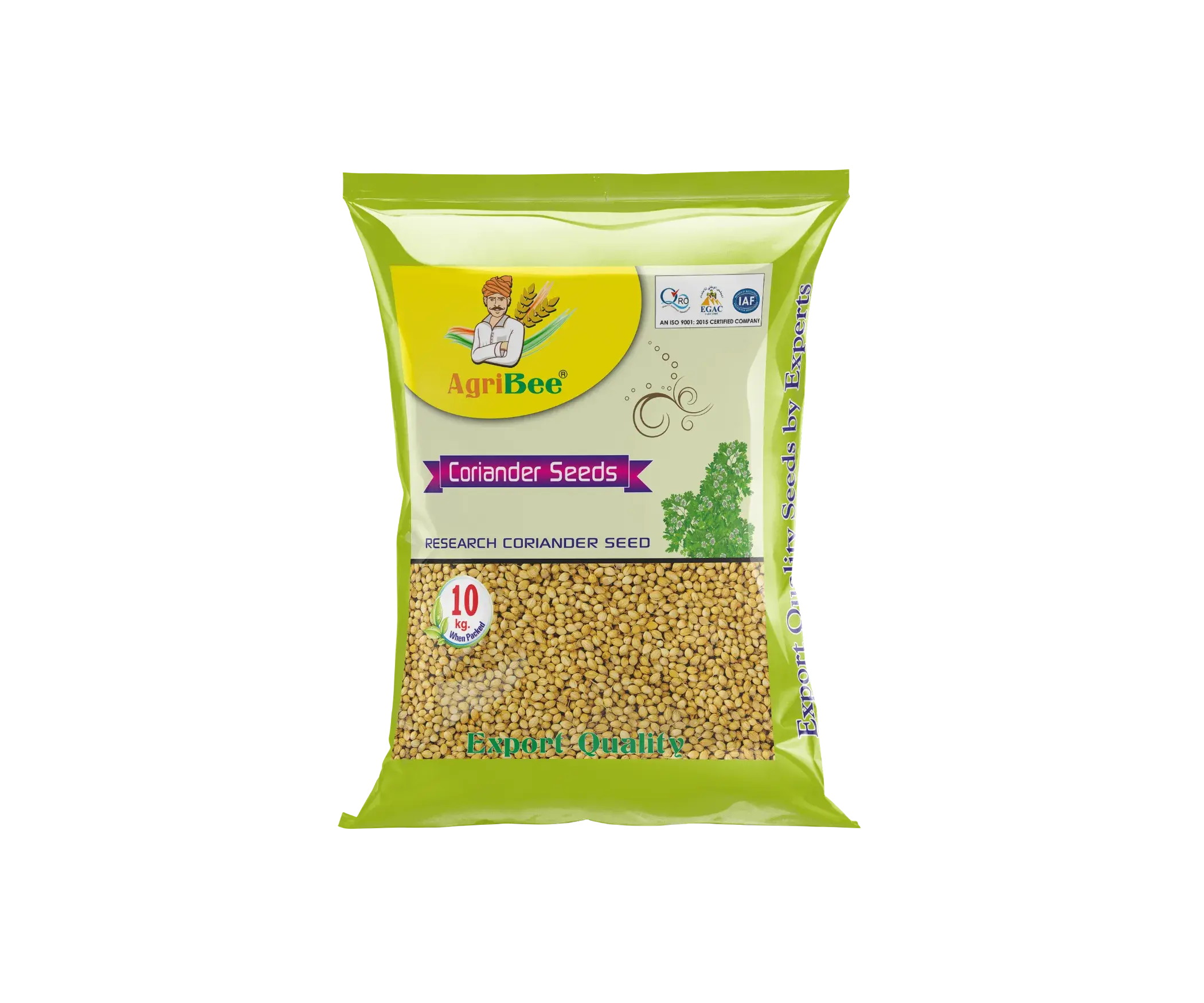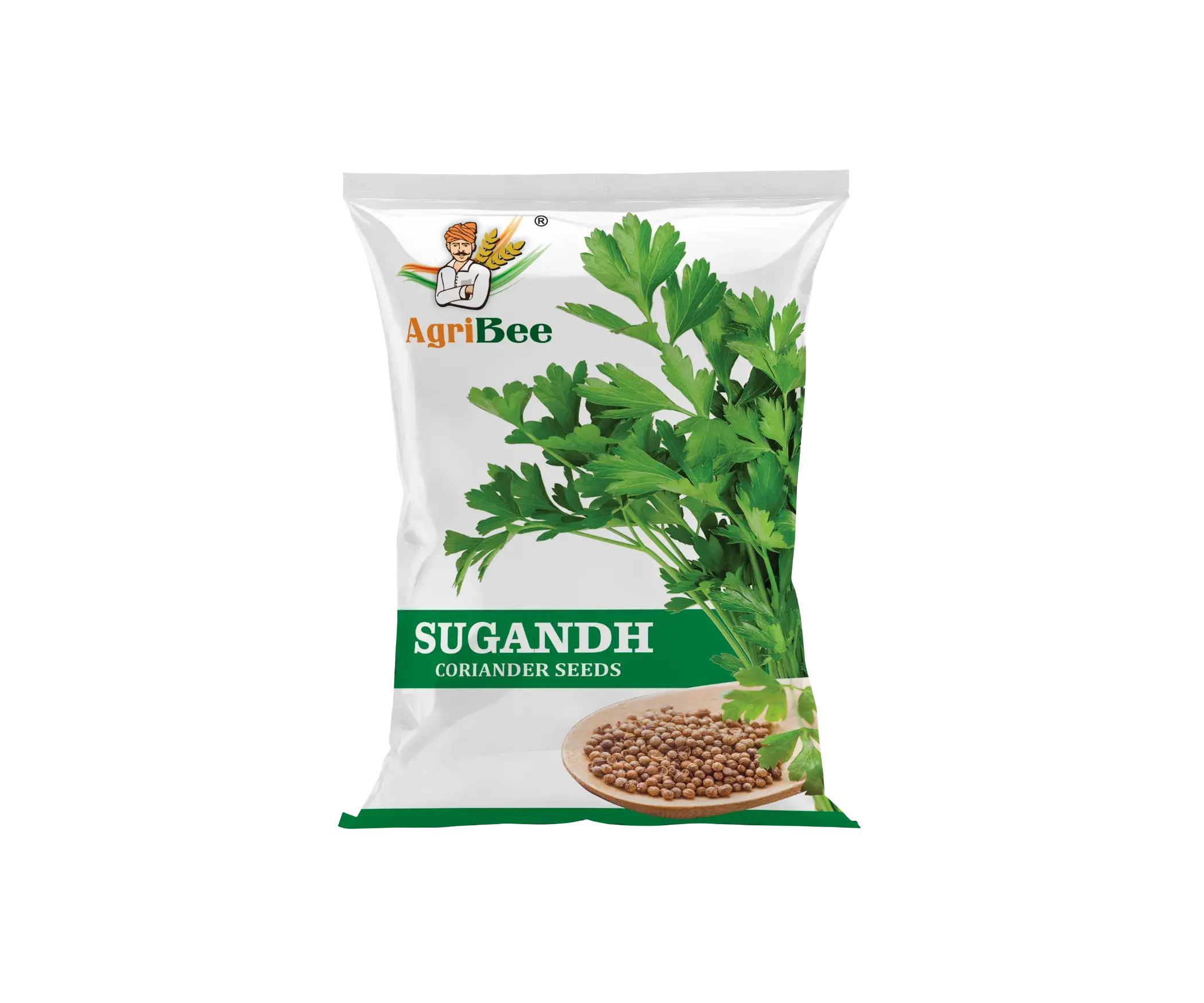
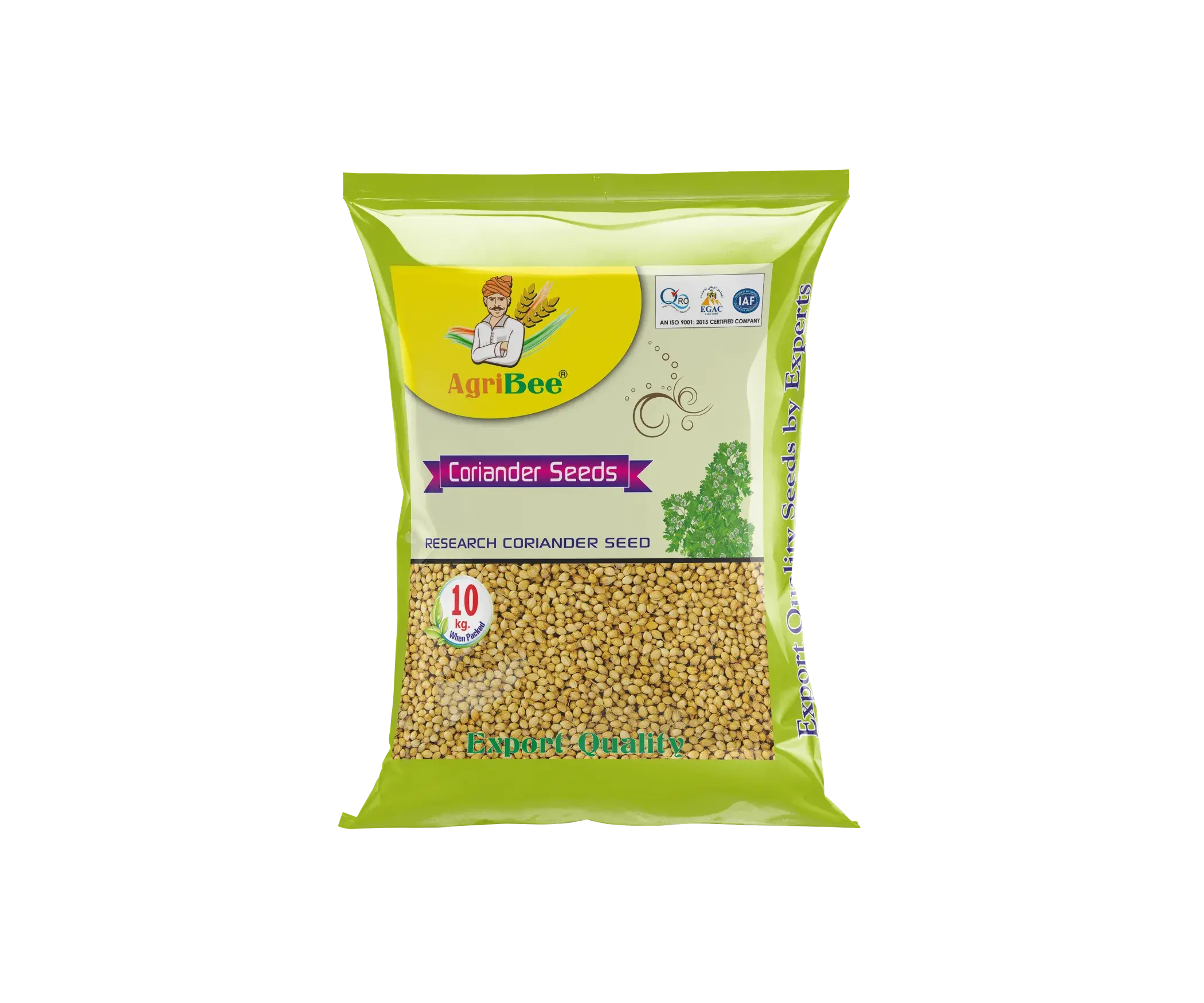
Description
Farming & Cultivation Guide — Coriander AgriBee – 999
Complete step-by-step agronomic guide for optimal crop management, disease resistance, and premium produce quality.
🌾 Soil Preparation & Field Prep
Proper land preparation ensures uniform seedling emergence and robust root anchorage.
🌱 Ideal Soil Type & pH
Well-drained loamy to sandy-loam soils with pH 6.5–8.0. Coriander performs best in soils with good organic matter and moderate water-holding capacity. Heavy clay or waterlogged soils should be avoided due to root rot susceptibility.
✨ Core Advantage
Fine tilth and friable soil structure promote uniform seed germination, rapid emergence, and strong taproot development essential for a sturdy 95–100 cm canopy.
- 1
Deep summer ploughing to 25–30 cm followed by 2–3 cross-harrowings to achieve a fine, clod-free tilth.
- 2
Field leveling using laser leveling or board leveling to ensure uniform moisture distribution and prevent water stagnation.
- 3
Incorporation of 8–10 tonnes per acre of well-decomposed FYM or vermicompost during the last harrowing to improve soil structure and nutrient availability.
- 4
Soil health conditioning — apply gypsum (10 kg/acre) in saline-affected soils and lime (5–10 kg/acre) in acidic soils to maintain optimal pH range.
🌱 Sowing Time & Method
Precise seed rate and spacing maximize light interception and canopy development.
| Parameter | Recommendation | Agronomic Importance |
|---|---|---|
| Sowing Window | October – November (Rabi); June – July (Kharif); February – March (Summer in South India) | Cool Rabi conditions produce aromatic, high-quality fruits; Kharif sowing suits rainfed areas; summer sowing in southern regions targets off-season premium markets. |
| Seed Rate | 20 Kg per Acre | Ensures adequate plant population and uniform crop stand when sown at 30 × 10 cm spacing for optimal canopy development and air circulation. |
| Spacing | 30 cm (row-to-row) × 10 cm (plant-to-plant) | Provides balanced canopy spread, reduces intra-crop competition, improves aeration, and facilitates easy intercultural operations and harvest access. |
| Sowing Depth | 1.5 – 2.0 cm | Shallow sowing ensures reliable germination of light-yellowish seeds (100-seed weight 5.7 gm); deeper sowing delays emergence and reduces stand consistency. |
💧 Irrigation & Water Management
Adequate moisture regulation supports strong vegetative and reproductive growth.
☀️ Water Requirement Profile
Coriander has moderate drought tolerance but is sensitive to both water deficit and waterlogging. Under drip irrigation, light and frequent irrigation at 3–4 day intervals is recommended. Under flood irrigation, apply gentle inundation at 12–15 day intervals depending on soil type and climatic conditions. Drip systems significantly improve water-use efficiency and fruit quality.
🌦️ Soil Moisture Management
In rainfed conditions, adopt moist soil conditions through timely pre-sowing irrigation and mulching. Avoid moisture stress during the flowering and fruit-setting stages (35–70 DAS), as drought at this stage causes flower drop, poor fruit set, and reduced essential oil content.
- ✓
First irrigation within 5–7 days of sowing (nachni watering) to ensure uniform germination, especially in dry seedbeds.
- ✓
During vegetative phase (15–35 DAS), irrigate at 10–12 day intervals to support lush foliage growth and tiller production.
- ✓
Critical irrigation at flowering to fruit-set stage (40–65 DAS) — maintain consistent soil moisture to prevent flower abortion and ensure plump fruit development.
- ✓
Withhold irrigation completely 10–12 days before harvest to reduce fruit moisture content, improve handling, and enhance post-harvest shelf life and aroma retention.
🧪 Fertilizer & Nutrition Management
Balanced crop nutrition supports robust plant structure and premium produce quality.
| Nutrient | Recommended Dose (per Acre) | Application Method & Timing |
|---|---|---|
| Nitrogen (N) | 60–80 kg/acre | 50% basal at sowing + 50% top-dressed at 30–35 DAS to support vegetative growth and leaf biomass without causing lodging. |
| Phosphorus (P₂O₅) | 40 kg/acre | 100% basal application as DAP (21:54:00) or SSP during last harrowing for root development and early growth promotion. |
| Potash (K₂O) | 30 kg/acre | 100% basal application as MOP (60:0:0) to strengthen stems, improve disease resistance, and enhance essential oil concentration in fruits. |
🌿 Interculture & Weed Management
Timely weed control ensures optimal nutrient and moisture availability for crop seedlings.
-
1
First Weeding & Hoeing: Carry out at 15–20 DAS using a rotavator or hand hoe. Early weed control is critical as coriander is a slow-establishing crop during the first 2 weeks. Shallow weeding avoids root damage.
-
2
Second Weeding & Earthing-Up: Perform at 30–35 DAS to remove competitive weeds and lightly hill soil around the base of plants. This improves root aeration and provides mechanical support as plants reach 95–100 cm height.
-
3
Mulching Application: Apply straw mulch at 2–3 tonnes/acre immediately after first irrigation to conserve soil moisture, suppress weeds, regulate soil temperature, and protect shallow roots during hot summer conditions.
🛡️ Pest & Disease Management
Proactive crop monitoring and integrated management ensure healthy crop development.
🐛 Insect Pest Management
- Leaf Hopper (Amrasca biguttula biguttula): Sucking insects cause leaf yellowing, curling, and stunted growth. Control: Spray Imidacloprid 17.8% SL at 0.3 ml/L of water or Thiamethoxam 25% WG at 0.2 g/L at 20–25 DAS. Repeat at 10-day intervals if infestation persists.
- Aphid (Myzus persicae / Aphis gossypii): Colonies on tender shoots and leaves cause curling, honeydew deposition, and sooty mold. Control: Spray Chlorpyriphos 20% EC at 1.5 ml/L or Acephate 75% SP at 1.0 g/L. Deploy yellow sticky traps at 10 traps/acre for monitoring and reduction.
- Fruit Fly (Bactrocera cucurbitae): Larvae mine inside developing fruits causing premature fruit drop and rendering produce unmarketable. Control: Apply Neem-based pesticide (Azadirachtin 1%) at 2.5 ml/L as a preventive spray from flowering onwards. Use protein bait traps (hydrolyzed protein + organophosphate) at 10 traps/acre.
🔬 Disease Control
- Blast / Leaf Blight (Pyricularia oryzae / Passalora fulva): Irregular brown necrotic lesions on leaves with greyish centre and purple margins. Control: Spray Mancozeb 75% WP at 2.5 g/L or Propiconazole 25% EC at 0.5 ml/L at first sign of infection. Practice crop rotation and avoid overhead irrigation to reduce leaf wetness duration.
- Stem Rot / Collar Rot (Sclerotium rolfsii / Rhizoctonia solani): Water-soaked lesions at soil line, white mycelial growth, and golden-brown sclerotia. Plants wilt and die. Control: drench soil with Trichoderma viride @ 5 g/L at 15 DAS as prophylaxis. For active infection, spray Carbendazim 50% WP at 1.0 g/L or Bavistin @ 2 g/L. Remove and burn infected plants immediately.
- Powdery Mildew (Erysiphe cichoracearum): White powdery fungal growth on leaves and stems, causing premature drying and reduced essential oil content. Control: Spray Wettable sulfur 80% WP at 2.5 g/L or Sulphex 64% WP at 2.0 g/L at early onset. Ensure adequate spacing (30 × 10 cm) for canopy ventilation and humidity reduction.
✂️ Harvesting & Produce Quality Guide
Harvesting at peak maturity ensures maximum commercial grade and long keeping quality.
⏱️ Harvesting Schedule & Timing
Fresh leaf harvesting can begin at ~40 DAS for continuous partial picking. Green fruit harvest is carried out at 100–110 DAS when 70–75% of umbels turn yellowish-green to light brown. Cut the entire plant at ground level using a sickle during early morning hours when moisture content is optimal.
⭐ Produce Quality Characteristics
Premium light green to pale yellowish fruits with high essential oil content (2.5–4.0% v/w). Seeds exhibit a characteristic aromatic flavor, light yellowish colour, and uniform size. Foliage shows deep green, thick, and vigorous leaf canopy with minimal yellowing or spotting. Fruit shape is spherical to ovoid with prominent ribs.
| Quality Parameter | Agronomic Standard | Farmer & Market Benefit |
|---|---|---|
| Harvest Stage | 100–110 Days after Sowing | Ensures fruits attain physiological maturity with maximum essential oil accumulation and market-ready appearance |
| Harvest Maturity Signs | 70–75% umbels turn from green to yellowish-brown; seeds harden and cannot be crushed between fingernails; foliage begins yellowing from lower leaves upward | Prevents over-maturity-induced shattering and loss of aromatic volatile oils |
| Shelf Life & Keeping Quality | Dried fruits retain quality for 12–18 months in dry, airtight storage at ambient conditions; fresh foliage has a shelf life of 5–7 days under refrigerated conditions (2–4°C) | Enables extended marketing windows, long-distance transport, and storage for off-season price realization |
| Market Suitability | Suitable for fresh market, dry spice mandi, export-grade processing, and essential oil extraction industries | Uniform fruit size, bright colour, and high oil content attract premium rates from traders and processors |
⭐ Varietal Features — Coriander AgriBee – 999
Distinguishing characteristics that make this variety a top choice for Indian growers.
🌿 Core Variety Highlight
Coriander AgriBee – 999 delivers robust field performance with uniform plant architecture reaching 95–100 cm, making it a reliable choice for both green fruit and seed production across diverse Indian agro-climatic zones.
🌿 Produce Quality & Appearance
Produces light yellowish, spherical to ovoid fruits with prominent ribs, high essential oil concentration, and uniform size — characteristics highly valued by dry spice markets and exporters.
🌿 Stress & Disease Tolerance
Demonstrates strong field tolerance to common coriander diseases including powdery mildew, leaf blight, and stem rot under integrated management, along with moderate resilience to heat and drought stress.
🌿 Growth Habit & Vigor
Vigorous early growth with strong taproot establishment and well-branched canopy. The semi-erect habit with 95–100 cm plant height supports good light interception and efficient resource utilization.
🌿 Crop Duration & Earliness
50–55 days to 50% flowering and 100–110 days to physiological maturity enable flexible crop scheduling, allowing farmers to fit coriander efficiently between successive crops in intensive rotation systems.
🌿 Market & Farmer Preference
Farmers and traders prefer Coriander AgriBee – 999 for its consistent seed appearance, high fragrance, excellent shell-out percentage, and adaptability to both Rabi and Kharif seasons across Gujarat, Maharashtra, Rajasthan, MP, and South India.