Description
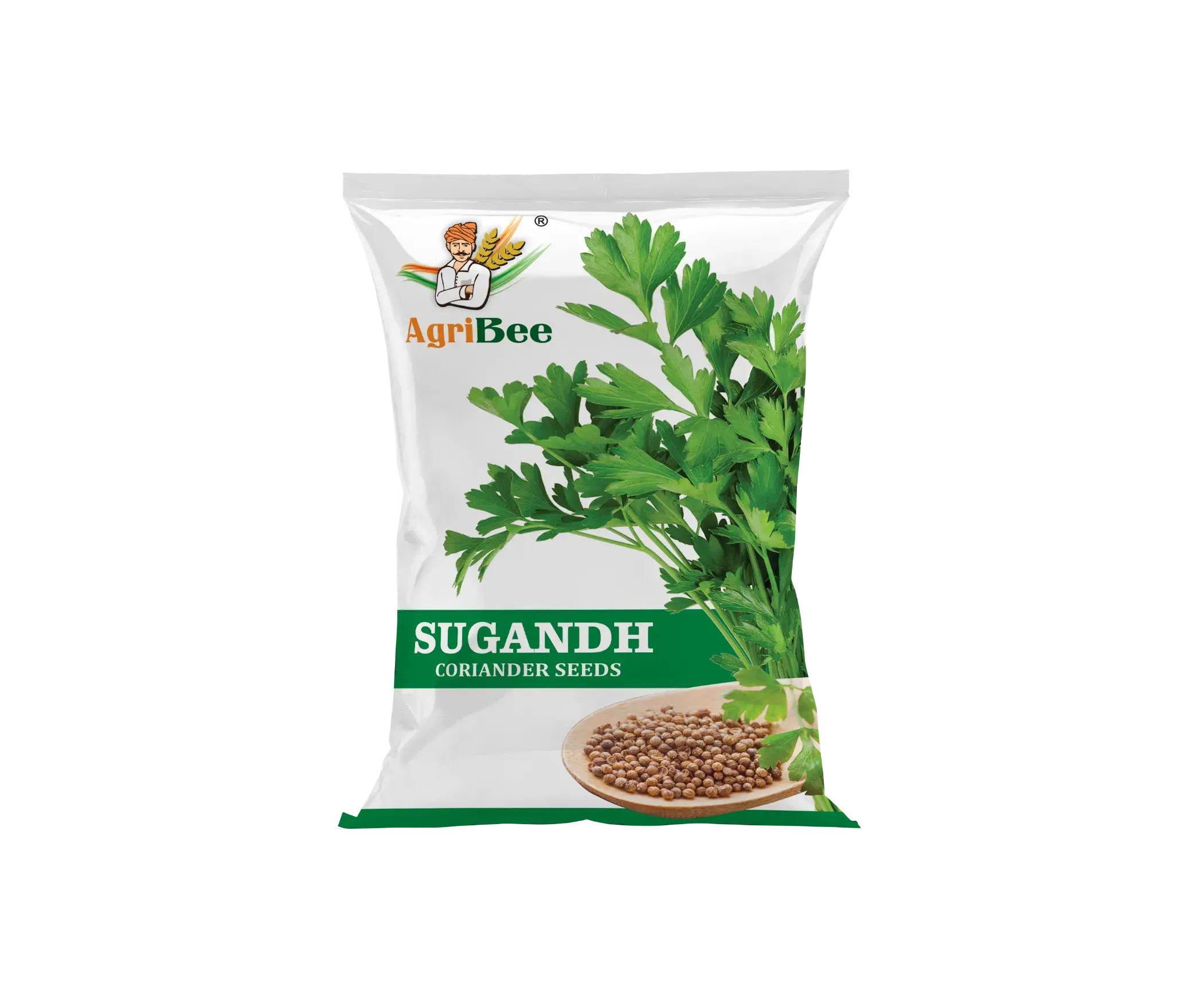
Farming & Cultivation Guide — Coriander Seeds Sugandh
Complete step-by-step agronomic guide for optimal crop management, disease resistance, and premium produce quality.
🌾 Soil Preparation & Field Prep
Proper land preparation ensures uniform seedling emergence and robust root anchorage.
🌱 Ideal Soil Type & pH
Well-drained loamy to sandy-loam soils with a pH range of 6.0–7.5. Good organic matter content enhances oil content and foliage vigor.
✨ Core Advantage
Free-draining soil ensures rapid seed imbibition and uniform germination while preventing root rot in humid conditions.
- 1
Deep ploughing in summer followed by 2–3 harrowings to achieve fine tilth and destroy perennial weeds.
- 2
Field leveling with laser leveling equipment to ensure uniform moisture distribution.
- 3
Incorporation of 8–10 t/acre well-decomposed FYM or vermicompost during last ploughing.
- 4
Soil health conditioning: apply gypsum (100 kg/acre) in alkaline soils and sulphur (25 kg/acre) in calcareous soils to optimise pH.
🌱 Sowing Time & Method
Precise seed rate and spacing maximize light interception and canopy development.
| Parameter | Recommendation | Agronomic Importance |
|---|---|---|
| Sowing Window | Best in Rabi (October–November) for premium leaf quality; Kharif (June–July) for summer cultivation with irrigation. | Optimal temperature (15–25 °C) prevents early bolting and ensures dense canopy formation. |
| Seed Rate | 8–10 kg/acre for line sowing; 10–12 kg/acre for broadcast method. | Maintains ideal plant population for balanced canopy and maximises branching potential. |
| Spacing | Row-to-row: 30 cm; Plant-to-plant: 10 cm. | Promotes adequate airflow, reduces disease humidity, and accommodates natural spreading habit. |
| Sowing Depth | 1.0–1.5 cm depth; seeds must be lightly pressed into soil without deep burial. | Shallow sowing ensures quick radicle emergence and uniform stand establishment. |
💧 Irrigation & Water Management
Adequate moisture regulation supports strong vegetative and reproductive growth.
☀️ Water Requirement Profile
Moderately drought-sensitive during early vegetative stage. Requires consistent soil moisture but cannot tolerate waterlogging. Drip irrigation with lateral spacing of 60 cm and emitters at 2 L/hour is highly suitable, reducing water use by 30–40%.
🌦️ Soil Moisture Management
In rainfed zones, synchronise sowing with pre-monsoon showers or rely on residual soil moisture. Use mulching (straw/paddy husk) to minimise evaporation and maintain root-zone humidity during dry spells.
- ✓
First irrigation applied 5–7 days after sowing to promote germination and early root establishment.
- ✓
During vegetative phase, irrigate at 10–12 day intervals depending on soil texture and rainfall.
- ✓
Critical growth stages: branching initiation (15–20 DAS) and green fruit development require adequate moisture to support 40–50 branches per plant.
- ✓
Cease irrigation 7–10 days before final leaf harvest to improve firmness and extend post-harvest shelf life.
🧪 Fertilizer & Nutrition Management
Balanced crop nutrition supports robust plant structure and premium produce quality.
| Nutrient | Recommended Dose (per Acre) | Application Method & Timing |
|---|---|---|
| Nitrogen (N) | 40–50 kg/acre | 50% basal at sowing; remaining 50% as top-dressing at 25 DAS to support dense branching. |
| Phosphorus (P2O5) | 25–30 kg/acre | 100% basal application incorporated with FYM and basal nitrogen. |
| Potash (K2O) | 20–25 kg/acre | Applied in two splits: 50% basal and 50% at first weeding to enhance fruit set and stress tolerance. |
🌿 Interculture & Weed Management
Timely weed control ensures optimal nutrient and moisture availability for crop seedlings.
-
1
First Weeding & Hoeing: Carry out at 10–12 days after sowing (DAS) using a conformable hoe or cultivator to keep the field weed-free during early competition.
-
2
Second Weeding & Inter-row Cultivation: Perform at 25–30 DAS before first leaf harvest to relieve root zone compaction and improve oxygen availability for branching roots.
-
3
Mulching Application: Spread paddy straw mulch (200–250 kg/acre) immediately after second weeding to conserve soil moisture, suppress weeds, and maintain clean foliage.
🛡️ Pest & Disease Management
Proactive crop monitoring and integrated management ensure healthy crop development.
🐛 Insect Pest Management
- Aphid (Macrosiphum coriandri): Sucking sap from leaves and stems causing curling and honeydew soot. Control: Spray imidacloprid 17.8% SL @ 0.3 ml/litre or neem oil 3% EC @ 5 ml/litre at 15 DAS and repeat after 10 days if infestation persists.
- Coriander leaf miner (Liriomyza trifolii): Miners create serpentine trails in leaves, reducing photosynthetic area. Control: Apply spinosad 45% SC @ 0.5 ml/litre or capture 10% EC @ 1.5 ml/litre at first sign of mining. Practice crop rotation to break pest cycle.
- Coriander fruit borer (Homoeocera punctigera): Larvae bore into developing fruits causing wilting and premature drop. Control: Install pheromone traps @ 10/acre for monitoring and spray chlorantraniliprole 18.5% SC @ 0.3 ml/litre at flowering stage.
🔬 Disease Control
- Downy mildew (Peronospora coriandri): Yellow patches on upper leaf surface with fuzzy grey-purple sporulation underneath. Control: Spray mancozeb 75% WP @ 2.5 g/litre or metalaxyl 35% WS @ 1.0 g/litre at 20 DAS and repeat at 10-day intervals during humid weather.
- Leaf spot / blight (Cercospora coriandrina): Small brown spots with yellow halos on leaves that coalesce and cause defoliation. Control: Apply copper oxychloride 50% WP @ 3.0 g/litre or kasugamycin 5% SL @ 1.0 ml/litre at onset of symptoms.
- Powdery mildew (Erysiphe polygoni): White powdery growth on leaves and stems, stunting growth and reducing branching. Control: Spray wettable sulphur 80% WP @ 3.0 g/litre or myclobutanil 10% WP @ 0.5 g/litre at early infection stage.
✂️ Harvesting & Produce Quality Guide
Harvesting at peak maturity ensures maximum commercial grade and long keeping quality.
⏱️ Harvesting Schedule & Timing
First leaf harvest can begin at 25–30 days after sowing. Subsequent pickings are possible at 15–20 day intervals, retaining 5–7 cm stubble for regrowth. Final harvest for green fruit/seeds occurs approximately 60–70 DAS when fruits turn light brown.
⭐ Produce Quality Characteristics
Vibrant green, finely divided leaves with strong aroma; spherical, bright green fruits (before drying) that develop rich essential oil content. Foliage is tender with high market appeal.
| Quality Parameter | Agronomic Standard | Farmer & Market Benefit |
|---|---|---|
| First Harvest Stage | 25–30 Days after Sowing for leaf picking; 60–70 DAS for fruit maturation | Early leaf harvesting captures peak tenderness and aroma, allowing farmers to access premium markets quickly. |
| Harvest Maturity Signs | Leaves: fully expanded, deep green, no signs of bolting. Fruits: firm, green turning pale yellow/brown, aromatic when crushed. | Visual cues indicate optimal physiological maturity, ensuring maximum essential oil and flavour compound content. |
| Shelf Life & Keeping Quality | Fresh leaves: 5–7 days under refrigerated conditions (2–4 °C); fresh green fruits: 7–10 days ambient. Dried seeds: 12–15 months in airtight packaging. | Superior post-harvest longevity reduces spoilage losses and supports longer distribution windows for exporters and processors. |
| Market Suitability | Ideal for fresh vegetable markets, export consignments, processing units (oil extraction), and dry spice trade after threshing and cleaning. | Versatile produce fetches multiple income streams and meets diverse demand from metropolitan mandis, retail chains, and international buyers. |
⭐ Varietal Features — Sugandh: Fragrant Aroma & Fresh Market Variety
Sugandh (सुगंध = Fragrance) is specially chosen for its strong aromatic leaf quality. Best suited for fresh sabzi markets, restaurant supply, and buyers who value strong coriander fragrance over dry seed yield.
🌿 Core Variety Highlight
Sugandh is selected specifically for its high essential oil content and strong characteristic coriander fragrance — a quality that commands premium pricing at fresh produce markets and wholesale sabzi mandis.
🌿 Produce Quality & Appearance
Bright green, highly aromatic leaves and uniformly shaped spherical fruits with intense essential oil content, appealing to both fresh produce and dry spice markets.
🌿 Stress & Disease Tolerance
Moderate tolerance to downy mildew and leaf spot. Note: Being an aromatic variety, Sugandh performs best under mild temperatures (15–28°C). High heat above 35°C may reduce essential oil content and aroma intensity.
🌿 Growth Habit & Vigor
Spreading growth habit producing 40–50 well-branched plants per square meter, resulting in dense canopy and high biomass accumulation.
🌿 Crop Duration & Earliness
First fragrant leaf harvest at 25–28 DAS — harvest at this early stage captures peak essential oil and aroma. Quick turnover allows 3–5 cuts per crop cycle, maximising fresh market income.
🌿 Market & Farmer Preference
Preferred by farmers supplying fresh vegetable markets, metro supermarkets, and food processors who specifically demand high-aroma coriander. Sugandh leaf retains fragrance longer post-harvest, reducing rejection at market.