Description
Farming & Cultivation Guide — F1 Hybrid BottleGourd
Complete step-by-step agronomic guide for optimal crop management, disease resistance, and premium produce quality.
🌾 Soil Preparation & Field Prep
Proper land preparation ensures uniform seedling emergence and robust root anchorage.
🌱 Ideal Soil Type & pH
Well-drained loamy or sandy-loam soils with pH 6.0–7.5. Heavy clays must be avoided due to poor drainage and risk of root rot. Soil should be rich in organic matter with adequate water-holding capacity.
✨ Core Advantage
Fine, well-aerated seedbed promotes rapid germination and strong early root development, essential for vigorous vine establishment.
- 1
Deep summer ploughing followed by 2–3 cross-harrowings to achieve a fine, clod-free tilth.
- 2
Field leveling and formation of drainage channels to prevent waterlogging during monsoon sowing.
- 3
Incorporation of 8–10 tonnes per acre of well-decomposed FYM or compost at final harrowing for improved soil structure.
- 4
Soil health conditioning: apply gypsum (100 kg/acre) in acidic soils or lime (50 kg/acre) in alkaline soils to maintain pH within the optimal range.
🌱 Sowing Time & Method
Precise seed rate and spacing maximize light interception and canopy development.
| Parameter | Recommendation | Agronomic Importance |
|---|---|---|
| Sowing Window | Feb–Mar (Rabi/Summer) and Jun–Jul (Kharif) under Indian conditions | Avoids extreme winter cold during early growth and aligns monsoon moisture for vegetative vigor. |
| Seed Rate | 2.0–2.5 kg per acre | Ensures optimal plant population (~8,000–10,000 plants/acre) with minimal thinning losses. |
| Spacing | 90 cm row-to-row × 45 cm plant-to-plant | Provides adequate canopy spread, improves air circulation, and facilitates interculture operations. |
| Sowing / Transplanting Depth | 2–3 cm deep (2 seed holes per pit, covered lightly) | Shallow sowing ensures rapidEmergence; excessive depth reduces germination percentage. |
💧 Irrigation & Water Management
Adequate moisture regulation supports strong vegetative and reproductive growth.
☀️ Water Requirement Profile
Bottle gourd has shallow, fibrous roots and moderate drought sensitivity. Consistent soil moisture is critical throughout the crop cycle. Drip irrigation is highly recommended, supplying 25–35 mm water per week during active growth. The crop requires approximately 400–500 mm total water over the lifecycle. Water stress during flowering leads to flower drop and malformed fruits.
🌦️ Soil Moisture Management
In rainfed zones, sow at the onset of normal monsoon rains. Use mulching (straw or plastic) to conserve soil moisture and reduce evaporation. Avoid water stagnation by ensuring prompt drainage after heavy rainfall events, which can cause root diseases.
- ✓
First irrigation applied 3–5 days after sowing to ensure uniform germination; light sprinkler or flood irrigation preferred.
- ✓
Vegetative phase: irrigate every 5–7 days during summer and 8–10 days during cooler seasons to sustain rapid vine growth.
- ✓
Critical stage at flowering and initial fruit set — maintain consistent moisture; even 2-day stress at bloom causes significant flower abscission and fruit deformation.
- ✓
Withhold irrigation 3–4 days before final harvest to improve fruit firmness, reduce spoilage during transport, and enhance shelf life.
🧪 Fertilizer & Nutrition Management
Balanced crop nutrition supports robust plant structure and premium produce quality.
| Nutrient | Recommended Dose (per Acre) | Application Method & Timing |
|---|---|---|
| Nitrogen (N) | 60–80 kg/acre as urea | 50% basal at sowing, 50% split at 25 DAS as top-dressing near root zone. |
| Phosphorus (P2O5) | 40 kg/acre as DAP (18-46-0) or SSP | 100% basal application mixed thoroughly in seedbed before sowing. |
| Potash (K2O) | 40 kg/acre as MOP (0-0-60) | 50% basal + 50% at 30 DAS to support fruit development and stalk strength. |
🌿 Interculture & Weed Management
Timely weed control ensures optimal nutrient and moisture availability for crop seedlings.
-
1
First Weeding & Hoeing: Carry out at 10–12 DAS using a hand hoe or rotavator between rows. Maintain a weed-free environment during early growth; competitive weeds severely stunt vine establishment and delay flowering.
-
2
Second Weeding & Earthing-Up: Conduct at 25–30 DAS. Light earthing-up around the base of each plant strengthens adventitious roots and prevents stem lodging under wind or heavy fruit load.
-
3
Trellising and Vine Training: Install vertical trellis (1.5–1.8 m height) using coir rope or net. Train main vine upward and remove side shoots (suckers) beyond the 5th node to direct energy toward fruit production. Mulch with straw (3–4 cm layer) to conserve moisture and suppress weeds.
🛡️ Pest & Disease Management
Proactive crop monitoring and integrated management ensure healthy crop development.
🐛 Insect Pest Management
- Yellow Leatherback Beetle (Moina sp.) / Fruit and Shoot Borer (Leucinodes orbonalis): Larvae bore into young fruits and tender shoots, causing wilting and fruit rot. Spray Indoxacarb 14.5% SC at 150 ml/acre or Emamectin Benzoate 5% SG at 250 g/acre at 7-day intervals starting from flowering. Release Trichogramma brachytruma at 50,000/acre/week for bio-control.
- Pinkwarded Bug / Stink Bug (Eocanthecona furcellata): Sucks sap from leaves and fruits causing necrotic spots and distorted growth. Spray chlorpyriphos 20% EC at 500 ml/acre or neem-based pesticide (Azadirachtin 1% EC) at 5 ml/liter water as foliar spray. Monitor weekly during rainy season.
- Cucurbit Leaf Curl Virus Vector — Whitefly (Bemisia tabaci): Causes leaf curling, yellowing, and stunted growth reducing overall vine vigor. Apply imidacloprid 17.8% SL at 100 ml/acre or thiamethoxam 25% WG at 100 g/acre as soil drench at 15 DAS. Install yellow sticky traps at 15 traps/acre for monitoring and control.
🔬 Disease Control
- Powdery Mildew (Podosphaera xanthii): White powdery growth on upper leaf surface causing premature senescence. Spray sulfur-based fungicide (wettable sulfur 80% WP) at 250 g/acre or propiconazole 25% EC at 500 ml/acre at 7-day intervals. Remove and destroy heavily infected leaves to reduce inoculum.
- Fusarium Wilt (Fusarium oxysporum f. sp. cucurbitae): Yellowing of lower leaves, vascular browning, and progressive wilting. Drench soil with carbendazim 50% WP at 1 kg/acre or trichoderma viride at 5 kg/acre mixed in 500 liters water at base of each plant every 15 days. Use raised beds and ensure proper drainage.
- Downy Mildew (Pseudoperonospora cubensis): Angular yellow lesions on upper leaf surface with downy grey-purple sporulation on lower surface. Spray metalaxyl 35% WS at 500 g/acre or mancozeb 75% WP at 2 kg/acre. Apply preventive sprays at 10-day intervals during humid conditions. Crop rotation with non-cucurbits for 2–3 years is recommended.
✂️ Harvesting & Produce Quality Guide
Harvesting at peak maturity ensures maximum commercial grade and long keeping quality.
⏱️ Harvesting Schedule & Timing
First picking begins 55–60 days after sowing. Subsequent pickings are taken at 2–3 day intervals over a harvest window of 20–25 days. Regular harvesting encourages continuous fruit set.
⭐ Produce Quality Characteristics
Fruits exhibit uniform cylindrical to bottle-shaped morphology with smooth, light green skin. Flesh is crisp, pale green-white with mild sweetness and low fiber content. High water content and nutritional value including vitamin C, potassium, and dietary fiber. Premium appearance commands higher market rates.
| Quality Parameter | Agronomic Standard | Farmer & Market Benefit |
|---|---|---|
| First Harvest Stage | 55–60 days after sowing; fruits 30–40 cm length | Enables early market entry when prices are typically favorable. |
| Harvest Maturity Signs | Skin smooth and light green, flesh firm to touch, no yellowing or softening | Prevents over-maturity which leads to tough skin, hollow interior, and market rejection. |
| Shelf Life & Keeping Quality | 5–7 days under ambient conditions; 10–12 days under cool storage (8–10°C and 85–90% RH) | Extends selling window and reduces post-harvest losses during transport to distant markets. |
| Market Suitability | Fresh table consumption, mandis, retail chains, processing units, and urban supermarkets | Uniform size, attractive color, and excellent peel quality make this variety preferred by traders and retailers. |
⭐ Varietal Features — F1 Hybrid BottleGourd
Distinguishing characteristics that make this variety a top choice for Indian growers.
🌿 Core Variety Highlight
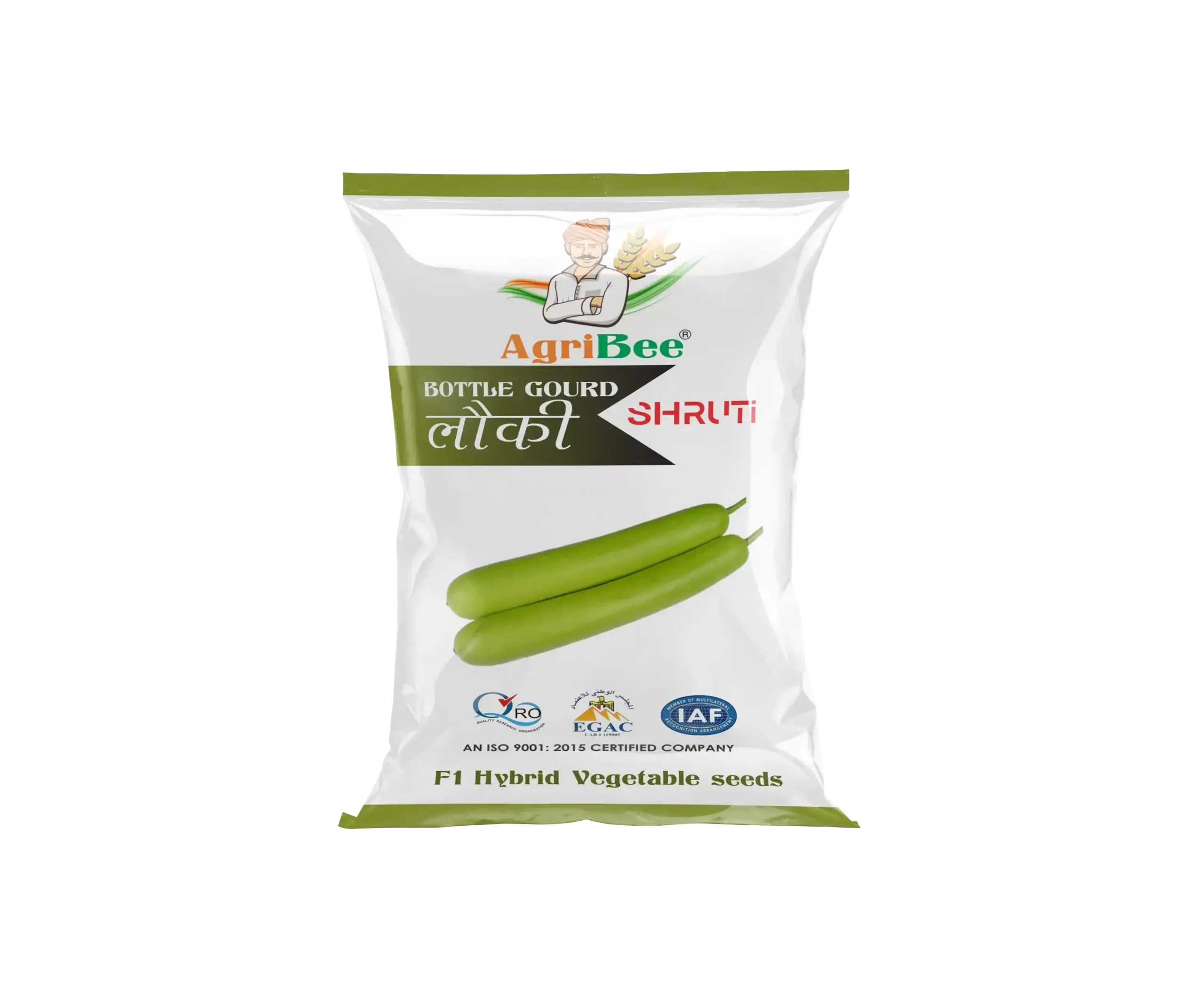
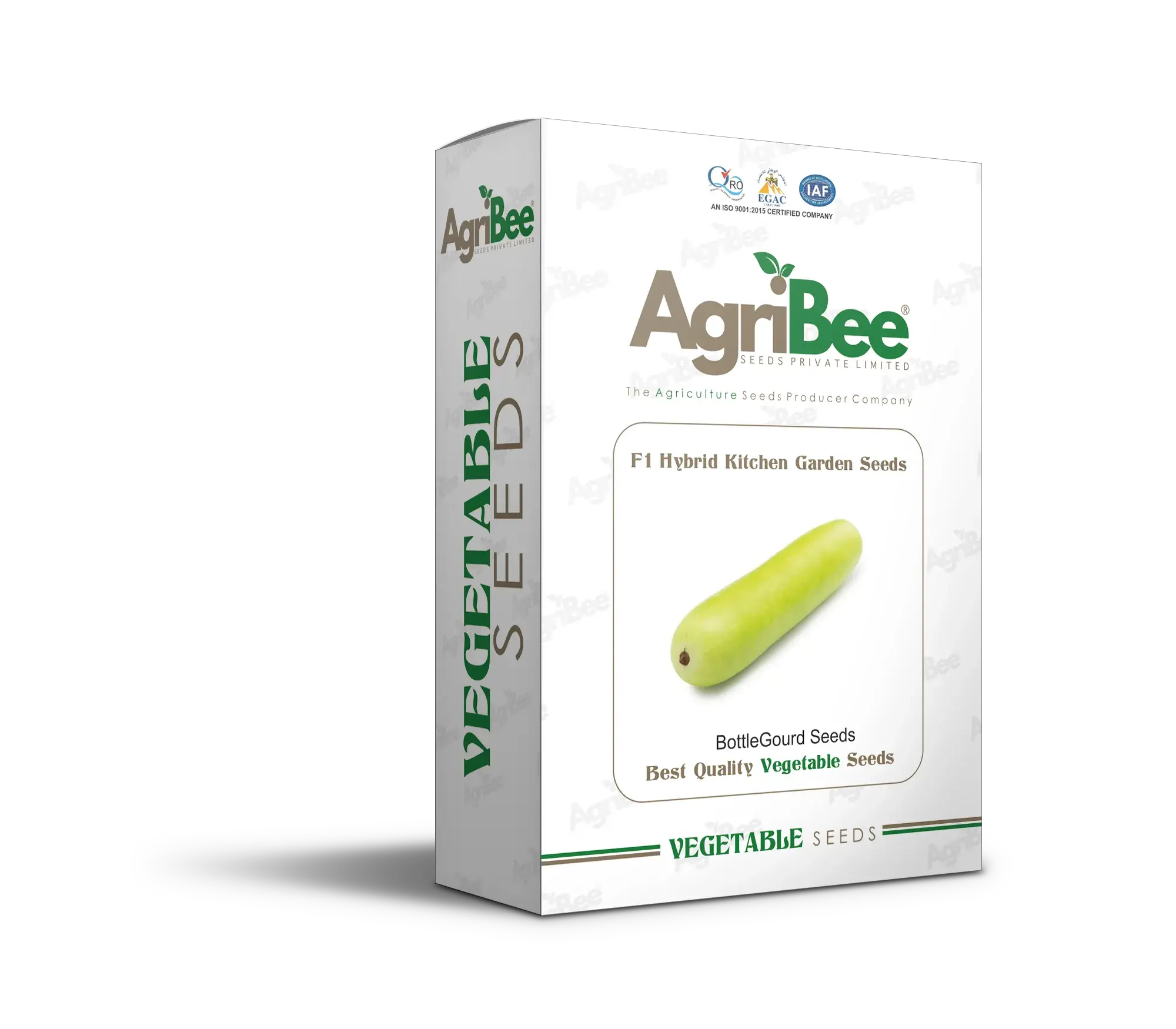
AgriBee F1 Hybrid Bottle Gourd delivers exceptional field uniformity, vigor, and consistency in fruit shape and color — traits that distinguish it from open-pollinated varieties.
🌿 Produce Quality & Appearance
Light green, smooth-skinned fruits with cylindrical to bottle-shaped morphology (30–40 cm). Firm flesh with mild flavor and minimal seed cavity, ideal for fresh market presentation.
🌿 Stress & Disease Tolerance
Good field tolerance to common cucurbit diseases including powdery mildew and downy mildew. Moderate resilience to heat stress during summer growing conditions under irrigated management.
🌿 Growth Habit & Vigor
Trailing vine architecture reaching 6–8 feet in length with strong lateral branching. Vigorous vegetative growth supported by efficient root system ensures sustained fruit production.
🌿 Crop Duration & Earliness
Early maturity at 55–60 days from sowing enables quick crop turnaround and flexibility in crop rotation schedules, particularly valuable in intensive vegetable cultivation systems.
🌿 Market & Farmer Preference
Farmers prefer this AgriBee hybrid for its uniform fruit quality, attractive appearance, consistent productivity across seasons, and strong trader demand in both domestic and export-oriented markets.